Padua Hills, Claremont
Updated · 120 residents
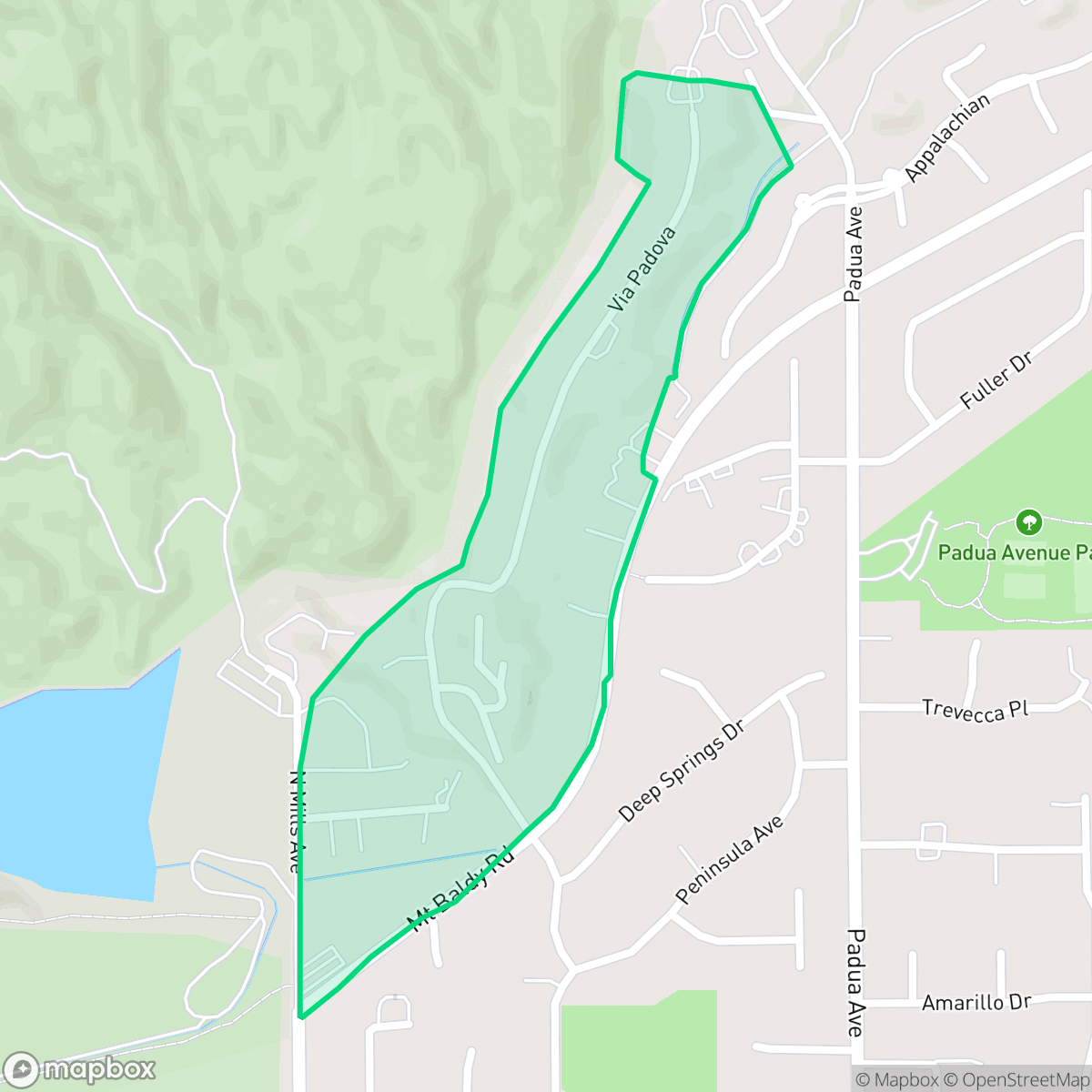
Padua Hills is a secluded, rural enclave in the Claremont foothills known for its highly scenic estates and expansive natural landscape. The area offers a quiet retreat with excellent access to dog-friendly trails, though it requires residents to remain vigilant regarding significant wildfire risks.
Key Highlights
About Padua Hills
Padua Hills, situated in the foothills of the San Gabriel Mountains, was established in 1927 by a group of Claremont residents led by industrialist Herman Garner. Originally envisioned as an artist colony, the neighborhood is centered around the historic Padua Hills Theatre, a Spanish Mission Revival complex designed by architects Marston and Maybury and completed in 1930. The theatre gained national prominence as the home of the Mexican Players, a troupe that performed Mexican folk music and plays from 1931 to 1974, making it the longest-running theatre of its kind in the United States. Characterized by its rugged hillside geography, olive groves, and distinct Spanish-style architecture, the area remains a significant cultural landmark, reflecting a unique heritage of mid-century arts, community gathering, and intercultural exchange.
This neighborhood is defined by its low-density housing and custom architectural styles that blend into the rugged mountain terrain. Residents enjoy a high degree of privacy and a peaceful, rural atmosphere that stands in contrast to the busier parts of the city. The area is particularly well-suited for those who value nature and outdoor recreation, as the extensive trail networks provide ample space for walking and exercise. According to iHuus data, the community benefits from a visually impressive aesthetic, characterized by manicured amenities and significant separation between properties.
Living in this elevated setting involves specific trade-offs, including a notable presence of traffic noise from nearby arterial roads and a heightened exposure to wildfire hazards. While the community is served by the highly regarded Claremont Unified School District and maintains excellent health insurance coverage, the remote nature of the area means it lacks the commercial density and diverse business activity found elsewhere. It is an ideal location for individuals or families seeking a serene, scenic environment who are prepared for the responsibilities of living in a high-fire-risk foothills zone.
Neighborhood Scores Across 15 Qualities
Housing density is moderate with varied spacing between properties, offering slightly more separation between neighbors than the Claremont average according to iHuus data.
Sidewalks and safe crossings are available on many streets, though pedestrian connectivity is slightly lower than the Claremont average according to iHuus data.
Custom architecture and expansive privacy buffers create a landscape significantly more visually impressive than the Claremont average. Low density housing and manicured amenities define the area's premium aesthetic according to iHuus data.
Extensive trail networks and large open spaces provide significantly more pet-friendly recreation than the Claremont average. According to iHuus data, the area offers abundant opportunities for long walks and off-leash exercise.
Expansive natural landscapes and minimal building density define this area, making it significantly more rural than the Claremont average according to iHuus data.
Low density and vast open spaces create a serene, remote atmosphere. This area lacks the commercial character and diverse business activity found more commonly in other parts of Claremont.
A steady hum of local traffic from a nearby busy street characterizes the area. According to iHuus data, acoustic levels are notably higher than the Claremont average.
Air quality remains consistently high with very few health concerns, though it is slightly lower than the Claremont city average according to iHuus data.
No warehouses, industrial facilities, or hazardous sites are present within the neighborhood. According to iHuus data, this area is more secluded from industrial activity than the Claremont average.
Health insurance access is exceptionally high among residents, significantly surpassing the average for Claremont. Data from iHuus indicates that nearly all members of the community are covered.
Political leanings in this area trend liberal, though the community exhibits a more moderate ideological profile than the broader Claremont area.
Residents live alongside a balanced mix of young adults, families, and older individuals. This demographic spread is slightly more varied than the average found throughout Claremont.
Flood risk in this area is notably higher than the Claremont average due to its location within a 500-year floodplain. Residents may encounter some residual flood risk during extreme weather events, according to iHuus data.
Wildfire danger is significantly higher here than the Claremont average, requiring residents to maintain rigorous fire prevention and protection measures. According to iHuus data, the landscape presents a severe hazard level.
Address-Level Insights for Padua Hills


iHuus Neighborhood Intelligence Insights
Get address-level neighborhood insights for Padua Hills
- Street-level scores — see how individual blocks compare, not just neighborhood averages
- Micro-zone boundaries — identify quiet pockets, flood boundaries, and walkable clusters before you visit
- 15 dimensions in full — walkability, noise, air quality, school quality, insurance coverage, population age profile, urban/rural index, and more
- Boundary risk alerts — know if your address sits near a block boundary where scores drop, the kind of detail no listing will ever mention
- School insights — individual school ratings and insights, not just district-level data
- Compare before you commit — side-by-side data across neighborhoods, down to block precision
No credit card required
Compare with Any Neighborhood
| Dimension | Padua Hills | Arbol Verde |
|---|---|---|
| 🚶 Walkabilityavg 8.6 | ||
| 🔊 Acoustic Comfortavg 2.58 | ||
| 🤫 Privacy Indexavg 5.58 | ||
| 🎨 Visual Appealavg 7.17 | ||
| 🐕 Dog Friendlinessavg 6.82 | ||
| 🗺️ Urban-Rural Indexavg 6.89 | ||
| ✨ Neighborhood Vibeavg 4.64 | ||
| 🏥 Health Insurance Coverageavg 8.37 | ||
| 🌿 Air Qualityavg 9.85 | ||
| 🏭 Industrial Proximityavg 8.67 | ||
| 🌊 Flood Safetyavg 3.81 | ||
| 🗳️ Ideological Leanavg 8.75 | ||
| 👥 Population Age Profileavg 5.03 | ||
| 🔥 Fire Safetyavg 0.41 | ||
| 🏫 School Quality |
Padua Hills Rankings
School Districts Serving Padua Hills
School Insights for Padua Hills
Below average outcomes; significant attendance and academic challenges.
School Insights
See what's really behind every school rating near Padua Hills
- Individual school ratings — each school's own score with outcome context, not just a district average
- Enrollment & class size data — student-to-teacher ratio and how it compares to the state average
- Full demographics breakdown — ethnicity and gender composition for every school in the enrollment zone
- Every school in the district — all schools within the enrollment boundary ranked by rating, not just the closest one
- Grade levels & benchmarks — elementary through high school, with below/above state-average flags
No credit card required