Claraboya, Claremont
Updated · 397 residents
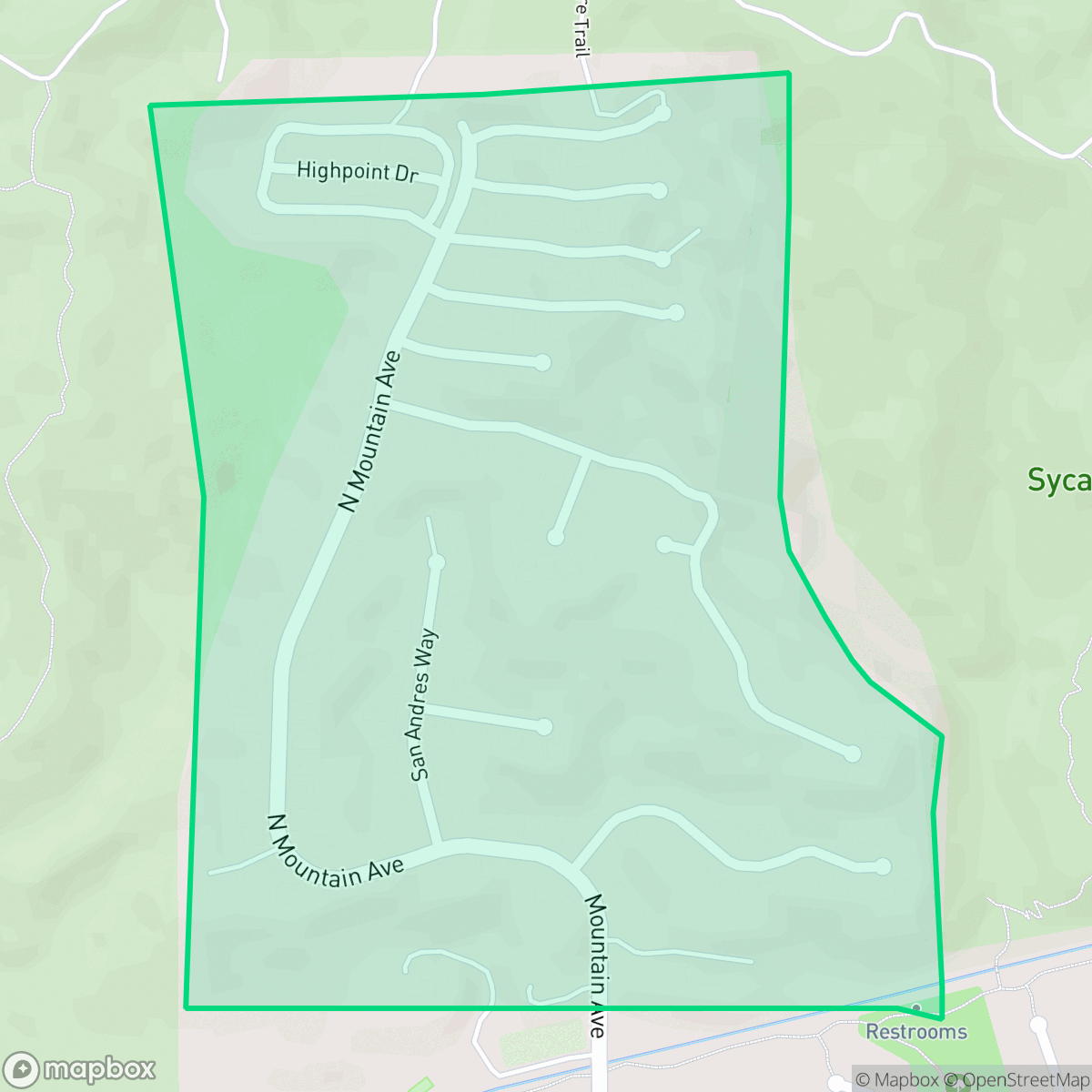
Claraboya is a hillside residential enclave in Claremont known for its custom mid-century modern homes and expansive views of the Pomona Valley. The area offers a tranquil, rural-like atmosphere with excellent air quality and high dog-friendliness, though residents should note limited walkability and significant fire safety considerations.
Key Highlights
About Claraboya
Conceived in the early 1960s by co-developers Robert Musgrove and Gail Frampton, Claraboya is Claremont’s first and only hillside residential development, rising on the lower slopes of the San Gabriel Mountains. Designed with an architect-led vision by Fred W. McDowell and Theodore Criley Jr., the neighborhood features custom, terraced homes shaped by strict guidelines to preserve unobstructed views of the Pomona Valley. These large, custom residences—lacking sidewalks and set close to the street—primarily showcase mid-century modern and contemporary styles. A prominent architectural landmark is McDowell's "Horizon Home" (built in 1964), which won the Western States Horizon Home Award for its innovative use of concrete and glass. Reflecting local cultural history, the neighborhood's Guanajuato Drive was dedicated in the early 1960s to commemorate Claremont’s sister-city relationship with Guanajuato, Mexico.
Nestled on the lower slopes of the San Gabriel Mountains, the neighborhood provides a distinct sense of seclusion and connection to nature. The layout prioritizes privacy and scenic vistas, resulting in a low-density environment that feels far removed from urban congestion. Residents enjoy pristine air quality and ample green space, making it a desirable setting for those who prioritize a quiet, nature-oriented lifestyle. According to iHuus data, the area maintains a high level of health insurance coverage, reflecting a stable and established community profile.
Living in this area requires navigating specific trade-offs, particularly regarding accessibility and safety. The steep terrain and lack of sidewalks make the neighborhood less suitable for those who rely on walking for daily errands. Additionally, the hillside location presents challenges related to fire safety, which is a critical consideration for prospective homeowners. The community is well-suited for individuals or families who value architectural character and a peaceful, private setting over proximity to central commercial districts.
Neighborhood Scores Across 15 Qualities
Residential spacing offers a moderate level of separation between neighbors, sitting slightly above the Claremont average according to iHuus data.
Sidewalks are available on one side of the streets and safe crossings are provided for pedestrians. This level of accessibility is nearly identical to the average found throughout Claremont.
Large homes and frequent upscale amenities contribute to a visual landscape that is more polished than the Claremont average, according to iHuus data.
Extensive access to large parks, trails, and open spaces makes this area highly suitable for pet owners. According to iHuus data, the availability of these recreational spaces is significantly higher than the Claremont average.
Extensive natural landscapes and agricultural land dominate this area, providing a much more rural atmosphere than the typical Claremont residential zone. According to iHuus data, the presence of forests and farms is significantly higher here than the city average.
Low density and significant open space define this area, which lacks a distinct commercial character and sits near a major highway. According to iHuus data, the level of activity and service availability is slightly below the Claremont average.
Steady traffic noise from a nearby busy street is present, though the area remains significantly quieter than the average for Claremont.
Air quality remains consistently clean with negligible health concerns, performing slightly better than the Claremont average according to iHuus data.
No warehouses, industrial facilities, or hazard sites are present in this area. This neighborhood offers a more secluded environment than the Claremont average, consisting entirely of residential streets and open green spaces.
Health insurance access is exceptionally high among Claraboya residents, notably exceeding the average for Claremont. According to iHuus data, nearly all inhabitants are covered by a health plan.
Political leanings in this area are largely liberal, though the neighborhood leans slightly less progressive than the broader Claremont average according to iHuus data.
Residents experience a balanced demographic mix of young adults, families, and older individuals. This age distribution is slightly more varied than the average seen across Claremont, according to iHuus data.
Residual flood risk exists within this area because it sits within a 500-year floodplain. However, flood safety levels in Claraboya remain significantly higher than the average for the city of Claremont, according to iHuus data.
Wildfire danger is exceptionally high in this area, representing a more significant hazard than most parts of Claremont. Residents should prioritize maximum fire protection measures according to iHuus data.
Address-Level Insights for Claraboya


iHuus Neighborhood Intelligence Insights
Get address-level neighborhood insights for Claraboya
- Street-level scores — see how individual blocks compare, not just neighborhood averages
- Micro-zone boundaries — identify quiet pockets, flood boundaries, and walkable clusters before you visit
- 15 dimensions in full — walkability, noise, air quality, school quality, insurance coverage, population age profile, urban/rural index, and more
- Boundary risk alerts — know if your address sits near a block boundary where scores drop, the kind of detail no listing will ever mention
- School insights — individual school ratings and insights, not just district-level data
- Compare before you commit — side-by-side data across neighborhoods, down to block precision
No credit card required
Compare with Any Neighborhood
| Dimension | Claraboya | Arbol Verde |
|---|---|---|
| 🚶 Walkabilityavg 8.6 | ||
| 🔊 Acoustic Comfortavg 2.58 | ||
| 🤫 Privacy Indexavg 5.58 | ||
| 🎨 Visual Appealavg 7.17 | ||
| 🐕 Dog Friendlinessavg 6.82 | ||
| 🗺️ Urban-Rural Indexavg 6.89 | ||
| ✨ Neighborhood Vibeavg 4.64 | ||
| 🏥 Health Insurance Coverageavg 8.37 | ||
| 🌿 Air Qualityavg 9.85 | ||
| 🏭 Industrial Proximityavg 8.67 | ||
| 🌊 Flood Safetyavg 3.81 | ||
| 🗳️ Ideological Leanavg 8.75 | ||
| 👥 Population Age Profileavg 5.03 | ||
| 🔥 Fire Safetyavg 0.41 | ||
| 🏫 School Quality |
Claraboya Rankings
School Districts Serving Claraboya
School Insights for Claraboya
Below average outcomes; significant attendance and academic challenges.
School Insights
See what's really behind every school rating near Claraboya
- Individual school ratings — each school's own score with outcome context, not just a district average
- Enrollment & class size data — student-to-teacher ratio and how it compares to the state average
- Full demographics breakdown — ethnicity and gender composition for every school in the enrollment zone
- Every school in the district — all schools within the enrollment boundary ranked by rating, not just the closest one
- Grade levels & benchmarks — elementary through high school, with below/above state-average flags
No credit card required