Arbol Verde, Claremont
Updated · 371 residents
Arbol Verde is a lively, walkable neighborhood in Claremont known for its accessible local dining scene and strong community atmosphere. While it offers excellent air quality and a pet-friendly environment, residents should expect higher noise levels from road traffic and limited privacy compared to other parts of the city.
Key Highlights
About Arbol Verde
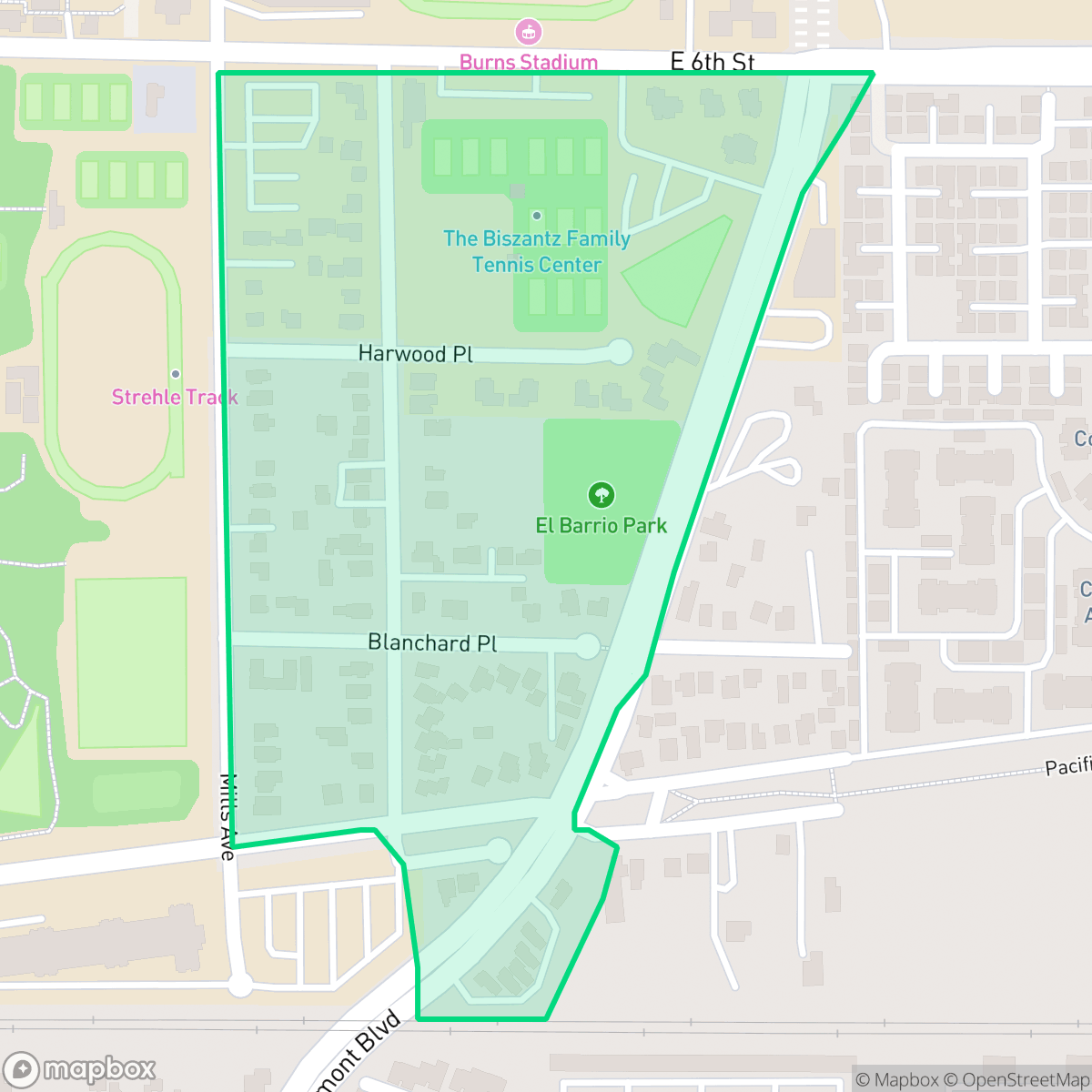
Established in 1910 by J.H. Brooks, Arbol Verde (historically known as "El Barrio") developed as a vital Mexican American enclave in Claremont. Due to racial covenants and segregation elsewhere, it was one of the few local areas where Mexican immigrants—many of whom fled the Mexican Revolution to work in the local citrus industry—could purchase land. Residents built a vibrant community featuring California bungalows, local grocery stores, and the Sacred Heart Chapel. However, the neighborhood underwent dramatic transformations starting in the 1960s. The construction of Claremont Boulevard in 1968 bisected the barrio, demolishing its church and numerous homes. Subsequent campus expansions by Claremont McKenna College further displaced residents. Today, El Barrio Park serves as a critical local landmark preserving the neighborhood’s cultural identity and history of grassroots resistance.
The area maintains a vibrant, suburban character supported by high walkability and proximity to local favorites like Nuno's Bistro and Juanchos Mexican Restaurant. According to iHuus data, the neighborhood benefits from exceptional air quality and a lack of industrial encroachment, making it a pleasant environment for outdoor activity. Its younger demographic contributes to a lively atmosphere that distinguishes it from the quieter, more traditional residential pockets of Claremont.
Prospective residents should weigh the benefits of this active lifestyle against certain trade-offs. The high volume of road traffic results in higher ambient noise levels, and the density of the area leads to a lower sense of privacy for homeowners. Furthermore, the neighborhood faces significant flood risks and moderate fire safety concerns, which are important considerations for long-term planning. Despite these factors, its central location and strong social vibe make it an appealing choice for those who prioritize community engagement over absolute solitude.
Neighborhood Scores Across 15 Qualities
Residential spacing is mixed, offering some buffers between neighbors but providing less seclusion than the Claremont average. According to iHuus data, homes are situated at moderate densities without significant isolation.
Sidewalks are available on one side of the street and safe crossings are provided for pedestrians. This level of walkability is slightly below the Claremont average according to iHuus data.
Large homes and upscale amenities characterize this area, though the overall visual aesthetic sits slightly below the Claremont average according to iHuus data.
Connected green spaces and wide, traffic-safe paths make this area significantly more dog-friendly than the Claremont average, according to iHuus data.
Open land and scattered homes amid woodlands define this area, providing a landscape that is slightly less dense than the Claremont average according to iHuus data.
Active pockets of social and dining hubs provide more community engagement than the Claremont average. Residents can find various wellness and dining options near green spaces, though much of the area remains car-dependent according to iHuus data.
Frequent noise from nearby freeways and railroad tracks characterizes this area. According to iHuus data, acoustic comfort is slightly lower than the Claremont average.
Air quality remains consistently high with negligible health concerns for residents. This level of cleanliness is slightly above the Claremont average, according to iHuus data.
Industrial presence is minimal within Arbol Verde, consisting mostly of quiet residential streets and occasional light commercial activity. This lack of heavy industry is slightly lower than the Claremont average, though the area remains predominantly residential with significant green space.
Health insurance coverage in this area is consistent with the average found throughout Claremont. Residents benefit from a level of medical security that aligns with broader city trends, according to iHuus data.
Voting patterns and census indicators show a predominantly liberal political leaning that is more pronounced than the Claremont average, according to iHuus data.
A majority of the population consists of young adults, with a noticeably lower proportion of families and seniors compared to the Claremont average. According to iHuus data, the neighborhood lacks the age diversity found in other parts of the city.
Properties in this area are situated within a designated floodplain, meaning residents may face a higher risk of flooding and likely require flood insurance. According to iHuus data, the flood risk in Arbol Verde is slightly higher than the average for Claremont.
Significant fire hazards are present in this area, representing a much higher risk level than the average for Claremont. Residents should be aware of the heightened need for enhanced fire mitigation measures according to iHuus data.
Address-Level Insights for Arbol Verde


iHuus Neighborhood Intelligence Insights
Get address-level neighborhood insights for Arbol Verde
- Street-level scores — see how individual blocks compare, not just neighborhood averages
- Micro-zone boundaries — identify quiet pockets, flood boundaries, and walkable clusters before you visit
- 15 dimensions in full — walkability, noise, air quality, school quality, insurance coverage, population age profile, urban/rural index, and more
- Boundary risk alerts — know if your address sits near a block boundary where scores drop, the kind of detail no listing will ever mention
- School insights — individual school ratings and insights, not just district-level data
- Compare before you commit — side-by-side data across neighborhoods, down to block precision
No credit card required
Compare with Any Neighborhood
| Dimension | Arbol Verde | Belage |
|---|---|---|
| 🚶 Walkabilityavg 8.6 | ||
| 🔊 Acoustic Comfortavg 2.58 | ||
| 🤫 Privacy Indexavg 5.58 | ||
| 🎨 Visual Appealavg 7.17 | ||
| 🐕 Dog Friendlinessavg 6.82 | ||
| 🗺️ Urban-Rural Indexavg 6.89 | ||
| ✨ Neighborhood Vibeavg 4.64 | ||
| 🏥 Health Insurance Coverageavg 8.37 | ||
| 🌿 Air Qualityavg 9.85 | ||
| 🏭 Industrial Proximityavg 8.67 | ||
| 🌊 Flood Safetyavg 3.81 | ||
| 🗳️ Ideological Leanavg 8.75 | ||
| 👥 Population Age Profileavg 5.03 | ||
| 🔥 Fire Safetyavg 0.41 | ||
| 🏫 School Quality |
Arbol Verde Rankings
School Districts Serving Arbol Verde
School Insights for Arbol Verde
Below average outcomes; significant attendance and academic challenges.
School Insights
See what's really behind every school rating near Arbol Verde
- Individual school ratings — each school's own score with outcome context, not just a district average
- Enrollment & class size data — student-to-teacher ratio and how it compares to the state average
- Full demographics breakdown — ethnicity and gender composition for every school in the enrollment zone
- Every school in the district — all schools within the enrollment boundary ranked by rating, not just the closest one
- Grade levels & benchmarks — elementary through high school, with below/above state-average flags
No credit card required