Guadalupe, Lubbock
Updated · 652 residents
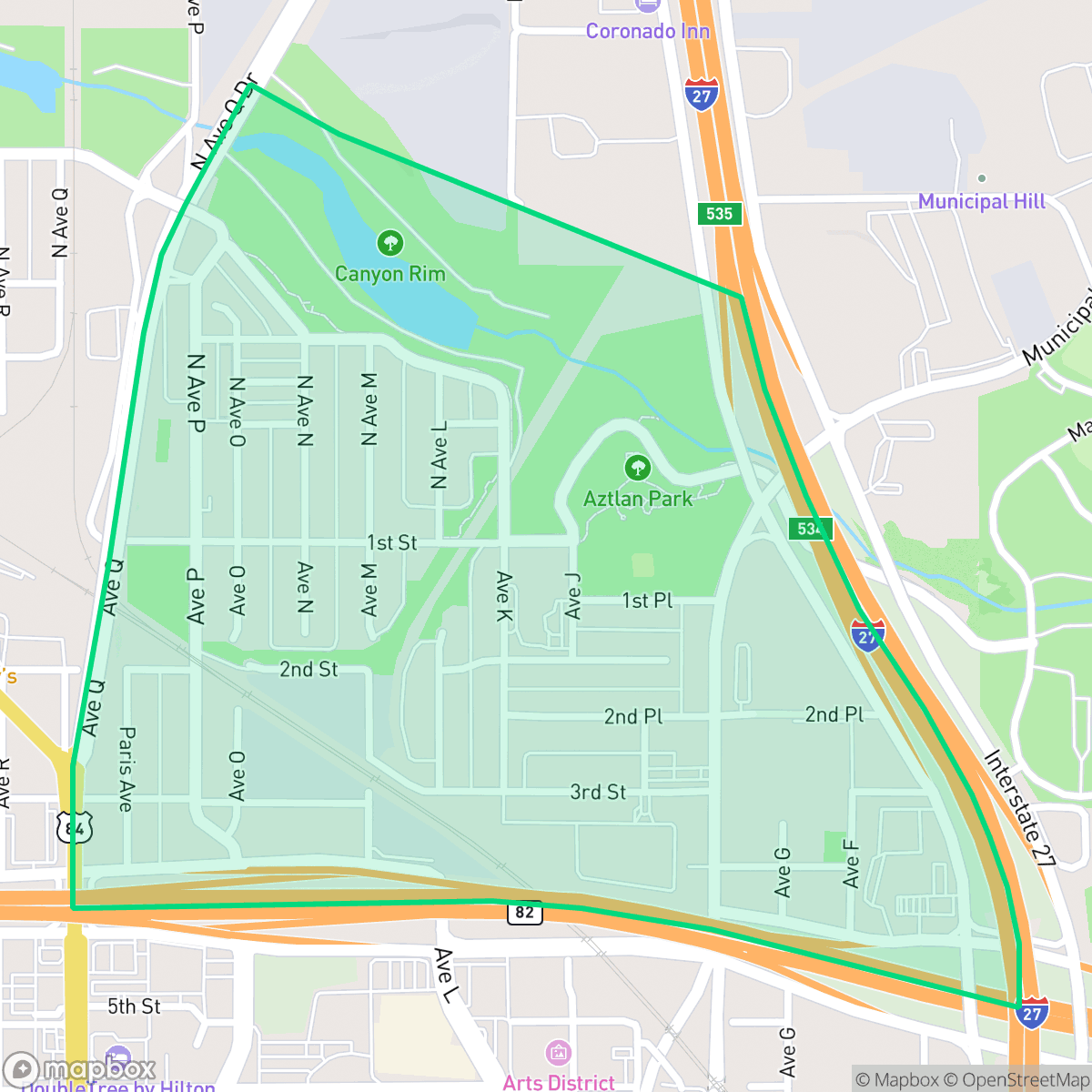
Guadalupe is a historic northeast Lubbock enclave defined by its resilient community spirit and proximity to local cultural landmarks like St. Joseph’s Catholic Church. The area features a blend of residential streets and light industrial activity, characterized by moderate walkability and a notably vibrant, community-focused atmosphere.
Key Highlights
About Guadalupe
The Guadalupe neighborhood (or barrio del Guadalupe) in northeast Lubbock, Texas, is a historically Hispanic enclave settled in the early 20th century, largely by agricultural and railroad workers. Described historically as a "small town inside of a big city," the neighborhood's cultural and spiritual life has long centered around local institutions like St. Joseph’s Catholic Church, which has served the community for nearly a century. The neighborhood's defining historical event occurred on May 11, 1970, when a devastating F5 tornado leveled hundreds of homes in the barrio. In the wake of the disaster, the Lubbock Guadalupe Neighborhood Association (founded in 1949 and later becoming the Guadalupe Economic Services Corporation) spearheaded a massive, decades-long rebuilding effort. This reconstruction model was so successful that it was adopted by the U.S. Department of Housing and Urban Development as a national best practice.
The current character of the neighborhood is shaped by its unique position as a mixed-use area in northeast Lubbock. Residents experience a landscape where residential life frequently intersects with active commercial and light industrial zones. According to iHuus data, the area maintains a lively local vibe that exceeds the city average, reflecting a strong sense of identity. The streetscape is defined by a blend of long-standing homes and proximity to major thoroughfares, creating an urban-rural hybrid feel that is distinct from the typical suburban sprawl found elsewhere in the city.
Living in this area involves specific trade-offs, particularly regarding acoustic comfort, as road traffic contributes to a higher-than-average noise profile. While the neighborhood offers a deep sense of historical continuity, it presents a more industrial-adjacent environment compared to other parts of Lubbock. It is best suited for individuals who prioritize a tight-knit community and a central, accessible location over the quiet seclusion of a traditional residential district. Prospective residents should note that while the area has high flood safety, other metrics like visual appeal and health insurance coverage remain consistent with the broader regional trends identified by iHuus.
Neighborhood Scores Across 15 Qualities
Residential spacing offers a moderate level of separation between neighbors. According to iHuus data, this degree of privacy is slightly lower than the average found throughout Lubbock.
Pedestrian movement is supported by safe crossings and sidewalks on one side of the street, matching the typical walkability found across Lubbock. According to iHuus data, the area provides a functional environment for walking, though it lacks full sidewalk coverage.
Standard tract housing with modest yards defines the local landscape. This area offers less visual variety than the Lubbock average.
Opportunities for pet exercise are limited, as the area lacks significant green verges or direct access to public parks. This level of accessibility is roughly in line with the Lubbock city average, according to iHuus data.
Open land and industrial plots characterize this area, offering a landscape that is slightly less developed than the Lubbock average. Residents will find a mix of sparse residential clusters and large-footprint commercial zones according to iHuus data.
A varied mix of lively commercial corridors and quieter industrial patches creates a vibe that is slightly more active than the Lubbock average. Residents can find diverse dining and social spots near major roadways, though many areas remain car-dependent due to the presence of warehouses and freight corridors.
Frequent noise from nearby railroad tracks and heavy freeway traffic makes this area significantly louder than the Lubbock average. Residents may find the acoustic environment disruptive due to its proximity to major transportation corridors.
Active logistics hubs, rail lines, and salvage yards introduce significant heavy truck traffic and noise to parts of the area. This level of industrial density is notably higher than the Lubbock average, creating a landscape where commercial operations and residential life overlap.
Health insurance accessibility is significantly lower than the Lubbock average, according to iHuus data. Residents may face greater challenges accessing employer-sponsored or private medical coverage within this area.
Political leanings in this area are relatively balanced between conservative and liberal perspectives, representing a more even split than the heavily conservative leaning of the broader Lubbock area.
A large majority of residents are young adults, creating a demographic that is noticeably younger than the Lubbock city average. This profile suggests a limited presence of older residents or large families within the area.
Flood risk in this area is notably higher than the Lubbock average, though a detailed federal assessment is currently unavailable. Residents should remain aware of potential drainage issues during heavy rain events according to iHuus data.
Address-Level Insights for Guadalupe


iHuus Neighborhood Intelligence Insights
Get address-level neighborhood insights for Guadalupe
- Street-level scores — see how individual blocks compare, not just neighborhood averages
- Micro-zone boundaries — identify quiet pockets, flood boundaries, and walkable clusters before you visit
- 15 dimensions in full — walkability, noise, air quality, school quality, insurance coverage, population age profile, urban/rural index, and more
- Boundary risk alerts — know if your address sits near a block boundary where scores drop, the kind of detail no listing will ever mention
- School insights — individual school ratings and insights, not just district-level data
- Compare before you commit — side-by-side data across neighborhoods, down to block precision
No credit card required
Compare with Any Neighborhood
| Dimension | Guadalupe | Arnett Benson |
|---|---|---|
| 🚶 Walkabilityavg 6.67 | ||
| 🔊 Acoustic Comfortavg 3.09 | ||
| 🤫 Privacy Indexavg 5.75 | ||
| 🎨 Visual Appealavg 5.7 | ||
| 🐕 Dog Friendlinessavg 5.29 | ||
| 🗺️ Urban-Rural Indexavg 6.86 | ||
| ✨ Neighborhood Vibeavg 4.81 | ||
| 🏥 Health Insurance Coverageavg 6.7 | ||
| 🌿 Air Quality | ||
| 🏭 Industrial Proximityavg 8.52 | ||
| 🌊 Flood Safetyavg 1.79 | ||
| 🗳️ Ideological Leanavg 2.17 | ||
| 👥 Population Age Profileavg 4.52 | ||
| 🔥 Fire Safety | ||
| 🏫 School Quality |
Guadalupe Rankings
School Districts Serving Guadalupe
School Insights for Guadalupe
Below average outcomes; significant attendance and academic challenges.
School Insights
See what's really behind every school rating near Guadalupe
- Individual school ratings — each school's own score with outcome context, not just a district average
- Enrollment & class size data — student-to-teacher ratio and how it compares to the state average
- Full demographics breakdown — ethnicity and gender composition for every school in the enrollment zone
- Every school in the district — all schools within the enrollment boundary ranked by rating, not just the closest one
- Grade levels & benchmarks — elementary through high school, with below/above state-average flags
No credit card required