Dunbar-Manhattan Heights, Lubbock
Updated · 2,265 residents
Dunbar-Manhattan Heights is a historically significant area in East Lubbock defined by its industrial landscape and proximity to major infrastructure. Residents experience a quiet, low-density environment with moderate walkability and a strong sense of community rooted in local landmarks.
Key Highlights
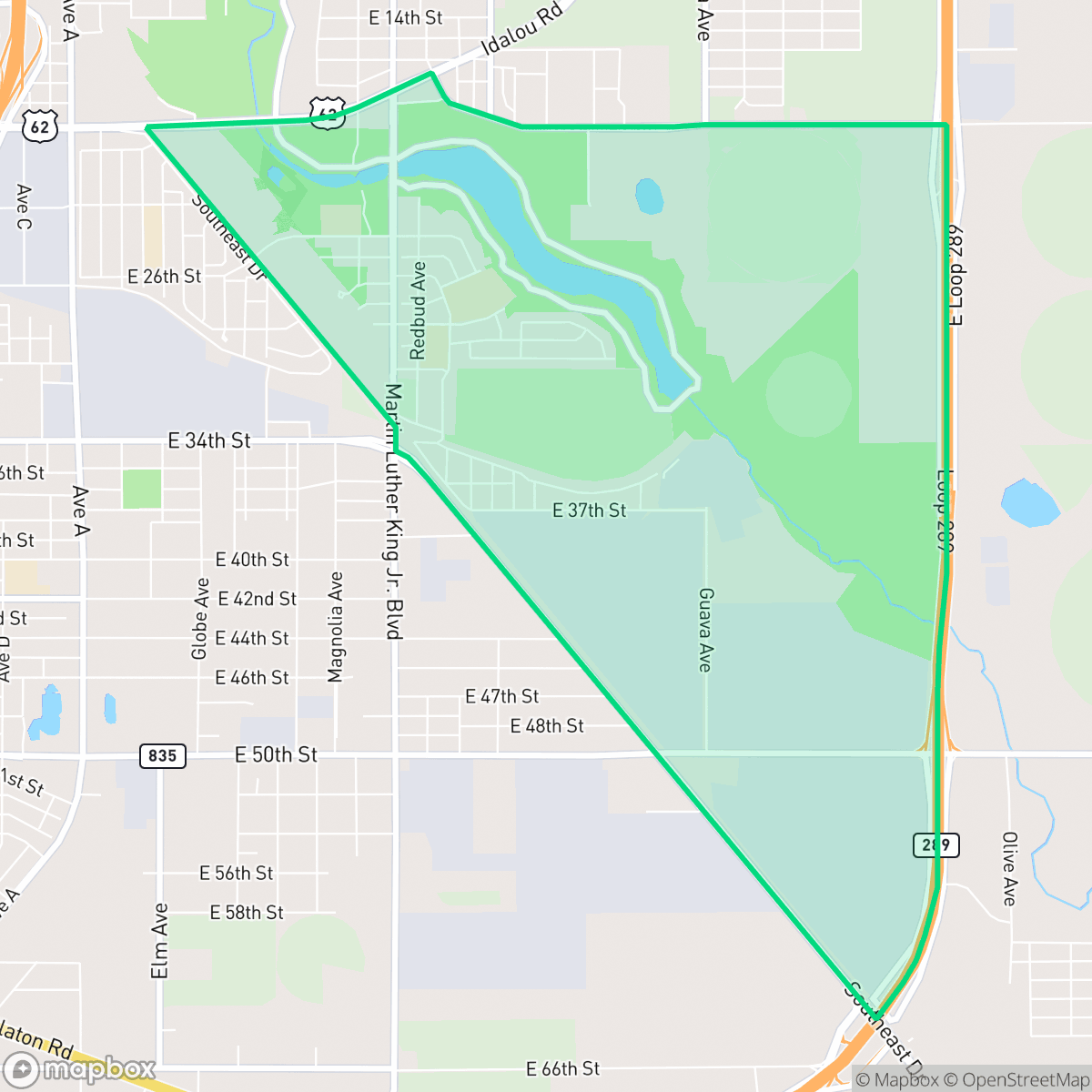
About Dunbar-Manhattan Heights
Dunbar-Manhattan Heights is a historically Black neighborhood in East Lubbock, Texas, bounded by heavy infrastructure, including the BNSF Railway yard and the Canyon Lakes. The neighborhood’s identity is deeply tied to the legacy of Dunbar High School, established in the 1920s and named after the renowned African American poet Paul Laurence Dunbar. Under the leadership of long-time principal E.C. Struggs, the school served as the pride and cultural anchor of the community. Geographically isolated by physical barriers—such as bridges over the railway and 19th Street—the neighborhood faced significant challenges from mid-20th-century urban renewal efforts, which residents often felt resulted in displacement and vacant lots. Today, the neighborhood maintains its rich cultural heritage, centered around local landmarks like Dunbar Historical Lake, Mae Simmons Park, and Martin Luther King Jr. Boulevard.
The neighborhood maintains a distinct character shaped by its proximity to the BNSF railway and significant logistics infrastructure. The area features a mix of light industrial facilities, warehouses, and low-density residential spaces, resulting in a quiet, rural-industrial atmosphere. According to iHuus data, the landscape is largely defined by vast open areas and specialized utility sites, creating a unique, albeit sparse, urban-rural environment that stands apart from the more densely developed parts of Lubbock.
Living in this area involves specific trade-offs, particularly regarding commercial access and industrial proximity. While the neighborhood offers higher dog friendliness than the city average, residents should expect minimal local business density and a reliance on nearby corridors for daily essentials. The area is served by the Lubbock Independent School District, which is currently undergoing operational restructuring. Prospective residents will find a quiet, low-traffic environment, though they should be prepared for the presence of heavy logistics hubs and the associated industrial activity that characterizes the local landscape.
Neighborhood Scores Across 15 Qualities
Residential spacing is mixed, providing more buffer between neighbors than the Lubbock average. According to iHuus data, the neighborhood offers a moderate level of separation between adjacent properties.
Quiet residential streets provide a peaceful environment for walking, though the lack of sidewalks makes the area less walkable than much of Lubbock. According to iHuus data, navigating the neighborhood on foot requires more caution than in more pedestrian-oriented parts of the city.
Residential scenery consists primarily of dense housing with minimal greenery or ornamental landscaping. According to iHuus data, the visual landscape is notably less varied than the Lubbock average.
Access to public parks and wide green verges is slightly above the Lubbock average, though opportunities for pet walking are somewhat limited. According to iHuus data, the area offers fair amenities for pet owners compared to other parts of the city.
Large expanses of agricultural land, industrial warehouses, and undeveloped utility sites define the landscape. This area features a higher degree of open space and low building density than the typical Lubbock neighborhood, according to iHuus data.
Low density and heavy industrial presence create a serene, subdued environment with significantly less activity than the Lubbock average. Residents will find very few social destinations or local businesses within the area, as much of the landscape consists of warehouses, railways, and open green space.
A steady hum of local traffic from a nearby busy street provides a more active acoustic environment than the city average. Residents can expect more ambient sound levels than many other parts of Lubbock.
Light industrial utility sites, rail infrastructure, and a wastewater treatment plant are interspersed with residential areas. This level of industrial proximity is notably lower than the Lubbock city average, resulting in a landscape that blends residential life with active commercial daytime traffic.
Health insurance access is notably lower in this area than in the rest of Lubbock. According to iHuus data, a minority of residents have verified coverage.
Voting patterns and census indicators show a predominantly liberal leaning, which is significantly more pronounced than the Lubbock city average according to iHuus data.
A balanced mix of young adults, families, and older residents characterizes the area. This demographic spread is slightly more diverse than the typical Lubbock population according to iHuus data.
Flood vulnerability in this area is considerably higher than the Lubbock average. Residents should prepare for much higher insurance premiums and potential flood hazards according to iHuus data.
Address-Level Insights for Dunbar-Manhattan Heights


iHuus Neighborhood Intelligence Insights
Get address-level neighborhood insights for Dunbar-Manhattan Heights
- Street-level scores — see how individual blocks compare, not just neighborhood averages
- Micro-zone boundaries — identify quiet pockets, flood boundaries, and walkable clusters before you visit
- 15 dimensions in full — walkability, noise, air quality, school quality, insurance coverage, population age profile, urban/rural index, and more
- Boundary risk alerts — know if your address sits near a block boundary where scores drop, the kind of detail no listing will ever mention
- School insights — individual school ratings and insights, not just district-level data
- Compare before you commit — side-by-side data across neighborhoods, down to block precision
No credit card required
Compare with Any Neighborhood
| Dimension | Dunbar-Manhattan Heights | Arnett Benson |
|---|---|---|
| 🚶 Walkabilityavg 6.67 | ||
| 🔊 Acoustic Comfortavg 3.09 | ||
| 🤫 Privacy Indexavg 5.75 | ||
| 🎨 Visual Appealavg 5.7 | ||
| 🐕 Dog Friendlinessavg 5.29 | ||
| 🗺️ Urban-Rural Indexavg 6.86 | ||
| ✨ Neighborhood Vibeavg 4.81 | ||
| 🏥 Health Insurance Coverageavg 6.7 | ||
| 🌿 Air Quality | ||
| 🏭 Industrial Proximityavg 8.52 | ||
| 🌊 Flood Safetyavg 1.79 | ||
| 🗳️ Ideological Leanavg 2.17 | ||
| 👥 Population Age Profileavg 4.52 | ||
| 🔥 Fire Safety | ||
| 🏫 School Quality |
Dunbar-Manhattan Heights Rankings
School Districts Serving Dunbar-Manhattan Heights
School Insights for Dunbar-Manhattan Heights
Below average outcomes; significant attendance and academic challenges.
School Insights
See what's really behind every school rating near Dunbar-Manhattan Heights
- Individual school ratings — each school's own score with outcome context, not just a district average
- Enrollment & class size data — student-to-teacher ratio and how it compares to the state average
- Full demographics breakdown — ethnicity and gender composition for every school in the enrollment zone
- Every school in the district — all schools within the enrollment boundary ranked by rating, not just the closest one
- Grade levels & benchmarks — elementary through high school, with below/above state-average flags
No credit card required