Chatman Hill, Lubbock
Updated · 1,219 residents
Chatman Hill is a quiet, car-dependent neighborhood in Lubbock defined by its unique blend of suburban residential streets and heavy industrial infrastructure. While the area offers a relatively peaceful acoustic environment, it is primarily characterized by its proximity to large-scale manufacturing facilities and rail logistics hubs.
Key Highlights
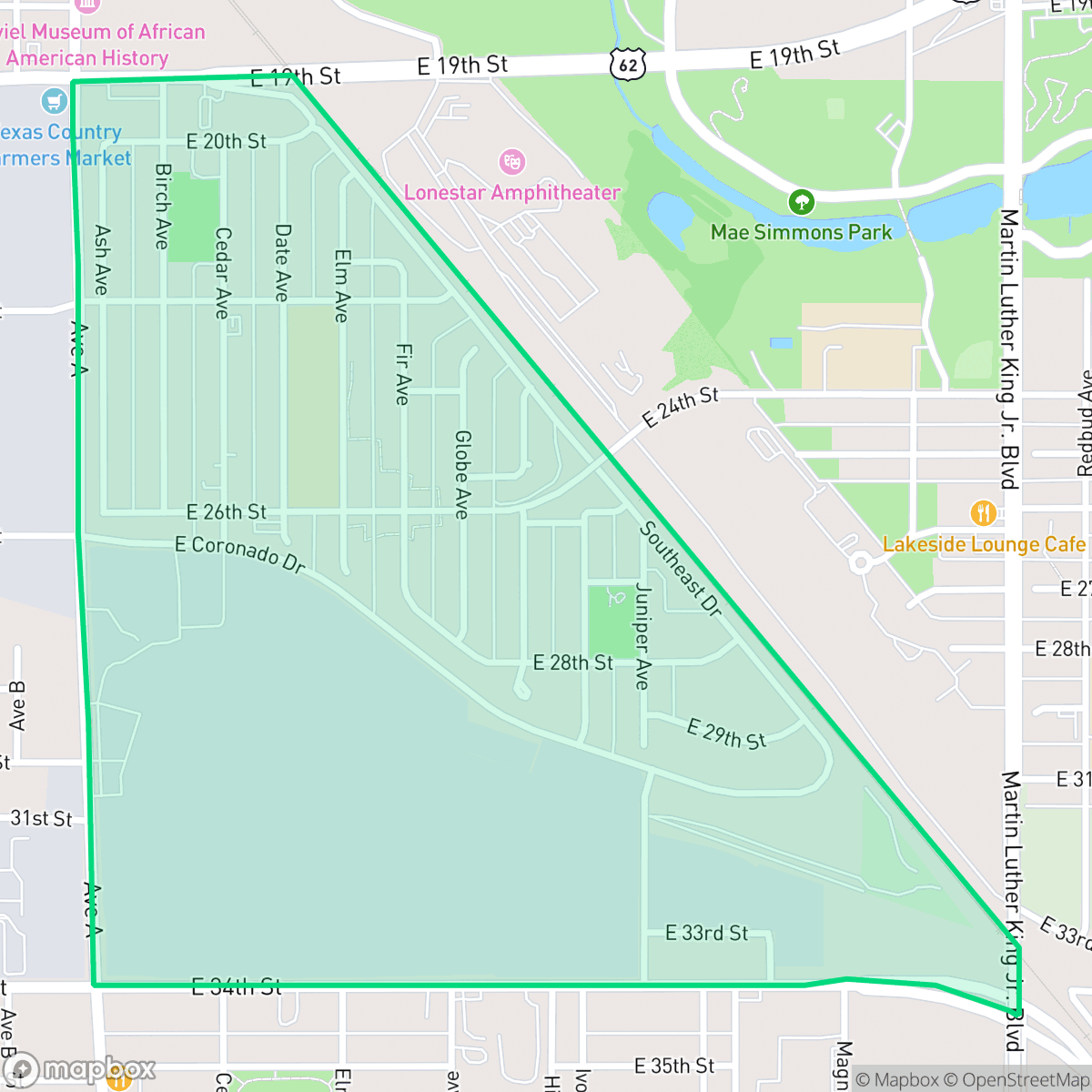
About Chatman Hill
First platted in 1909 as the Wheelock Second Addition, Lubbock's Chatman Hill neighborhood was settled in 1920 following a local cotton boom. Its history is deeply rooted in the city's African American heritage. In 1939, Dr. Joseph Alvin Chatman arrived in Lubbock and subsequently established the Chatman Hospital in 1945—the city's first medical facility dedicated to Black patients. Designed as a landmark cast-stone building, the hospital became a cornerstone of the community. Historically known as the Coronado District, the neighborhood gained broader significance in 1959 when it was selected as the first urban renewal project in both Lubbock and the state of Texas. This transformation cleared substandard housing, reshaping the area into the modern Chatman Hill neighborhood.
The area functions as a low-density urban zone where residential blocks sit adjacent to significant industrial activity and rail yards. This configuration creates a distinct landscape where logistics warehouses and manufacturing plants share space with local landmarks like the Greater Saint Luke Baptist Church. According to iHuus data, the neighborhood maintains a relatively quiet acoustic profile despite its industrial surroundings, providing a reprieve from the higher noise levels found in other parts of the city.
Residents in this locale face specific trade-offs, including limited walkability and a heavy reliance on personal vehicles for daily errands. The neighborhood is best suited for those who prioritize a quiet, remote living environment and do not require immediate access to dense commercial services. Prospective residents should note that the area remains an industrial-residential hybrid, which influences the overall visual appeal and accessibility of local amenities.
Neighborhood Scores Across 15 Qualities
Residential spacing provides a moderate amount of separation between neighbors. According to iHuus data, this level of buffer is slightly higher than the average for Lubbock.
Quiet streets permit casual walking, but the lack of sidewalks makes the area less walkable than the Lubbock average. According to iHuus data, pedestrian infrastructure is underdeveloped for regular errands on foot.
Limited greenery and dense housing configurations define the landscape. According to iHuus data, the area lacks the ornamental landscaping and open space found more commonly across Lubbock.
Access to large green verges and public parks is roughly comparable to the Lubbock average. Residents may find limited specialized amenities for pets within the immediate vicinity.
Open land and undeveloped spaces characterize this area, which features a layout slightly less dense than the Lubbock average. According to iHuus data, the landscape consists of a mix of industrial facilities, warehouses, and scattered residential pockets.
Primarily characterized by low-density residential and industrial spaces, this area offers a tranquil environment with far fewer social destinations than the Lubbock average. Most amenities and dining options require a car, as the neighborhood features significant green space and warehouses near railway corridors.
Steady hum from nearby busy streets creates more ambient noise than the Lubbock average. Residents may notice consistent vehicle sounds during peak commuting hours according to iHuus data.
Active railway lines, grain elevators, and logistics hubs are located near residential areas, resulting in significantly higher levels of industrial activity and noise than the Lubbock average.
Health insurance access among residents is lower than the Lubbock city average, according to iHuus data.
Political leanings in this area trend significantly more liberal than the Lubbock average, according to iHuus data.
A diverse range of age groups, including young adults, families, and older residents, characterizes this area. According to iHuus data, this demographic spread is slightly more varied than the Lubbock city average.
Significant flood risk exists in this area, which is notably higher than the Lubbock average. Residents should expect much higher insurance premiums and potential hazards related to coastal wave action according to iHuus data.
Address-Level Insights for Chatman Hill


iHuus Neighborhood Intelligence Insights
Get address-level neighborhood insights for Chatman Hill
- Street-level scores — see how individual blocks compare, not just neighborhood averages
- Micro-zone boundaries — identify quiet pockets, flood boundaries, and walkable clusters before you visit
- 15 dimensions in full — walkability, noise, air quality, school quality, insurance coverage, population age profile, urban/rural index, and more
- Boundary risk alerts — know if your address sits near a block boundary where scores drop, the kind of detail no listing will ever mention
- School insights — individual school ratings and insights, not just district-level data
- Compare before you commit — side-by-side data across neighborhoods, down to block precision
No credit card required
Compare with Any Neighborhood
| Dimension | Chatman Hill | Arnett Benson |
|---|---|---|
| 🚶 Walkabilityavg 6.67 | ||
| 🔊 Acoustic Comfortavg 3.09 | ||
| 🤫 Privacy Indexavg 5.75 | ||
| 🎨 Visual Appealavg 5.7 | ||
| 🐕 Dog Friendlinessavg 5.29 | ||
| 🗺️ Urban-Rural Indexavg 6.86 | ||
| ✨ Neighborhood Vibeavg 4.81 | ||
| 🏥 Health Insurance Coverageavg 6.7 | ||
| 🌿 Air Quality | ||
| 🏭 Industrial Proximityavg 8.52 | ||
| 🌊 Flood Safetyavg 1.79 | ||
| 🗳️ Ideological Leanavg 2.17 | ||
| 👥 Population Age Profileavg 4.52 | ||
| 🔥 Fire Safety | ||
| 🏫 School Quality |
Chatman Hill Rankings
School Districts Serving Chatman Hill
School Insights for Chatman Hill
Below average outcomes; significant attendance and academic challenges.
School Insights
See what's really behind every school rating near Chatman Hill
- Individual school ratings — each school's own score with outcome context, not just a district average
- Enrollment & class size data — student-to-teacher ratio and how it compares to the state average
- Full demographics breakdown — ethnicity and gender composition for every school in the enrollment zone
- Every school in the district — all schools within the enrollment boundary ranked by rating, not just the closest one
- Grade levels & benchmarks — elementary through high school, with below/above state-average flags
No credit card required