Sayles Boulevard, Abilene
Updated · 4,624 residents
Sayles Boulevard is a historic Abilene neighborhood characterized by a diverse collection of architectural styles ranging from Victorian estates to Craftsman bungalows. The area offers a quiet, suburban atmosphere with above-average walkability for the city, though residents should expect moderate noise levels primarily driven by local road traffic.
Key Highlights
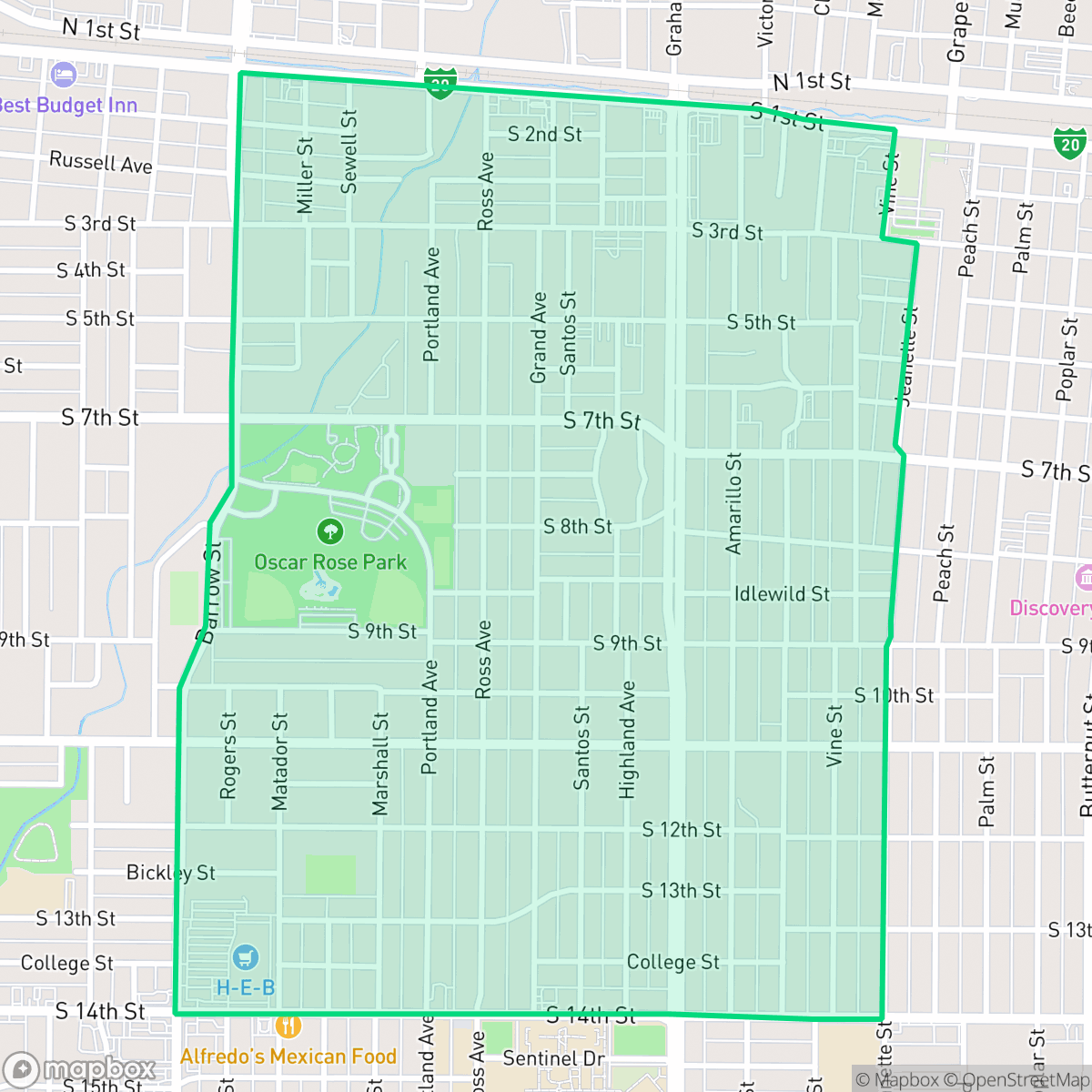
About Sayles Boulevard
Developed in the late 19th century under Henry Sayles, Sr., president of the Abilene Land and Improvement Company, the Sayles Boulevard neighborhood was originally known as "Boulevard Street" before being renamed in honor of the Sayles family. Once Abilene's most exclusive residential corridor, the area evolved into a premier historic enclave. The neighborhood’s architectural landscape is highly diverse, featuring late Victorian and Queen Anne-style residences—most notably the 1889 Henry Sayles House (also known as Hattie's House), which is listed on the National Register of Historic Places. Alongside these grand Victorian estates, the neighborhood showcases early 20th-century Craftsman bungalows and Art Moderne designs. Recognized for its architectural and local commercial significance, the Sayles Boulevard Historic District was officially added to the National Register of Historic Places in 1992.
The neighborhood serves as a residential enclave that balances historic preservation with suburban living. It features a mix of green spaces and established streets, providing a tranquil environment for its residents. While business density remains low, the area maintains a higher level of walkability compared to the city average. Local landmarks, including various community churches and small-scale dining establishments, contribute to the neighborhood's moderate, steady pace of life. The environment is predominantly residential, benefiting from minimal industrial proximity.
According to iHuus data, prospective residents should consider the trade-offs between the area's aesthetic appeal and its practical infrastructure. While the neighborhood is visually appealing, it faces specific challenges regarding flood safety and lower rates of health insurance coverage. The local school district, Abilene Independent School District, offers strong vocational and STEM programs, though families should be aware of the academic variability across different campuses. The area is best suited for those who value historic character and a quiet, suburban environment over high-density commercial convenience.
Neighborhood Scores Across 15 Qualities
Residential spacing offers a balance of proximity and separation between homes. According to iHuus data, this level of density is roughly comparable to the average across Abilene.
Sidewalks are available on one side of the street along with safe crossings. This level of pedestrian accessibility is slightly above the Abilene average, according to iHuus data.
Typical tract housing with simple rooflines and modest yards defines the area. This level of visual variety is roughly in line with the average across Abilene.
Access to public parks and expansive green verges is somewhat restricted compared to the city average. Pet owners may find fewer dedicated outdoor spaces for walking within this immediate area.
Open land and scattered homes amidst fields or woodland characterize this area. This landscape is less dense than the Abilene city average according to iHuus data.
A steady mix of residential life and essential services provides more activity than the Abilene average. While various dining and social spots are present, the layout remains largely car-dependent with limited businesses within easy walking distance.
Frequent sounds from nearby transit routes and infrastructure characterize the area, with acoustic comfort levels sitting slightly below the Abilene average according to iHuus data.
Industrial presence is virtually nonexistent here, providing a purely residential environment that is notably cleaner than the Abilene average. According to iHuus data, the area contains only local services and residential streets with no detected warehouses or heavy manufacturing facilities.
Health insurance accessibility is notably lower in this area than the Abilene city average, according to iHuus data.
Voting patterns and census indicators show a markedly conservative leaning that is more pronounced than the Abilene average, according to iHuus data.
A balanced mix of young adults, families, and older residents characterizes this area. This demographic spread is largely consistent with the typical age distribution found across Abilene.
Flood vulnerability is significantly higher here than in the rest of Abilene. According to iHuus data, this area faces much greater risks of water damage during heavy rain events compared to the city average.
Address-Level Insights for Sayles Boulevard


iHuus Neighborhood Intelligence Insights
Get address-level neighborhood insights for Sayles Boulevard
- Street-level scores — see how individual blocks compare, not just neighborhood averages
- Micro-zone boundaries — identify quiet pockets, flood boundaries, and walkable clusters before you visit
- 15 dimensions in full — walkability, noise, air quality, school quality, insurance coverage, population age profile, urban/rural index, and more
- Boundary risk alerts — know if your address sits near a block boundary where scores drop, the kind of detail no listing will ever mention
- School insights — individual school ratings and insights, not just district-level data
- Compare before you commit — side-by-side data across neighborhoods, down to block precision
No credit card required
Compare with Any Neighborhood
| Dimension | Sayles Boulevard | Abilene Heights |
|---|---|---|
| 🚶 Walkabilityavg 6.03 | ||
| 🔊 Acoustic Comfortavg 3.93 | ||
| 🤫 Privacy Indexavg 6.18 | ||
| 🎨 Visual Appealavg 5.66 | ||
| 🐕 Dog Friendlinessavg 5.58 | ||
| 🗺️ Urban-Rural Indexavg 7.25 | ||
| ✨ Neighborhood Vibeavg 4.1 | ||
| 🏥 Health Insurance Coverageavg 6.05 | ||
| 🌿 Air Quality | ||
| 🏭 Industrial Proximityavg 8.24 | ||
| 🌊 Flood Safetyavg 1.79 | ||
| 🗳️ Ideological Leanavg 0.7 | ||
| 👥 Population Age Profileavg 4.64 | ||
| 🔥 Fire Safety | ||
| 🏫 School Quality |
Sayles Boulevard Rankings
School Districts Serving Sayles Boulevard
School Insights for Sayles Boulevard
Below average outcomes; significant attendance and academic challenges.
School Insights
See what's really behind every school rating near Sayles Boulevard
- Individual school ratings — each school's own score with outcome context, not just a district average
- Enrollment & class size data — student-to-teacher ratio and how it compares to the state average
- Full demographics breakdown — ethnicity and gender composition for every school in the enrollment zone
- Every school in the district — all schools within the enrollment boundary ranked by rating, not just the closest one
- Grade levels & benchmarks — elementary through high school, with below/above state-average flags
No credit card required