Lytle, Abilene
Updated · 2,471 residents
Lytle is a scenic, quiet residential community in southeast Abilene characterized by its proximity to Lytle Lake and significant open green spaces. While the area offers a serene, rural-like atmosphere with high visual appeal, it remains car-dependent and features limited local commercial activity.
Key Highlights
About Lytle
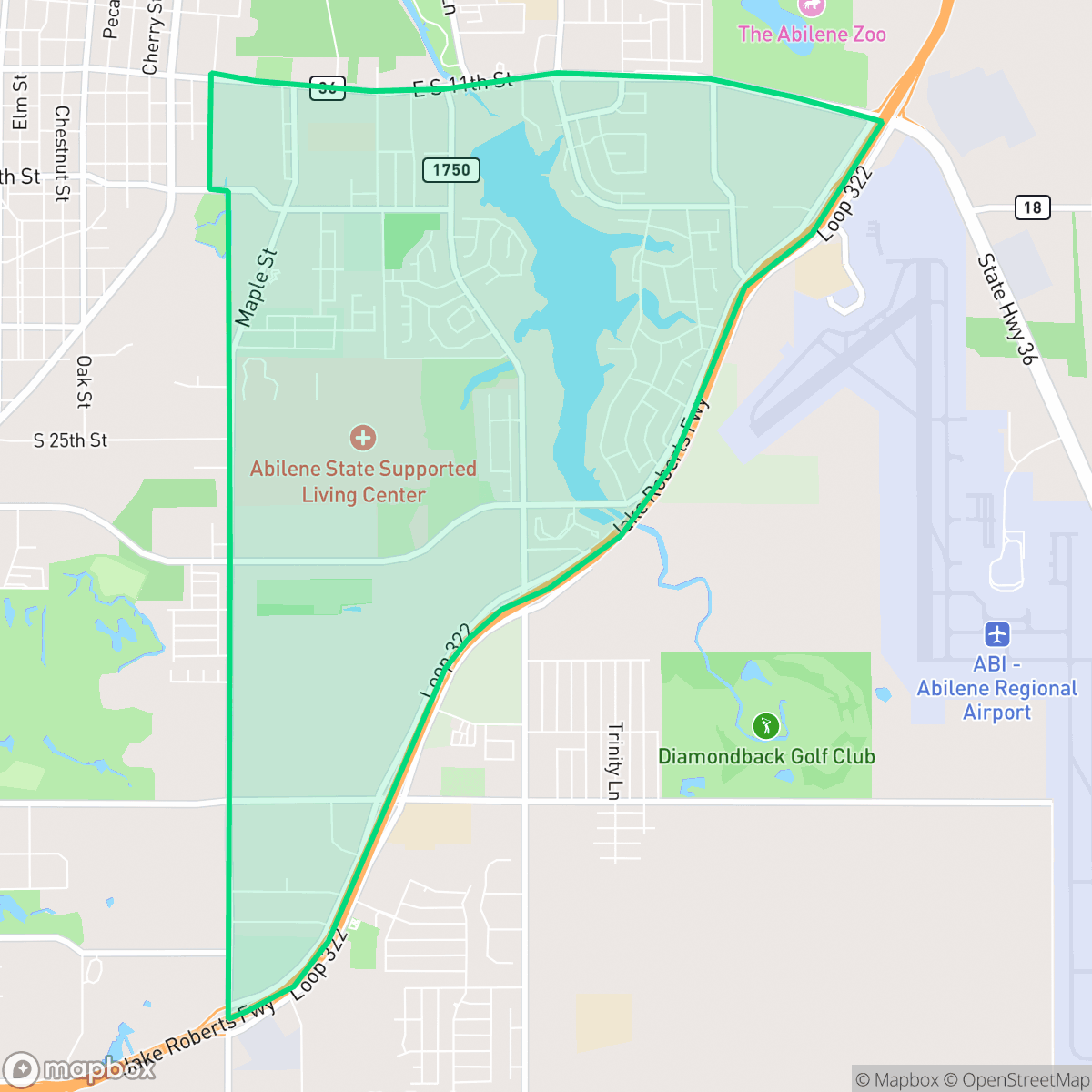
The Lytle neighborhood in southeast Abilene is historically centered around Lytle Lake, a reservoir constructed on Lytle Creek in 1897. Built by the Lytle Water Company to secure the city's water supply and successfully attract a state hospital for epileptics (now the Abilene State Supported Living Center), the lake was named for John Lytle, an early settler who trapped mustangs in the area. The reservoir later powered a West Texas Utilities Company plant before transitioning into a private recreational lake. Developed primarily from the mid-to-late 20th century, the neighborhood features prominent subdivisions like Lytle Shores, Lytle Estates, and Lytle Place, which surround the water. Today, the area is managed by the Lytle Lake Water Control and Improvement District and remains one of Abilene's most scenic, established residential communities.
The neighborhood serves as a quiet, low-density enclave where residential pockets blend with light industrial zones and expansive undeveloped land. Its visual appeal is among the highest in the city, largely due to the scenic surroundings near the water and the presence of established, leafy subdivisions. Residents often experience a serene environment that feels removed from the busier urban core, though this isolation results in a very low level of daily activity and limited access to immediate commercial amenities.
Living here requires a reliance on personal vehicles for daily errands, as the area is not designed for pedestrian travel. While the setting provides a peaceful retreat, prospective residents should note the moderate noise levels from road traffic and the presence of nearby industrial logistics hubs. The area presents a mix of educational options, with parts of the community served by the highly-rated Wylie Independent School District. Due to its geography and proximity to water, the area also carries a notable flood risk that should be considered by those looking to settle in this established part of Abilene.
Neighborhood Scores Across 15 Qualities
Residential spacing is relatively mixed, providing some distance between neighbors. This level of privacy is roughly in line with the typical Abilene density.
Low traffic volumes and calm streets make for pleasant walks, even though the area lacks formal sidewalks. This level of walkability is roughly consistent with the average for Abilene.
Large residential properties and frequent upscale amenities provide a more polished aesthetic than the Abilene average. According to iHuus data, the area features spacious driveways and well-maintained streetscapes.
Public park access and wide green verges provide more opportunities for pet owners than the typical Abilene neighborhood. According to iHuus data, this area offers slightly better amenities for walking dogs than the city average.
Spacious open land and scattered residential clusters provide a more rural feel than most of Abilene. According to iHuus data, the area features significant undeveloped green space and large-scale earthworks typical of a developing fringe zone.
Primarily characterized by low-density industrial and residential spaces, this area offers a serene atmosphere but lacks the social energy found in other parts of Abilene. Most daily activities and dining options require a vehicle, as the neighborhood features significant open space and few walkable commercial hubs.
Frequent sounds from nearby railroad tracks and heavy freeway traffic define the area. This level of acoustic disturbance is higher than the average found across Abilene, according to iHuus data.
Occasional warehouses and concrete facilities introduce some truck traffic and noise to the area, making the industrial presence slightly higher than the Abilene average. While primarily residential, certain pockets near logistics hubs and wastewater infrastructure feature more active commercial activity.
Health insurance coverage among residents is higher than the Abilene average, according to iHuus data.
Voting patterns and census indicators show a predominantly conservative political leaning, though this is slightly less pronounced than the average seen across Abilene.
Residents live among a balanced mix of young adults, families, and older individuals. This demographic spread is slightly more varied than the average found throughout Abilene.
Frequent flood risk exists due to being located within a designated floodplain; according to iHuus data, this area presents a higher danger of flooding than most parts of Abilene.
Address-Level Insights for Lytle


iHuus Neighborhood Intelligence Insights
Get address-level neighborhood insights for Lytle
- Street-level scores — see how individual blocks compare, not just neighborhood averages
- Micro-zone boundaries — identify quiet pockets, flood boundaries, and walkable clusters before you visit
- 15 dimensions in full — walkability, noise, air quality, school quality, insurance coverage, population age profile, urban/rural index, and more
- Boundary risk alerts — know if your address sits near a block boundary where scores drop, the kind of detail no listing will ever mention
- School insights — individual school ratings and insights, not just district-level data
- Compare before you commit — side-by-side data across neighborhoods, down to block precision
No credit card required
Compare with Any Neighborhood
| Dimension | Lytle | Abilene Heights |
|---|---|---|
| 🚶 Walkabilityavg 6.03 | ||
| 🔊 Acoustic Comfortavg 3.93 | ||
| 🤫 Privacy Indexavg 6.18 | ||
| 🎨 Visual Appealavg 5.66 | ||
| 🐕 Dog Friendlinessavg 5.58 | ||
| 🗺️ Urban-Rural Indexavg 7.25 | ||
| ✨ Neighborhood Vibeavg 4.1 | ||
| 🏥 Health Insurance Coverageavg 6.05 | ||
| 🌿 Air Quality | ||
| 🏭 Industrial Proximityavg 8.24 | ||
| 🌊 Flood Safetyavg 1.79 | ||
| 🗳️ Ideological Leanavg 0.7 | ||
| 👥 Population Age Profileavg 4.64 | ||
| 🔥 Fire Safety | ||
| 🏫 School Quality |
Lytle Rankings
School Districts Serving Lytle
School Insights for Lytle
Below average outcomes; significant attendance and academic challenges.
School Insights
See what's really behind every school rating near Lytle
- Individual school ratings — each school's own score with outcome context, not just a district average
- Enrollment & class size data — student-to-teacher ratio and how it compares to the state average
- Full demographics breakdown — ethnicity and gender composition for every school in the enrollment zone
- Every school in the district — all schools within the enrollment boundary ranked by rating, not just the closest one
- Grade levels & benchmarks — elementary through high school, with below/above state-average flags
No credit card required