Windy Hill, Jacksonville
Updated · 13,751 residents
Windy Hill is a quiet, semi-rural community in Jacksonville characterized by its mix of forested spaces, suburban tract housing, and accessible retention ponds. While the area offers a peaceful environment for dog owners and a diverse age demographic, residents should expect frequent traffic noise from nearby transit corridors and a reliance on personal vehicles for daily errands.
Key Highlights
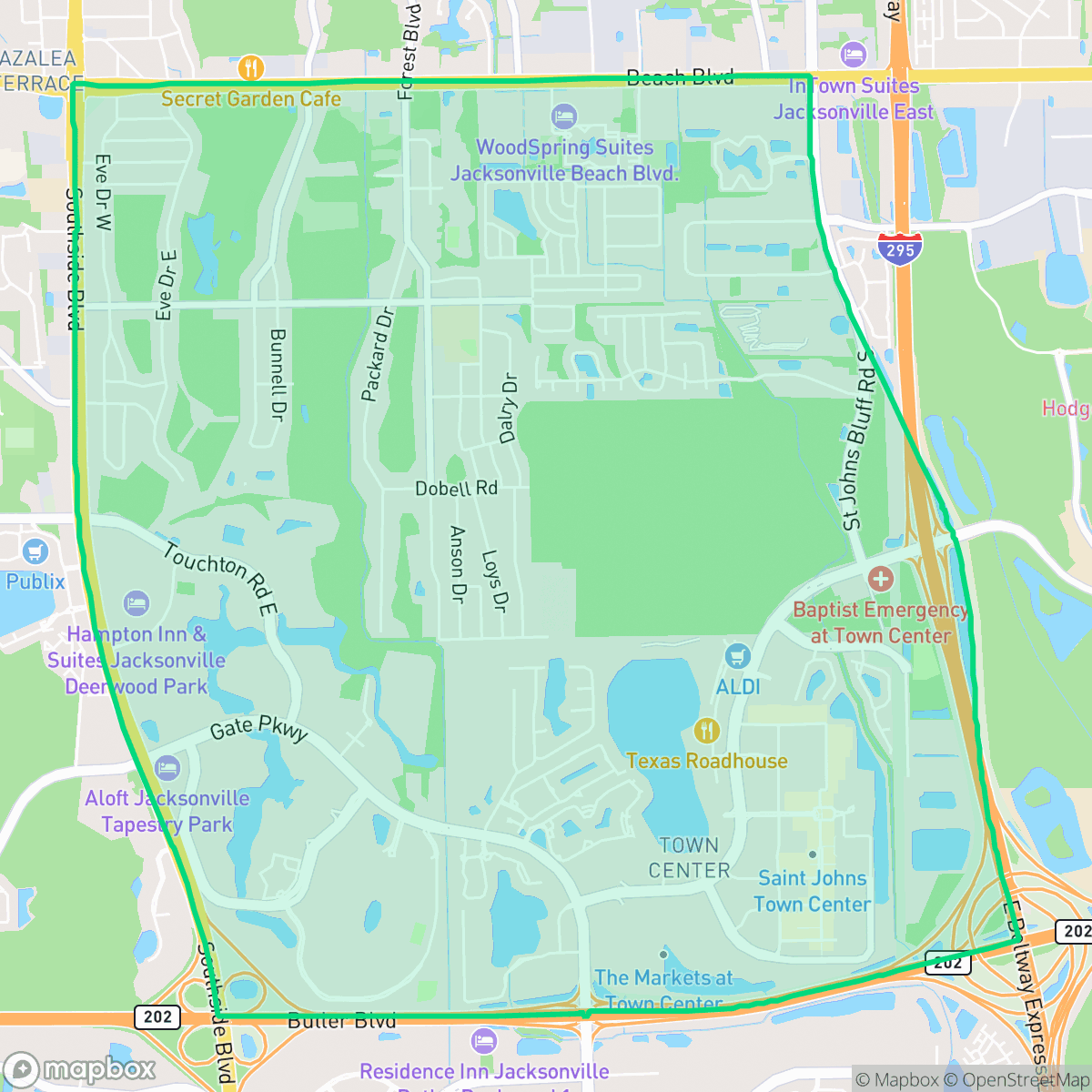
About Windy Hill
Windy Hill maintains a tranquil, semi-rural atmosphere that stands out from the denser parts of Jacksonville. The landscape is defined by modest residential developments, including both single-family tract homes and multi-family complexes, interspersed with significant pockets of woodland and open space. This layout provides a sense of privacy that exceeds the city average, making it a suitable choice for those seeking a subdued living environment away from heavy industrial activity.
Prospective residents should weigh the neighborhood's calm character against its practical trade-offs. While the internal pathways and green spaces are well-suited for walking pets, the proximity to major transit corridors results in persistent traffic noise. Additionally, the area faces a higher risk of flooding compared to the rest of the city, and the lack of continuous sidewalks along arterial roads necessitates the use of a car for most daily tasks. Families in the area are served by the Duval County Public School District, which offers a complex educational landscape ranging from neighborhood schools to specialized magnet programs.
Neighborhood Scores Across 15 Qualities
Residential spacing varies throughout the area, ranging from closely packed structures to segments buffered by preserved woodland. According to iHuus data, this level of separation between neighbors is notably higher than the Jacksonville average.
Quiet residential streets and internal pathways within apartment complexes allow for safe walking, though the area is more pedestrian-friendly than much of Jacksonville. Large commercial blocks and high-traffic arterial roads lack continuous sidewalks, making car travel necessary for many errands.
Standard tract housing and multi-family complexes define the landscape, offering a more structured visual environment than the Jacksonville average. According to iHuus data, the area features modest yards and common-area ponds alongside various apartment and mobile home communities.
Extensive forested areas and central retention ponds provide ample space for pet walking. According to iHuus data, this level of access to greenery is notably higher than the Jacksonville average.
Frequent open land and wooded areas provide a more rural feel than much of Jacksonville. According to iHuus data, this landscape features scattered homes and significant pockets of forest interspersed with suburban clusters.
Residential life remains largely subdued and tranquil, with significantly less commercial activity and street energy than the Jacksonville average. Most areas are characterized by a peaceful, low-key atmosphere that lacks a central commercial pulse.
Persistent traffic noise from nearby major transit corridors significantly exceeds the city average. Residents can expect frequent auditory disturbances due to the proximity of busy roadways.
Air quality levels in Windy Hill are generally acceptable, though they remain notably better than the Jacksonville average. Residents may encounter occasional periods of concern during certain weather patterns or seasonal changes according to iHuus data.
Primarily residential and commercial in nature, this area lacks heavy industry and features significantly less industrial density than the Jacksonville average. Most blocks consist of quiet streets, parks, and local services, though some pockets contain light warehouses and occasional truck traffic.
Health insurance enrollment in Windy Hill is notably higher than the Jacksonville average. According to iHuus data, a significant portion of the population maintains coverage, though many residents remain uninsured.
Political views in this area are evenly distributed between conservative and liberal leanings, representing a more balanced ideological landscape than the city average according to iHuus data.
Residents live alongside a broad mix of young adults, families, and older populations. This age distribution is more varied than the typical profile found throughout Jacksonville.
Flood risk in this area is higher than the Jacksonville average, though specific details remain uncertain as a formal study has not been finalized. According to iHuus data, residents should maintain awareness of local drainage and seasonal water levels.
Address-Level Insights for Windy Hill


iHuus Neighborhood Intelligence Insights
Get address-level neighborhood insights for Windy Hill
- Street-level scores — see how individual blocks compare, not just neighborhood averages
- Micro-zone boundaries — identify quiet pockets, flood boundaries, and walkable clusters before you visit
- 15 dimensions in full — walkability, noise, air quality, school quality, insurance coverage, population age profile, urban/rural index, and more
- Boundary risk alerts — know if your address sits near a block boundary where scores drop, the kind of detail no listing will ever mention
- School insights — individual school ratings and insights, not just district-level data
- Compare before you commit — side-by-side data across neighborhoods, down to block precision
No credit card required
Compare with Any Neighborhood
| Dimension | Windy Hill | 29th and Chase |
|---|---|---|
| 🚶 Walkabilityavg 3.96 | ||
| 🔊 Acoustic Comfortavg 4.37 | ||
| 🤫 Privacy Indexavg 4.3 | ||
| 🎨 Visual Appealavg 4.24 | ||
| 🐕 Dog Friendlinessavg 4.28 | ||
| 🗺️ Urban-Rural Indexavg 5.22 | ||
| ✨ Neighborhood Vibeavg 1.5 | ||
| 🏥 Health Insurance Coverageavg 4.35 | ||
| 🌿 Air Qualityavg 3.84 | ||
| 🏭 Industrial Proximityavg 5.11 | ||
| 🌊 Flood Safetyavg 4.01 | ||
| 🗳️ Ideological Leanavg 2.75 | ||
| 👥 Population Age Profileavg 3.26 | ||
| 🔥 Fire Safety | ||
| 🏫 School Quality |
Windy Hill Rankings
School Districts Serving Windy Hill
School Insights for Windy Hill
Below average outcomes; significant attendance and academic challenges.
School Insights
See what's really behind every school rating near Windy Hill
- Individual school ratings — each school's own score with outcome context, not just a district average
- Enrollment & class size data — student-to-teacher ratio and how it compares to the state average
- Full demographics breakdown — ethnicity and gender composition for every school in the enrollment zone
- Every school in the district — all schools within the enrollment boundary ranked by rating, not just the closest one
- Grade levels & benchmarks — elementary through high school, with below/above state-average flags
No credit card required