Tallyrand, Jacksonville
Updated · 779 residents
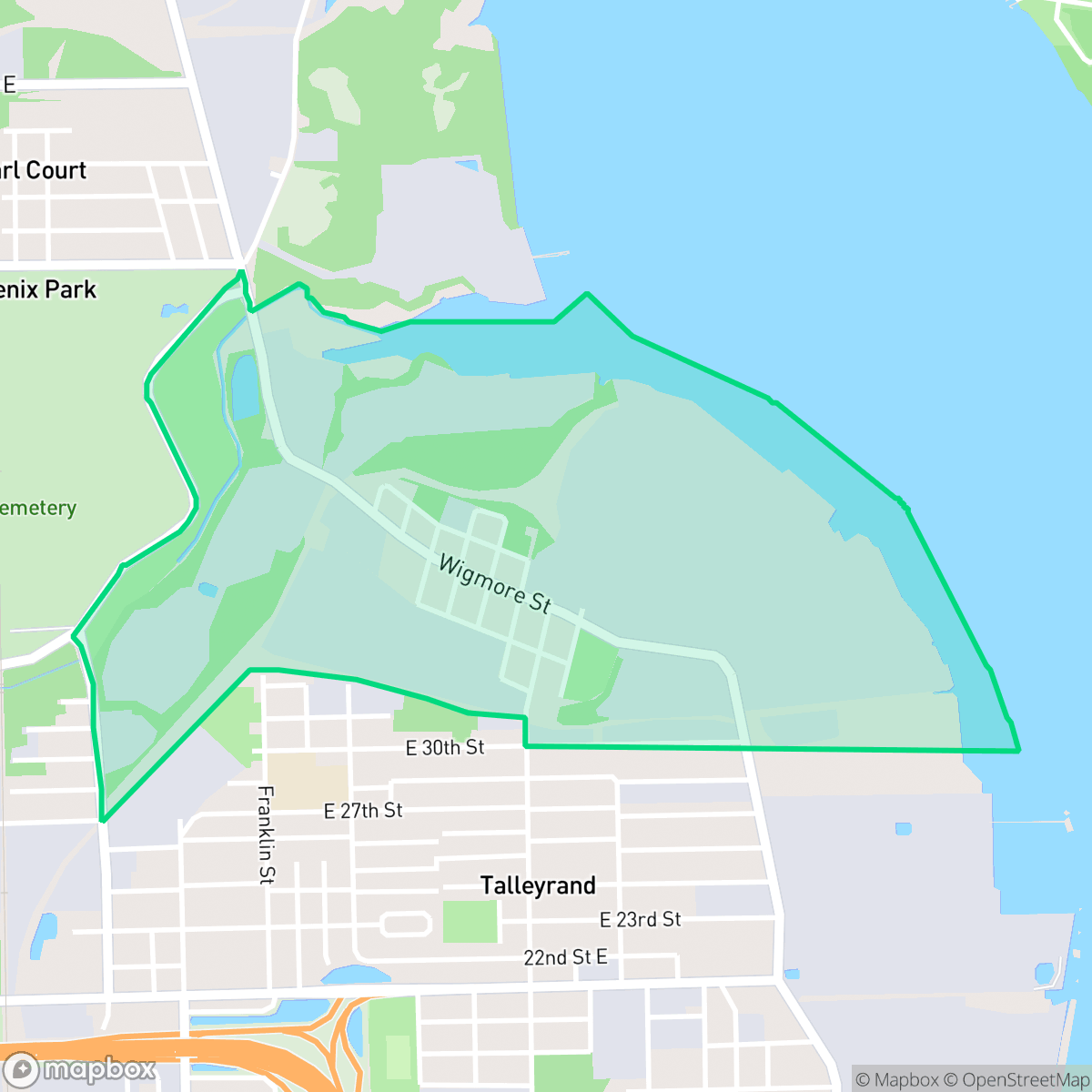
Talleyrand is a historically industrial district along the St. Johns River characterized by its quiet, suburban-feeling residential streets. While the neighborhood offers a peaceful environment with minimal noise, residents experience limited walkability and a utilitarian landscape shaped by its proximity to major shipping infrastructure.
Key Highlights
About Tallyrand
Talleyrand is a historically significant industrial district in Jacksonville, Florida, situated along the St. Johns River. Named after the Marquis de Talleyrand, who maintained a winter home in the area from 1869 to 1873, the neighborhood transformed into a heavy industrial hub following the Great Fire of 1901. Its strategic riverfront location and extensive rail infrastructure facilitated the growth of major manufacturing and chemical facilities throughout the 20th century. Today, the area is defined by the Talleyrand Marine Terminal, a critical component of JAXPORT, and the Talleyrand Terminal Railroad. While the neighborhood’s landscape reflects its legacy as a center for shipping, fertilizer production, and logistics, it remains a vital, albeit heavily industrial, part of Jacksonville’s maritime and economic identity.
The neighborhood maintains a distinct character where residential pockets exist alongside active maritime terminals and logistics facilities. This creates a unique atmosphere that balances a notably quiet acoustic environment with a landscape that reflects its heavy industrial roots. Residents benefit from a diverse age demographic, which includes a mix of young professionals, families, and seniors, contributing to a stable community feel that is notably more liberal in its political leanings than the broader Jacksonville area.
Prospective residents should consider the trade-offs of living in an industrial-adjacent area, which includes environmental considerations and a car-dependent lifestyle due to sparse local amenities. While the area offers more privacy than many parts of the city, the lack of sidewalks makes pedestrian navigation challenging. Families in the neighborhood are served by the Duval County Public School District, which provides access to specialized magnet programs despite ongoing budget and consolidation efforts across the district.
Neighborhood Scores Across 15 Qualities
Residential spacing provides a reasonable buffer between properties, offering more separation than the Jacksonville average. According to iHuus data, the neighborhood features a mixed density that balances community proximity with moderate personal distance.
Quiet streets provide a peaceful environment for walking, although the lack of sidewalks makes pedestrian navigation more challenging. This level of walkability is consistent with the Jacksonville city average.
Dense housing and small yards characterize this area, resulting in a visual landscape that is noticeably less varied than the Jacksonville average according to iHuus data.
Access to public parks and wide green verges is somewhat limited in this area. According to iHuus data, the availability of pet-friendly outdoor spaces is slightly above the Jacksonville average.
Residential streets and green spaces are distributed in roughly equal measure, offering a more suburban landscape than the Jacksonville average according to iHuus data.
Primarily consisting of established residential blocks, this area offers a calm atmosphere with very little commercial activity. According to iHuus data, the level of local street life is slightly above the city average but remains largely car-dependent due to sparse amenities.
Acoustic levels are considerably lower than the Jacksonville average, consisting primarily of infrequent distant trains and sporadic vehicle noise. Residents can expect a peaceful environment according to iHuus data.
Air quality fluctuates between acceptable and unhealthy levels, though it remains better than the average for Jacksonville. Sensitive individuals may experience occasional concern during certain periods according to iHuus data.
Residential pockets exist alongside active commercial zones and light industrial units, which results in an industrial presence slightly below the Jacksonville average. Local surroundings include heavy industrial areas with significant environmental considerations and proximity to a Superfund site, according to iHuus data.
Health insurance access among residents is slightly higher than the Jacksonville average, according to iHuus data. This indicates a moderate level of coverage availability within the community.
Political leanings in this area are notably more liberal than the Jacksonville average. According to iHuus data, the neighborhood contains a liberal majority with a modest opposing presence.
Residents live alongside a varied demographic of young professionals, families, and seniors. According to iHuus data, this age distribution is more diverse than the typical Jacksonville profile.
Flood risk in this area is slightly higher than the Jacksonville average, though a detailed study by FEMA has not yet been finalized for this specific location. According to iHuus data, residents should remain aware of potential water vulnerabilities during heavy rain events.
Address-Level Insights for Tallyrand


iHuus Neighborhood Intelligence Insights
Get address-level neighborhood insights for Tallyrand
- Street-level scores — see how individual blocks compare, not just neighborhood averages
- Micro-zone boundaries — identify quiet pockets, flood boundaries, and walkable clusters before you visit
- 15 dimensions in full — walkability, noise, air quality, school quality, insurance coverage, population age profile, urban/rural index, and more
- Boundary risk alerts — know if your address sits near a block boundary where scores drop, the kind of detail no listing will ever mention
- School insights — individual school ratings and insights, not just district-level data
- Compare before you commit — side-by-side data across neighborhoods, down to block precision
No credit card required
Compare with Any Neighborhood
| Dimension | Tallyrand | 29th and Chase |
|---|---|---|
| 🚶 Walkabilityavg 3.96 | ||
| 🔊 Acoustic Comfortavg 4.37 | ||
| 🤫 Privacy Indexavg 4.3 | ||
| 🎨 Visual Appealavg 4.24 | ||
| 🐕 Dog Friendlinessavg 4.28 | ||
| 🗺️ Urban-Rural Indexavg 5.22 | ||
| ✨ Neighborhood Vibeavg 1.5 | ||
| 🏥 Health Insurance Coverageavg 4.35 | ||
| 🌿 Air Qualityavg 3.84 | ||
| 🏭 Industrial Proximityavg 5.11 | ||
| 🌊 Flood Safetyavg 4.01 | ||
| 🗳️ Ideological Leanavg 2.75 | ||
| 👥 Population Age Profileavg 3.26 | ||
| 🔥 Fire Safety | ||
| 🏫 School Quality |
Tallyrand Rankings
School Districts Serving Tallyrand
School Insights for Tallyrand
Below average outcomes; significant attendance and academic challenges.
School Insights
See what's really behind every school rating near Tallyrand
- Individual school ratings — each school's own score with outcome context, not just a district average
- Enrollment & class size data — student-to-teacher ratio and how it compares to the state average
- Full demographics breakdown — ethnicity and gender composition for every school in the enrollment zone
- Every school in the district — all schools within the enrollment boundary ranked by rating, not just the closest one
- Grade levels & benchmarks — elementary through high school, with below/above state-average flags
No credit card required