Spring Glen, Jacksonville
Updated · 2,140 residents
Spring Glen is a residential community defined by its mid-century ranch-style homes, mature tree canopy, and a semi-rural atmosphere that feels distinct from typical suburban Jacksonville. Residents enjoy a high degree of privacy and visual appeal, though the area experiences notable noise from nearby rail lines and highway traffic.
Key Highlights
About Spring Glen
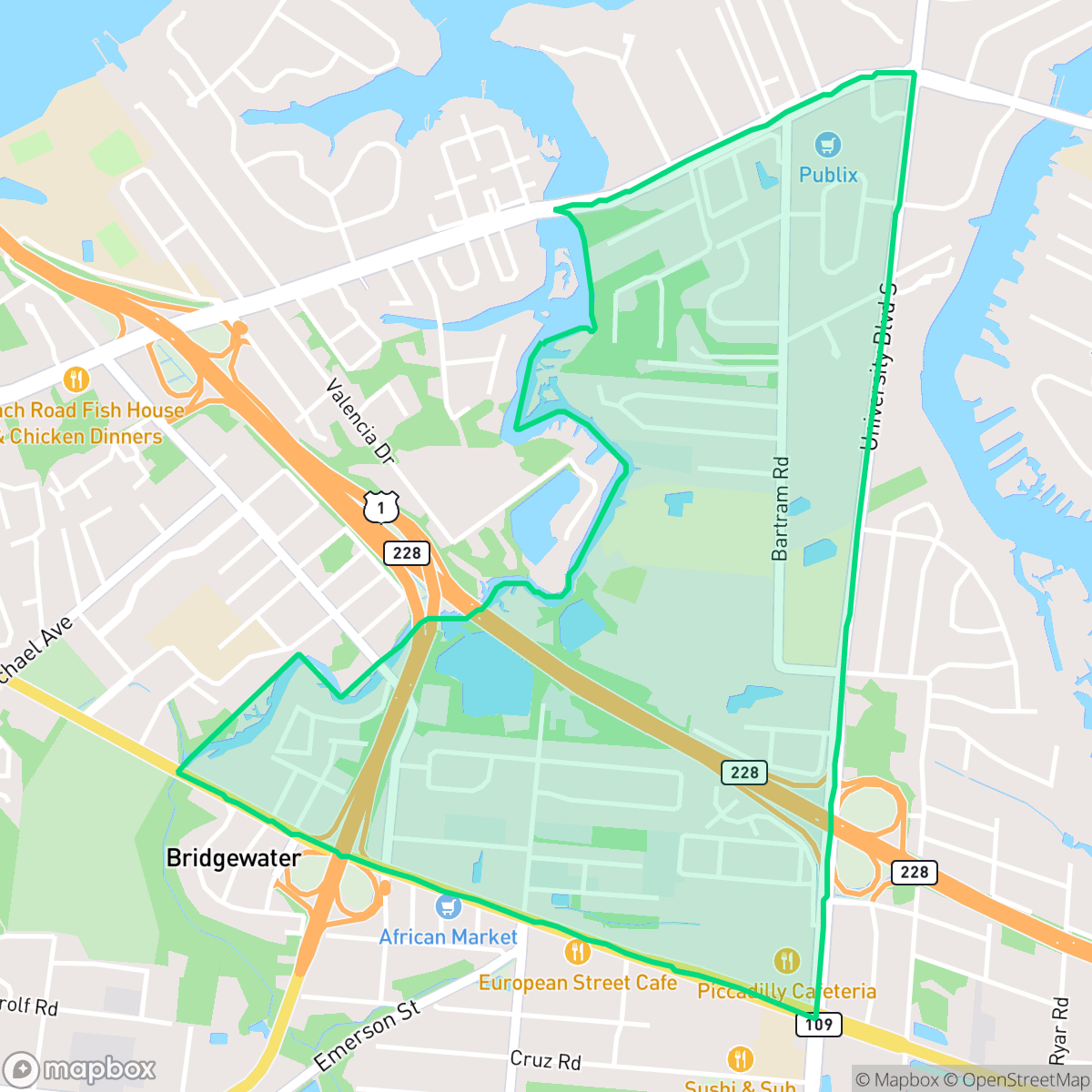
Spring Glen, a neighborhood in Southside Jacksonville, is defined by its mid-20th-century residential character, featuring a prominent stock of ranch-style homes primarily built between 1940 and 1969. Situated near the confluence of the Arlington River and Pottsburg Creek, the area shares a deep historical connection to early 19th-century land grants that shaped the region's development. The neighborhood's historical footprint is further marked by its proximity to the former Hope Haven Hospital on Atlantic Boulevard, a landmark institution that provided vital pediatric care to Northeast Florida starting in the 1940s. Today, Spring Glen is recognized for its established suburban atmosphere, tree-lined streets, and its continued role as a central residential hub within the Jacksonville metropolitan area.
The neighborhood offers a unique blend of established suburban living and open, wooded landscapes. The visual character is marked by spacious lots, private swimming pools, and waterfront access along the local creek systems. Unlike many denser parts of the city, the area maintains a semi-rural feel with minimal industrial presence, providing a quiet environment for those who value privacy and mature greenery. According to iHuus data, the area features a higher degree of separation between neighbors than is typical for the Jacksonville area, contributing to a tranquil residential setting.
Prospective residents should note that the area is best suited for those who prioritize an established atmosphere over proximity to major transit hubs. While the lack of sidewalks in some sections is balanced by low-traffic streets suitable for walking, the proximity to major transportation corridors does result in higher noise levels. Families will find a diverse demographic mix, though educational planning requires careful consideration of the broader Duval County school system, which offers a range of specialized magnet programs alongside standard neighborhood schools.
Neighborhood Scores Across 15 Qualities
Residential spacing varies between dense multi-family clusters and single-family homes situated on larger, wooded lots. According to iHuus data, this provides a higher degree of separation between neighbors than is typical for the Jacksonville area.
Low traffic volumes and a mature tree canopy make residential loops pleasant for walking, even though sidewalks are absent on many side streets. According to iHuus data, this level of walkability is notably higher than the Jacksonville average.
Large homes, private docks, and frequent backyard pools contribute to a visual landscape that is notably more attractive than the Jacksonville average. According to iHuus data, the area features a mix of affluent waterfront estates and well-maintained middle-class housing.
Abundant tree canopies and wide grass verges between roads and homes offer plenty of space for walks, making the area more dog-friendly than much of Jacksonville. While dedicated large public parks are limited, the low-traffic cul-de-sacs provide a quiet environment according to iHuus data.
A mix of single-family homes and scattered woodland provides a more open, low-density landscape than the typical Jacksonville suburban environment. According to iHuus data, this area features more frequent open land and mature greenery than the city average.
A steady rhythm of dining and civic institutions provides more activity than the city average. While some pockets remain quiet and residential, certain areas serve as local hubs for universities and various independent shops.
Frequent disruptions from nearby railroad tracks and heavy freeway traffic characterize the area. According to iHuus data, acoustic comfort in Spring Glen is notably lower than the Jacksonville average.
Air quality levels are generally acceptable but fluctuate between good and unhealthy days. According to iHuus data, the air quality in Spring Glen is notably better than the Jacksonville average.
Very little heavy industry exists within the area, leaving residents with far fewer industrial disturbances than the Jacksonville average. The neighborhood consists primarily of residential streets and light commercial services like cafes and local shops.
Health insurance coverage among residents is higher than the Jacksonville average. According to iHuus data, a significant portion of the population maintains coverage, though access levels remain moderate.
Political perspectives in Spring Glen are distributed fairly evenly between conservative and liberal leanings; this represents a more moderate ideological split than the average found throughout Jacksonville.
Residents live alongside a balanced mix of young adults, families, and seniors. This demographic variety is significantly more diverse than the average age profile found across Jacksonville.
Residual flood risk exists within this area due to its location in a 500-year floodplain, though safety levels are notably higher than the Jacksonville average according to iHuus data.
Address-Level Insights for Spring Glen


iHuus Neighborhood Intelligence Insights
Get address-level neighborhood insights for Spring Glen
- Street-level scores — see how individual blocks compare, not just neighborhood averages
- Micro-zone boundaries — identify quiet pockets, flood boundaries, and walkable clusters before you visit
- 15 dimensions in full — walkability, noise, air quality, school quality, insurance coverage, population age profile, urban/rural index, and more
- Boundary risk alerts — know if your address sits near a block boundary where scores drop, the kind of detail no listing will ever mention
- School insights — individual school ratings and insights, not just district-level data
- Compare before you commit — side-by-side data across neighborhoods, down to block precision
No credit card required
Compare with Any Neighborhood
| Dimension | Spring Glen | 29th and Chase |
|---|---|---|
| 🚶 Walkabilityavg 3.96 | ||
| 🔊 Acoustic Comfortavg 4.37 | ||
| 🤫 Privacy Indexavg 4.3 | ||
| 🎨 Visual Appealavg 4.24 | ||
| 🐕 Dog Friendlinessavg 4.28 | ||
| 🗺️ Urban-Rural Indexavg 5.22 | ||
| ✨ Neighborhood Vibeavg 1.5 | ||
| 🏥 Health Insurance Coverageavg 4.35 | ||
| 🌿 Air Qualityavg 3.84 | ||
| 🏭 Industrial Proximityavg 5.11 | ||
| 🌊 Flood Safetyavg 4.01 | ||
| 🗳️ Ideological Leanavg 2.75 | ||
| 👥 Population Age Profileavg 3.26 | ||
| 🔥 Fire Safety | ||
| 🏫 School Quality |
Spring Glen Rankings
School Districts Serving Spring Glen
School Insights for Spring Glen
Below average outcomes; significant attendance and academic challenges.
School Insights
See what's really behind every school rating near Spring Glen
- Individual school ratings — each school's own score with outcome context, not just a district average
- Enrollment & class size data — student-to-teacher ratio and how it compares to the state average
- Full demographics breakdown — ethnicity and gender composition for every school in the enrollment zone
- Every school in the district — all schools within the enrollment boundary ranked by rating, not just the closest one
- Grade levels & benchmarks — elementary through high school, with below/above state-average flags
No credit card required