Phoenix, Jacksonville
Updated · 1,655 residents
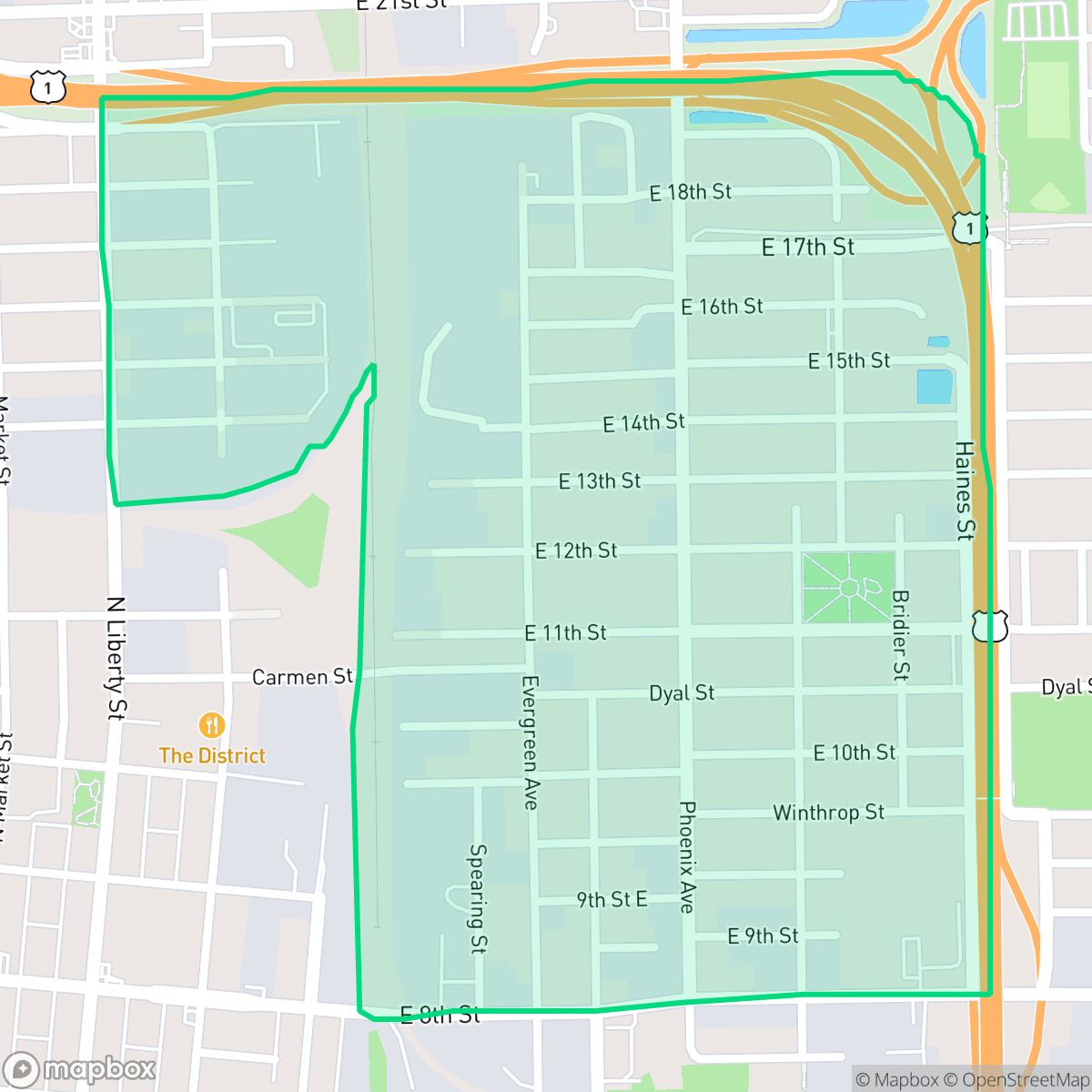
Phoenix is a historically rooted neighborhood defined by its industrial legacy and a unique blend of semi-rural open spaces alongside modest residential housing. While it offers a steady rhythm of local activity, residents should anticipate high noise levels from nearby rail and freeway traffic.
Key Highlights
About Phoenix
The Phoenix neighborhood in Jacksonville, Florida, was named to commemorate the city’s recovery from the Great Fire of 1901. Platted in 1904 as the Dyal-Upchurch subdivision, the area evolved as a prominent streetcar suburb, with Phoenix Avenue serving as a vital transit corridor connecting residents to downtown. Historically, the neighborhood developed a strong industrial character, bolstered by its proximity to rail yards and the Talleyrand Marine Terminal. It has long been a center for the metals industry, notably hosting Rubin Iron Works, established in 1914, and serving as the long-time home of the Canada Dry Bottling Company. Today, the area is recognized for its mid-20th-century residential architecture and its historical role as a transit-oriented community within Jacksonville’s urban core.
The area maintains a distinct identity as a transit-oriented community within the urban core, characterized by a utilitarian landscape where residential blocks often sit adjacent to large commercial warehouses. Unlike many Jacksonville neighborhoods, the local environment features a semi-rural feel with patches of woodland and open land. The community is politically progressive, fostering a diverse age demographic that includes both families and older residents. Local hubs provide a consistent level of activity, featuring independent shops and wellness services that keep the neighborhood engaged.
Living here requires navigating specific trade-offs, particularly regarding environmental and infrastructure factors. According to iHuus data, the proximity to industrial zones means that residents should be aware of potential utility odors and groundwater considerations, while the fragmented sidewalk network makes pedestrian travel challenging. The area experiences significant noise from heavy rail and major highways, which may impact acoustic comfort. Families should note that while the Duval County School District offers elite magnet programs, the neighborhood is also subject to ongoing district-wide school consolidations and budget adjustments.
Neighborhood Scores Across 15 Qualities
Residential spacing provides a moderate level of separation between neighbors, offering more privacy than the Jacksonville average. According to iHuus data, property layouts vary from standard suburban lots to larger industrial parcels with significant buffers.
Major highways and industrial blocks create significant barriers to walking, though the neighborhood offers slightly better walkability than the Jacksonville average due to its quiet residential streets. Fragmented sidewalks make navigating much of the area difficult for pedestrians.
Modest tract housing and industrial proximity characterize the area, resulting in a visual landscape that is slightly below the Jacksonville average. Residents will observe varied rooflines alongside dirt lots and nearby heavy rail yards.
Public parks and wide green verges are scarce in this area, as greenery is primarily restricted to private fenced yards. This level of accessibility for dog owners is consistent with the city average.
Open land and woodland are common throughout the area, providing a more semi-rural feel than much of Jacksonville. Residential blocks often sit adjacent to large commercial warehouses and industrial zones according to iHuus data.
A diverse mix of retail, dining, and wellness services provides a much more active atmosphere than the typical Jacksonville neighborhood. According to iHuus data, residents can find a reliable rhythm of activity through local hubs featuring cafes, independent shops, and fitness studios.
Frequent noise from nearby railroad tracks and major freeways makes this area significantly louder than the Jacksonville average. Residents may experience consistent auditory disturbances throughout the day according to iHuus data.
Air conditions in Phoenix fluctuate between acceptable and unhealthy levels, though quality remains significantly better than the Jacksonville average. Sensitive groups should monitor local reports for days with higher pollution concentrations.
Residential areas exist alongside light industrial and commercial utilities, which may introduce intermittent loading activity and transit traffic. According to iHuus data, the presence of nearby service facilities and a Superfund site means residents should be aware of potential utility odors and groundwater considerations.
Health insurance enrollment in Phoenix is higher than the Jacksonville average. According to iHuus data, a notable portion of the resident population remains uninsured.
Voting patterns and census indicators reflect a predominantly liberal political landscape, which is significantly more progressive than the Jacksonville average.
Residents experience a more balanced distribution of age groups, including families and older adults, compared to the more skewed young adult demographic found across much of Jacksonville. According to iHuus data, this profile lacks the heavy concentration of a single age bracket seen in the city average.
Flood risk levels in this area remain undetermined because FEMA has not yet finalized a detailed study for this specific location. According to iHuus data, the level of precaution required here is roughly comparable to the Jacksonville average.
Address-Level Insights for Phoenix


iHuus Neighborhood Intelligence Insights
Get address-level neighborhood insights for Phoenix
- Street-level scores — see how individual blocks compare, not just neighborhood averages
- Micro-zone boundaries — identify quiet pockets, flood boundaries, and walkable clusters before you visit
- 15 dimensions in full — walkability, noise, air quality, school quality, insurance coverage, population age profile, urban/rural index, and more
- Boundary risk alerts — know if your address sits near a block boundary where scores drop, the kind of detail no listing will ever mention
- School insights — individual school ratings and insights, not just district-level data
- Compare before you commit — side-by-side data across neighborhoods, down to block precision
No credit card required
Compare with Any Neighborhood
| Dimension | Phoenix | 29th and Chase |
|---|---|---|
| 🚶 Walkabilityavg 3.96 | ||
| 🔊 Acoustic Comfortavg 4.37 | ||
| 🤫 Privacy Indexavg 4.3 | ||
| 🎨 Visual Appealavg 4.24 | ||
| 🐕 Dog Friendlinessavg 4.28 | ||
| 🗺️ Urban-Rural Indexavg 5.22 | ||
| ✨ Neighborhood Vibeavg 1.5 | ||
| 🏥 Health Insurance Coverageavg 4.35 | ||
| 🌿 Air Qualityavg 3.84 | ||
| 🏭 Industrial Proximityavg 5.11 | ||
| 🌊 Flood Safetyavg 4.01 | ||
| 🗳️ Ideological Leanavg 2.75 | ||
| 👥 Population Age Profileavg 3.26 | ||
| 🔥 Fire Safety | ||
| 🏫 School Quality |
Phoenix Rankings
School Districts Serving Phoenix
School Insights for Phoenix
Below average outcomes; significant attendance and academic challenges.
School Insights
See what's really behind every school rating near Phoenix
- Individual school ratings — each school's own score with outcome context, not just a district average
- Enrollment & class size data — student-to-teacher ratio and how it compares to the state average
- Full demographics breakdown — ethnicity and gender composition for every school in the enrollment zone
- Every school in the district — all schools within the enrollment boundary ranked by rating, not just the closest one
- Grade levels & benchmarks — elementary through high school, with below/above state-average flags
No credit card required