Midtown, Jacksonville
Updated · 801 residents
Midtown is a diverse, semi-rural pocket of Jacksonville characterized by a blend of residential blocks, light industrial sites, and sports arenas. While the area offers a balanced demographic profile, residents should expect high noise levels from nearby rail lines and transit corridors alongside limited pedestrian infrastructure.
Key Highlights
About Midtown
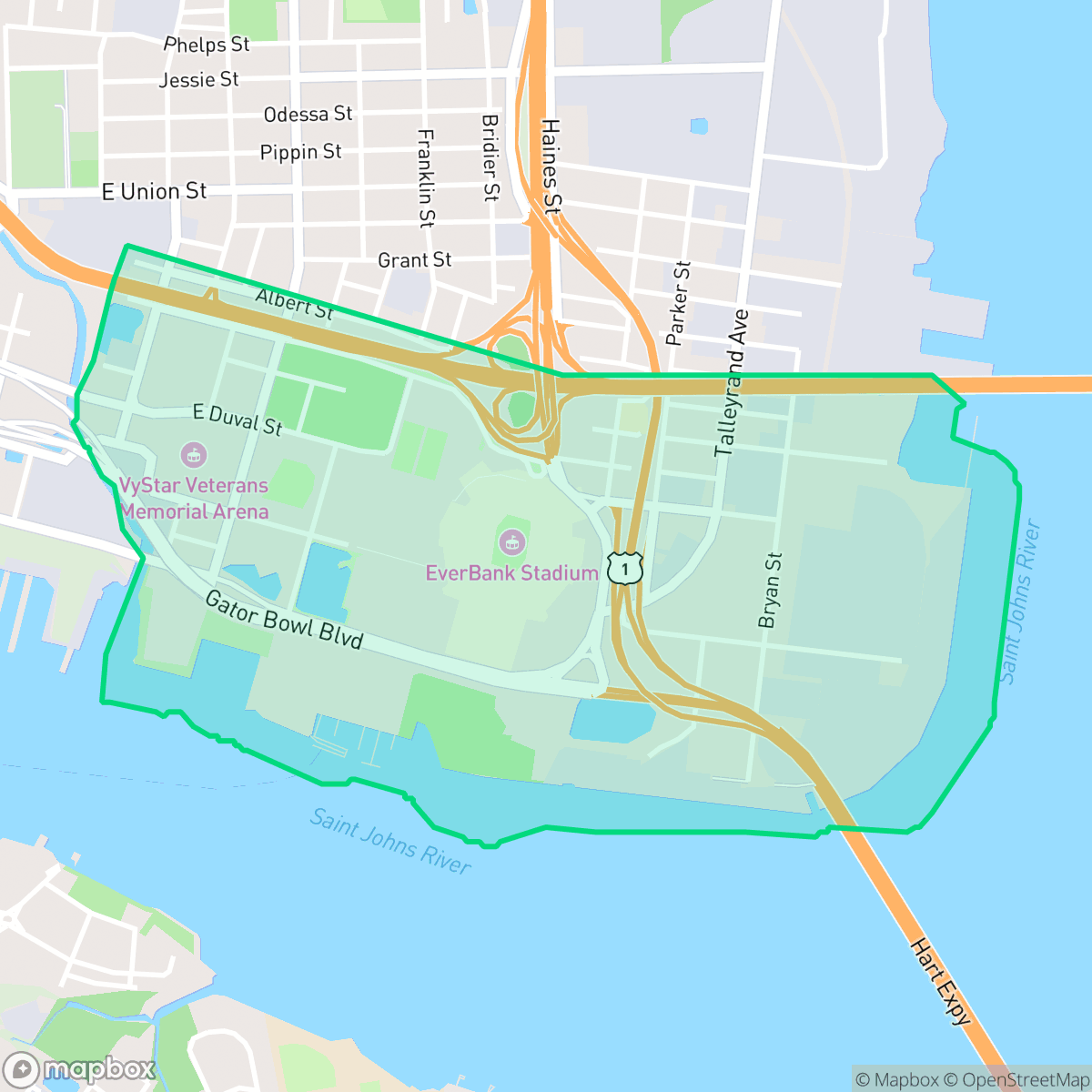
This neighborhood presents a unique, semi-rural landscape where residential housing sits alongside commercial warehouses and open land. The area maintains a politically balanced community with a diverse age range, though it faces distinct livability challenges. According to iHuus data, the proximity to heavy transit and rail lines creates a consistently noisy environment, and the fragmented sidewalk network makes the area largely car-dependent. Residents also navigate a landscape with moderate flood risks and limited access to health insurance compared to the broader city. The neighborhood is best suited for those who prioritize a central location with diverse demographic surroundings over quiet, pedestrian-friendly streets. While the visual character is functional and plain, the area offers a unique blend of industrial and recreational utility. Families should note that school options fall under the Duval County School District, which provides access to prestigious magnet programs despite ongoing challenges with budget deficits and campus consolidation.
Neighborhood Scores Across 15 Qualities
Housing density varies across the area with some homes tightly packed and others separated by vacant lots. This level of spatial buffering is higher than the Jacksonville average, according to iHuus data.
Pedestrian movement is made difficult by fragmented sidewalks and high traffic on arterial roads. This level of walkability is consistent with the city average for Jacksonville.
Modest housing and industrial interfaces define the landscape, though visual variety is slightly higher than the Jacksonville average. Streetscapes often feature dense residential units alongside unpaved lots according to iHuus data.
Scattered green patches and empty lots provide some relief, but overall access to dedicated dog parks is below the Jacksonville average according to iHuus data.
Frequent open land and scattered structures characterize this area, making it more semi-rural than the Jacksonville average. According to iHuus data, the landscape features a blend of residential blocks, commercial warehouses, and sports arenas.
Activity levels are notably higher than the Jacksonville average, offering a mix of quiet residential pockets and active local destinations for dining and entertainment. While some areas remain calm and car-dependent, other sections provide a more lively atmosphere near colleges, museums, and local eateries.
Persistent noise from nearby heavy transit corridors and rail lines makes this area significantly louder than the Jacksonville average. Residents may experience frequent disturbances from adjacent freeway and railroad activity.
Air quality in Midtown typically fluctuates between acceptable and unhealthy levels, though it remains notably better than the Jacksonville city average according to iHuus data. Sensitive groups should monitor local conditions during periods of occasional concern.
Light industrial activities and commercial services are more prevalent here than in most of Jacksonville. Residents should be aware of intermittent operational noise and the proximity of an EPA Superfund site that may affect local soil and groundwater quality.
Health insurance access among residents is notably lower than the Jacksonville average, according to iHuus data.
Political leanings in Midtown are evenly split between conservative and liberal perspectives. This represents a more balanced ideological landscape than the broader Jacksonville area according to iHuus data.
Residents live alongside a broad mix of young adults, families, and seniors. This demographic variety is notably more balanced than the age distribution found across the rest of Jacksonville.
Flood risk in this area is notably higher than the Jacksonville average, though current FEMA data remains undetermined due to incomplete studies. Residents should remain aware of potential vulnerabilities during heavy rain events according to iHuus data.
Address-Level Insights for Midtown


iHuus Neighborhood Intelligence Insights
Get address-level neighborhood insights for Midtown
- Street-level scores — see how individual blocks compare, not just neighborhood averages
- Micro-zone boundaries — identify quiet pockets, flood boundaries, and walkable clusters before you visit
- 15 dimensions in full — walkability, noise, air quality, school quality, insurance coverage, population age profile, urban/rural index, and more
- Boundary risk alerts — know if your address sits near a block boundary where scores drop, the kind of detail no listing will ever mention
- School insights — individual school ratings and insights, not just district-level data
- Compare before you commit — side-by-side data across neighborhoods, down to block precision
No credit card required
Compare with Any Neighborhood
| Dimension | Midtown | 29th and Chase |
|---|---|---|
| 🚶 Walkabilityavg 3.96 | ||
| 🔊 Acoustic Comfortavg 4.37 | ||
| 🤫 Privacy Indexavg 4.3 | ||
| 🎨 Visual Appealavg 4.24 | ||
| 🐕 Dog Friendlinessavg 4.28 | ||
| 🗺️ Urban-Rural Indexavg 5.22 | ||
| ✨ Neighborhood Vibeavg 1.5 | ||
| 🏥 Health Insurance Coverageavg 4.35 | ||
| 🌿 Air Qualityavg 3.84 | ||
| 🏭 Industrial Proximityavg 5.11 | ||
| 🌊 Flood Safetyavg 4.01 | ||
| 🗳️ Ideological Leanavg 2.75 | ||
| 👥 Population Age Profileavg 3.26 | ||
| 🔥 Fire Safety | ||
| 🏫 School Quality |
Midtown Rankings
School Districts Serving Midtown
School Insights for Midtown
Below average outcomes; significant attendance and academic challenges.
School Insights
See what's really behind every school rating near Midtown
- Individual school ratings — each school's own score with outcome context, not just a district average
- Enrollment & class size data — student-to-teacher ratio and how it compares to the state average
- Full demographics breakdown — ethnicity and gender composition for every school in the enrollment zone
- Every school in the district — all schools within the enrollment boundary ranked by rating, not just the closest one
- Grade levels & benchmarks — elementary through high school, with below/above state-average flags
No credit card required