Mayport, Jacksonville
Updated · 2,753 residents
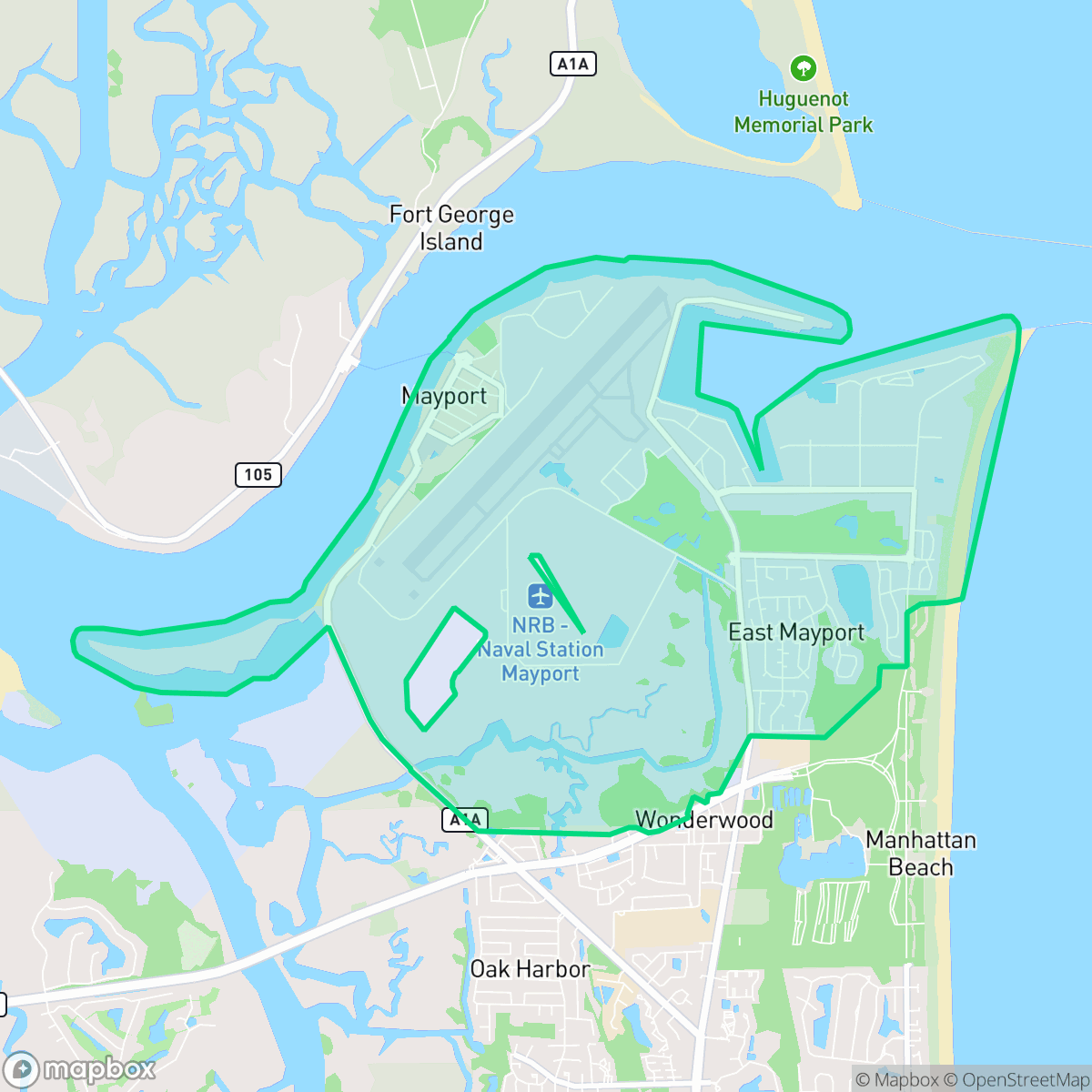
Mayport is a quiet, semi-rural community located at the mouth of the St. Johns River, defined by its maritime heritage and proximity to the naval station. While the area offers a sense of privacy and higher-than-average walkability on residential streets, residents should expect frequent noise from nearby flight paths and railroad activity.
Key Highlights
About Mayport
Mayport, a historic fishing village at the mouth of the St. Johns River in Jacksonville, traces its origins to early 19th-century bar pilots and fishermen. Long defined by its commercial shrimping fleet, the village became a vital maritime hub, further transformed in 1942 by the establishment of Naval Station Mayport. The community’s character is shaped by its working waterfront, historic wooden structures, and enduring maritime traditions, including the St. Johns River Ferry, which has operated since 1874. Once a resort destination served by the Florida East Coast Railway in the early 1900s, Mayport maintains a distinct identity as a center for the local seafood industry, exemplified by long-standing businesses like Singleton’s Seafood Shack. Today, the village balances its military presence with efforts to preserve its unique heritage as one of the region's oldest coastal settlements.
The area maintains a distinct semi-rural character, characterized by expansive marshlands and low-density residential pockets. Its visual landscape is functional, featuring modest yards and varied housing density that provides more separation between neighbors than is typical for the broader Jacksonville region. While light commercial and utility infrastructure exist near arterial roads, the core of the neighborhood remains a quiet, residential environment with limited commercial activity.
Prospective residents should note that the neighborhood experiences significant auditory disturbances due to its proximity to active flight paths and railroad tracks. Although residential streets are relatively calm and offer better-than-average walking conditions, the lack of pedestrian infrastructure on major roads can make navigation difficult. The area is served by the Duval County School District, where educational outcomes vary significantly based on specific school zoning and access to specialized magnet programs. According to iHuus data, the community maintains higher health insurance coverage than the city average, reflecting a stable demographic profile primarily composed of young adults.
Neighborhood Scores Across 15 Qualities
Housing density varies between tightly packed residential clusters and more isolated areas surrounded by wetlands. According to iHuus data, this provides a greater sense of separation from neighbors than is typical for the Jacksonville area.
Low traffic on residential streets provides a calm environment for walking, though the lack of continuous sidewalks and pedestrian infrastructure on major roads makes navigation difficult. This level of walkability is higher than the Jacksonville average according to iHuus data.
Uniform rooflines and modest yards characterize this area. According to iHuus data, the visual landscape offers more variety than much of the Jacksonville average.
Limited grassy verges and a prevalence of marshland mean pet owners have fewer spontaneous walking options compared to the Jacksonville average. While private yards are common, public access to large, open green spaces is restricted by dense wooded buffers and wetlands.
Open marshlands and scattered residential clusters provide a more rural feel than most of Jacksonville. According to iHuus data, the area features significant pockets of undeveloped land and low density housing amid coastal wetlands.
Low-key suburban and semi-rural pockets define this area, which offers a calm atmosphere with very little commercial activity. While some streets are highly walkable, the neighborhood lacks significant points of interest and maintains a level of quiet similar to the city average.
Frequent auditory disturbances from nearby railroad tracks and flight paths characterize this area. According to iHuus data, acoustic comfort in Mayport is significantly lower than the Jacksonville average.
Air quality levels fluctuate between acceptable and unhealthy, presenting occasional concerns for sensitive groups. According to iHuus data, the air quality in Mayport remains notably better than the average found across Jacksonville.
Light commercial and utility infrastructure exists alongside residential pockets, representing a slightly higher level of industrial activity than the Jacksonville average. While some areas remain strictly residential, certain zones near main arterial roads feature active daytime commercial traffic.
Health insurance enrollment levels in Mayport are notably higher than the Jacksonville average. According to iHuus data, a significant portion of the local population maintains coverage.
Voting patterns and census indicators in Mayport reflect a significantly more conservative leaning than the broader Jacksonville area, according to iHuus data.
A majority of residents are young adults, reflecting a demographic profile that aligns closely with the broader Jacksonville area. According to iHuus data, there is a modest presence of families and older residents alongside this younger population.
Flood safety in this area remains difficult to assess because FEMA has not yet completed a detailed study for the neighborhood. According to iHuus data, this level of uncertainty is roughly in line with the average seen across Jacksonville.
Address-Level Insights for Mayport


iHuus Neighborhood Intelligence Insights
Get address-level neighborhood insights for Mayport
- Street-level scores — see how individual blocks compare, not just neighborhood averages
- Micro-zone boundaries — identify quiet pockets, flood boundaries, and walkable clusters before you visit
- 15 dimensions in full — walkability, noise, air quality, school quality, insurance coverage, population age profile, urban/rural index, and more
- Boundary risk alerts — know if your address sits near a block boundary where scores drop, the kind of detail no listing will ever mention
- School insights — individual school ratings and insights, not just district-level data
- Compare before you commit — side-by-side data across neighborhoods, down to block precision
No credit card required
Compare with Any Neighborhood
| Dimension | Mayport | 29th and Chase |
|---|---|---|
| 🚶 Walkabilityavg 3.96 | ||
| 🔊 Acoustic Comfortavg 4.37 | ||
| 🤫 Privacy Indexavg 4.3 | ||
| 🎨 Visual Appealavg 4.24 | ||
| 🐕 Dog Friendlinessavg 4.28 | ||
| 🗺️ Urban-Rural Indexavg 5.22 | ||
| ✨ Neighborhood Vibeavg 1.5 | ||
| 🏥 Health Insurance Coverageavg 4.35 | ||
| 🌿 Air Qualityavg 3.84 | ||
| 🏭 Industrial Proximityavg 5.11 | ||
| 🌊 Flood Safetyavg 4.01 | ||
| 🗳️ Ideological Leanavg 2.75 | ||
| 👥 Population Age Profileavg 3.26 | ||
| 🔥 Fire Safety | ||
| 🏫 School Quality |
Mayport Rankings
School Districts Serving Mayport
School Insights for Mayport
Below average outcomes; significant attendance and academic challenges.
School Insights
See what's really behind every school rating near Mayport
- Individual school ratings — each school's own score with outcome context, not just a district average
- Enrollment & class size data — student-to-teacher ratio and how it compares to the state average
- Full demographics breakdown — ethnicity and gender composition for every school in the enrollment zone
- Every school in the district — all schools within the enrollment boundary ranked by rating, not just the closest one
- Grade levels & benchmarks — elementary through high school, with below/above state-average flags
No credit card required