Longbranch, Jacksonville
Updated · 1,373 residents
Longbranch is a quiet, suburban-style neighborhood in Jacksonville defined by its utilitarian landscape and proximity to industrial zones. While it offers a diverse demographic mix and better-than-average air quality, residents rely on vehicles for daily errands due to limited pedestrian infrastructure.
Key Highlights
About Longbranch
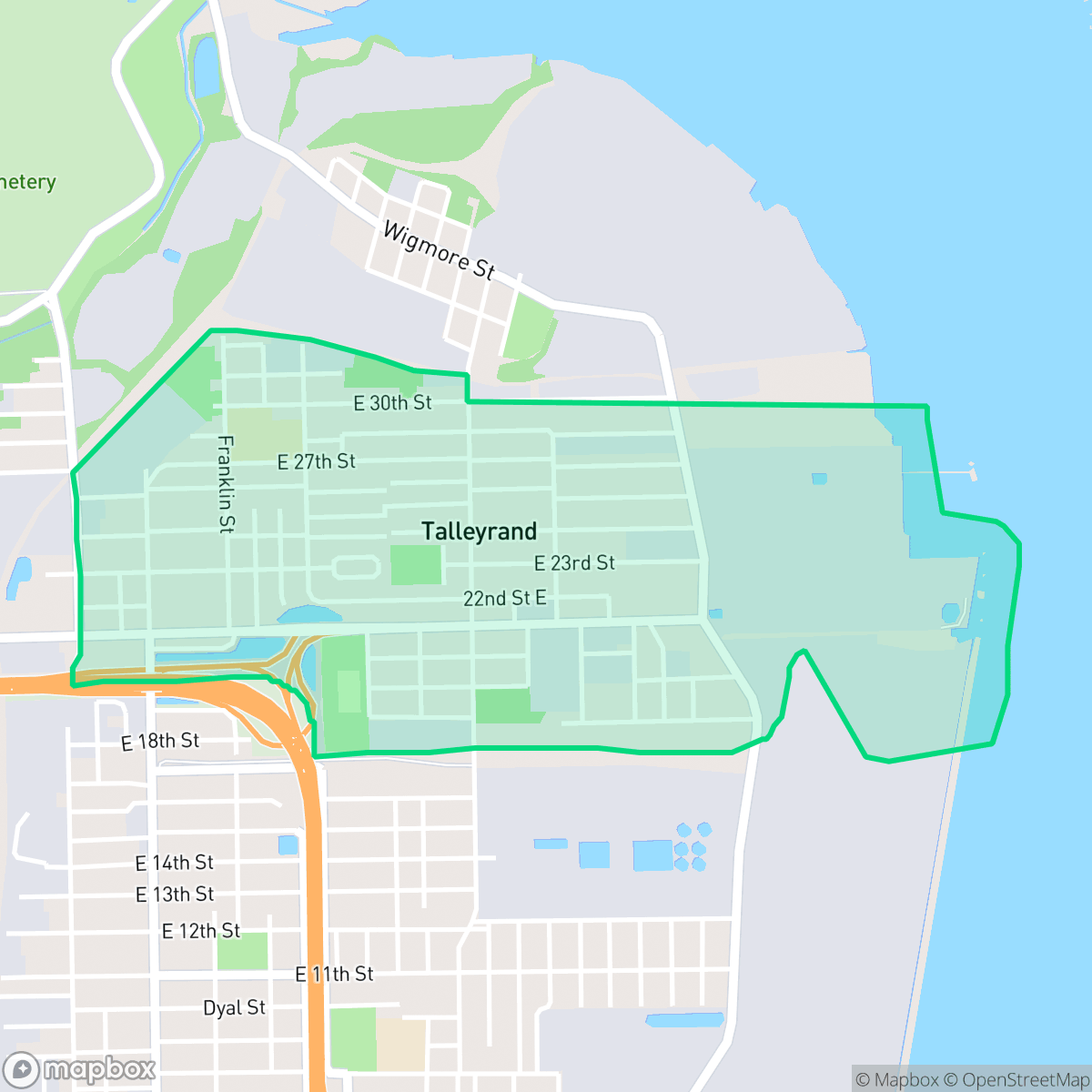
Platted in the mid-1880s by philanthropist James Jaquelin Daniel, the Longbranch neighborhood in Jacksonville’s Northside was named for the creek forming its northern border. Historically a working-class community, it grew significantly following the Great Fire of 1901 and benefited from the Jacksonville Traction Company’s Phoenix Park streetcar line, which connected residents to downtown and industrial hubs. The neighborhood served as a residential base for workers in the nearby maritime, railroad, and timber industries, including the massive Cummer Lumber Company. Longbranch Elementary School, established in 1917, remains a longstanding community anchor. In the mid-20th century, the neighborhood’s landscape and connectivity were significantly altered by the construction of the 20th Street Expressway, which bisected the area and reduced its residential footprint, leaving the community as a distinct enclave adjacent to the Talleyrand industrial district.
The area maintains a balanced suburban character, characterized by dense, basic housing and a utilitarian visual aesthetic. Because of its location near active commercial zones and industrial sites, the neighborhood experiences steady traffic noise and frequent heavy vehicle movement. Despite these industrial ties, the air quality remains generally better than the citywide average. The population is notably diverse, encompassing a mix of young adults, families, and seniors who benefit from higher-than-average health insurance coverage rates.
Prospective residents should consider the significant flood risk associated with the local floodplain, which often necessitates flood insurance for homeowners. The area is largely car-dependent, as the lack of sidewalks and heavy traffic make walking difficult. While the neighborhood provides a quiet, low-key environment, those seeking extensive pet amenities or highly landscaped surroundings may find the current infrastructure limited. Educational options fall under the Duval County School District, which is currently managing school consolidations and budget adjustments that impact neighborhood zoning.
Neighborhood Scores Across 15 Qualities
Residential spacing provides a moderate level of separation between neighbors, which is slightly higher than the Jacksonville average according to iHuus data.
Navigating the area on foot is difficult due to a lack of sidewalks and significant vehicle traffic. This level of walkability is slightly lower than the Jacksonville average, according to iHuus data.
Residential scenery consists primarily of dense, basic housing with limited greenery and small yards. According to iHuus data, the visual environment lacks significant amenities or landscaping compared to the Jacksonville average.
Access to dedicated dog parks and wide grassy verges for walking is relatively sparse. According to iHuus data, the availability of pet-friendly infrastructure in Longbranch is on par with the city average.
Residential streets and green spaces are distributed in roughly equal measure, providing a suburban character that is slightly more developed than the Jacksonville average according to iHuus data.
Subdued residential activity defines this area, which offers more localized engagement than the Jacksonville average. Most pockets are characterized by low-key street life and a reliance on vehicles for errands, though certain stretches near local parks provide moderate walkability.
Steady traffic sounds from nearby busy streets are common in this area. According to iHuus data, acoustic comfort here is notably higher than the Jacksonville average.
Air quality in Longbranch fluctuates between acceptable and unhealthy levels, though it remains notably better than the Jacksonville average according to iHuus data. Residents with respiratory sensitivities should monitor local conditions during periods of poor air quality.
Residential areas sit alongside active commercial zones, including storage facilities and a gas station that contribute to frequent heavy vehicle traffic. According to iHuus data, the presence of nearby industrial activity and an EPA Superfund site makes the industrial density roughly comparable to the Jacksonville average.
Health insurance access in Longbranch is notably higher than the Jacksonville average. According to iHuus data, a significant portion of the population maintains coverage, though gaps in access still exist.
Political leanings in this area are significantly more liberal than the Jacksonville average, according to iHuus data.
Residents will find a more varied demographic spread of young adults, families, and seniors than is typically seen across Jacksonville. According to iHuus data, this provides a balanced age distribution compared to the city average.
Significant flood risk exists due to the area's location within a hundred-year floodplain, which is notably higher than the Jacksonville average. Residents should anticipate that flood insurance will likely be a requirement for properties in this neighborhood according to iHuus data.
Address-Level Insights for Longbranch


iHuus Neighborhood Intelligence Insights
Get address-level neighborhood insights for Longbranch
- Street-level scores — see how individual blocks compare, not just neighborhood averages
- Micro-zone boundaries — identify quiet pockets, flood boundaries, and walkable clusters before you visit
- 15 dimensions in full — walkability, noise, air quality, school quality, insurance coverage, population age profile, urban/rural index, and more
- Boundary risk alerts — know if your address sits near a block boundary where scores drop, the kind of detail no listing will ever mention
- School insights — individual school ratings and insights, not just district-level data
- Compare before you commit — side-by-side data across neighborhoods, down to block precision
No credit card required
Compare with Any Neighborhood
| Dimension | Longbranch | 29th and Chase |
|---|---|---|
| 🚶 Walkabilityavg 3.96 | ||
| 🔊 Acoustic Comfortavg 4.37 | ||
| 🤫 Privacy Indexavg 4.3 | ||
| 🎨 Visual Appealavg 4.24 | ||
| 🐕 Dog Friendlinessavg 4.28 | ||
| 🗺️ Urban-Rural Indexavg 5.22 | ||
| ✨ Neighborhood Vibeavg 1.5 | ||
| 🏥 Health Insurance Coverageavg 4.35 | ||
| 🌿 Air Qualityavg 3.84 | ||
| 🏭 Industrial Proximityavg 5.11 | ||
| 🌊 Flood Safetyavg 4.01 | ||
| 🗳️ Ideological Leanavg 2.75 | ||
| 👥 Population Age Profileavg 3.26 | ||
| 🔥 Fire Safety | ||
| 🏫 School Quality |
Longbranch Rankings
School Districts Serving Longbranch
School Insights for Longbranch
Below average outcomes; significant attendance and academic challenges.
School Insights
See what's really behind every school rating near Longbranch
- Individual school ratings — each school's own score with outcome context, not just a district average
- Enrollment & class size data — student-to-teacher ratio and how it compares to the state average
- Full demographics breakdown — ethnicity and gender composition for every school in the enrollment zone
- Every school in the district — all schools within the enrollment boundary ranked by rating, not just the closest one
- Grade levels & benchmarks — elementary through high school, with below/above state-average flags
No credit card required