Herlong, Jacksonville
Updated · 5,108 residents
Herlong is a quiet, semi-rural community defined by its proximity to the historic recreational airport and a landscape of wooded lots. Residents enjoy a peaceful atmosphere with more privacy than typical Jacksonville suburbs, though the area offers limited retail and dining options within walking distance.
Key Highlights
About Herlong
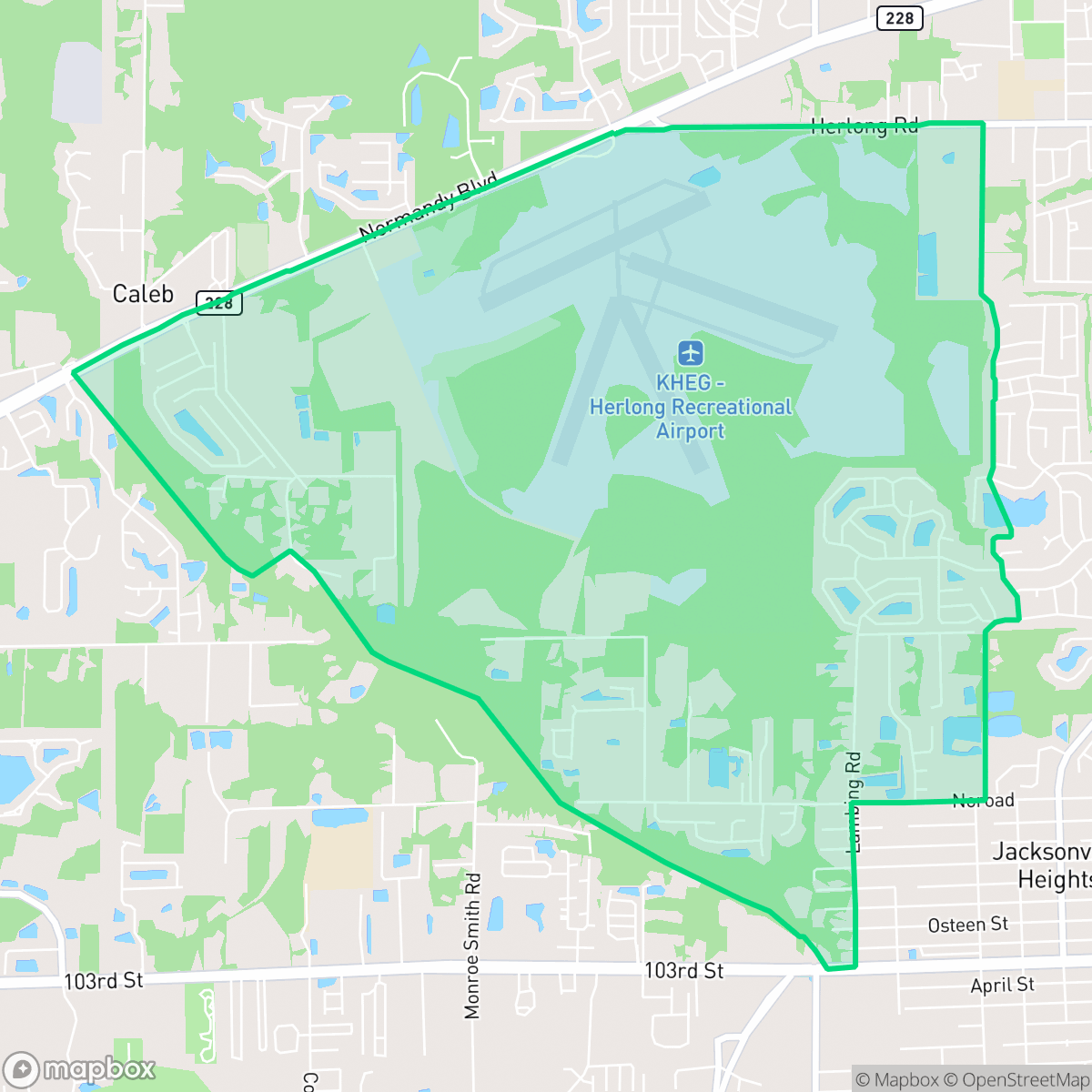
The Herlong neighborhood in Jacksonville is primarily defined by the adjacent Herlong Recreational Airport, originally established as a World War II Navy training field for student pilots. The facility was named in honor of Dr. M. B. Herlong, a prominent Jacksonville City Commission Chairman and State Senator who served during the 1930s. Following the war, the site transitioned into a center for general aviation and recreational flying. The surrounding residential community, largely developed during the mid-to-late 20th century, reflects Jacksonville's post-war suburban expansion. Today, the area is recognized for its significant demographic diversity and its continued role as a focal point for aviation enthusiasts in Northeast Florida, serving as a hub for light sport aircraft, gliders, and skydiving operations.
The area maintains a distinct semi-rural character, characterized by open landscapes, tree canopies, and a mix of suburban housing styles. Unlike more densely packed urban centers, the neighborhood provides residents with increased privacy and a quieter acoustic environment, despite the occasional hum of local traffic. The presence of green verges and small ponds makes the community well-suited for pet owners who appreciate outdoor space, and according to iHuus data, the air quality here remains better than the Jacksonville city average. Prospective residents should note that the neighborhood functions primarily as a residential enclave with very limited commercial activity. While the lack of immediate retail access requires travel for daily errands, the area benefits from a diverse demographic profile. Families within the Duval County School District will find a system currently navigating significant budget and consolidation challenges, making school zoning a critical factor for those with children.
Neighborhood Scores Across 15 Qualities
Housing density varies significantly across the area, ranging from closely spaced mobile home parks to more traditional suburban lots with moderate buffers. According to iHuus data, this level of privacy is higher than the Jacksonville average.
Low traffic on residential cul-de-sacs provides safe walking opportunities, but the lack of continuous sidewalks along major roads makes pedestrian travel difficult. According to iHuus data, walkability in this area is slightly higher than the Jacksonville average due to these quiet residential loops.
Residential landscapes feature a mix of standard tract housing and high-density developments, offering more visual variety than the Jacksonville average. According to iHuus data, the area contains modest yards and simple roof geometries alongside some larger lots with private pools.
Continuous green verges and small ponds offer decent walking space for pets within residential blocks. According to iHuus data, this level of accessibility is higher than the Jacksonville average.
Open landscapes and wooded lots define this area, which offers a more spread out, semi-rural feel than the typical Jacksonville suburban density. Residents will find a mix of large tree canopies and scattered homes that are notably less dense than the city average.
Low activity levels and a lack of commercial hubs define this area, which feels more tranquil than the Jacksonville average. Residents will find a peaceful, semi-rural landscape with very few local dining or retail destinations within walking distance.
A steady hum of local traffic originates from nearby busy streets; however, the acoustic environment remains more peaceful than the Jacksonville average according to iHuus data.
Air quality in this area fluctuates between acceptable and unhealthy levels, presenting occasional concerns for sensitive groups. According to iHuus data, the air quality remains notably better than the Jacksonville city average.
Residential life dominates the area with only occasional light commercial activity; however, certain pockets experience increased truck traffic and noise from nearby storage facilities and utility infrastructure. According to iHuus data, this neighborhood has a higher concentration of industrial-related activity than the Jacksonville average.
Health insurance accessibility in Herlong is slightly above the Jacksonville average. Residents may find that access to coverage is more stable here than in many other parts of the city, according to iHuus data.
Political viewpoints are evenly distributed across the area, representing a more balanced ideological landscape than the wider Jacksonville average according to iHuus data.
Residents live alongside a varied mix of young adults, families, and older individuals. This demographic spread is slightly more diverse than the typical age profile found across Jacksonville.
Flood risk in this area is higher than the Jacksonville average, though FEMA has not yet finalized a detailed flood study for this specific location. According to iHuus data, residents should remain aware of potential moderate risks during heavy rain events.
Address-Level Insights for Herlong


iHuus Neighborhood Intelligence Insights
Get address-level neighborhood insights for Herlong
- Street-level scores — see how individual blocks compare, not just neighborhood averages
- Micro-zone boundaries — identify quiet pockets, flood boundaries, and walkable clusters before you visit
- 15 dimensions in full — walkability, noise, air quality, school quality, insurance coverage, population age profile, urban/rural index, and more
- Boundary risk alerts — know if your address sits near a block boundary where scores drop, the kind of detail no listing will ever mention
- School insights — individual school ratings and insights, not just district-level data
- Compare before you commit — side-by-side data across neighborhoods, down to block precision
No credit card required
Compare with Any Neighborhood
| Dimension | Herlong | 29th and Chase |
|---|---|---|
| 🚶 Walkabilityavg 3.96 | ||
| 🔊 Acoustic Comfortavg 4.37 | ||
| 🤫 Privacy Indexavg 4.3 | ||
| 🎨 Visual Appealavg 4.24 | ||
| 🐕 Dog Friendlinessavg 4.28 | ||
| 🗺️ Urban-Rural Indexavg 5.22 | ||
| ✨ Neighborhood Vibeavg 1.5 | ||
| 🏥 Health Insurance Coverageavg 4.35 | ||
| 🌿 Air Qualityavg 3.84 | ||
| 🏭 Industrial Proximityavg 5.11 | ||
| 🌊 Flood Safetyavg 4.01 | ||
| 🗳️ Ideological Leanavg 2.75 | ||
| 👥 Population Age Profileavg 3.26 | ||
| 🔥 Fire Safety | ||
| 🏫 School Quality |
Herlong Rankings
School Districts Serving Herlong
School Insights for Herlong
Below average outcomes; significant attendance and academic challenges.
School Insights
See what's really behind every school rating near Herlong
- Individual school ratings — each school's own score with outcome context, not just a district average
- Enrollment & class size data — student-to-teacher ratio and how it compares to the state average
- Full demographics breakdown — ethnicity and gender composition for every school in the enrollment zone
- Every school in the district — all schools within the enrollment boundary ranked by rating, not just the closest one
- Grade levels & benchmarks — elementary through high school, with below/above state-average flags
No credit card required