Eastport, Jacksonville
Updated · 228 residents
Eastport is a quiet, secluded residential area in Jacksonville characterized by its dense housing and urban development. While the neighborhood offers a tranquil atmosphere, it presents significant challenges regarding walkability, air quality, and flood risk.
Key Highlights
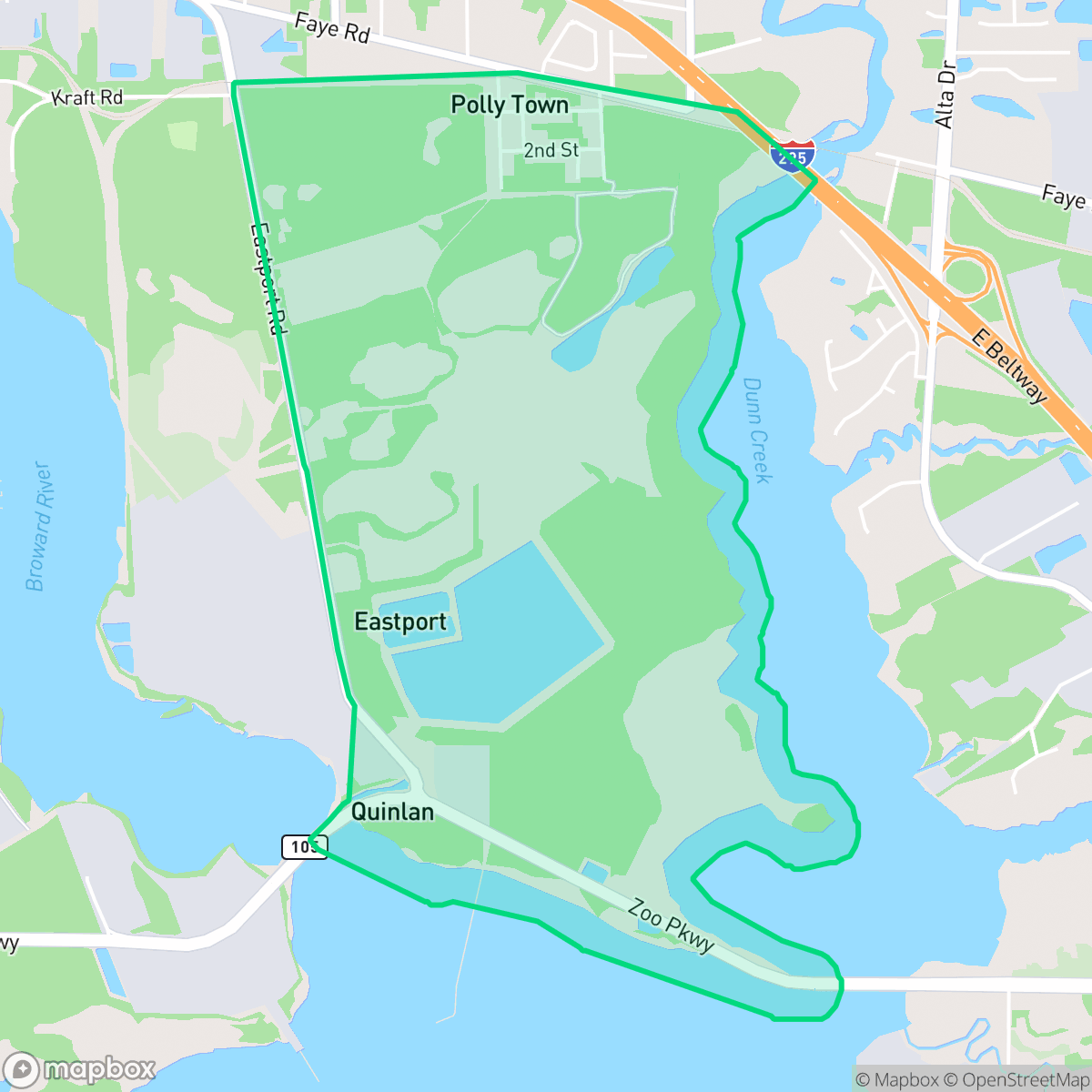
About Eastport
Eastport, located in the Northside of Jacksonville, is historically defined by its deep connection to the region's industrial and maritime heritage. Throughout the 20th century, the area became a vital corridor for the lumber and paper industries, leveraging its strategic location along the St. Johns and Broward rivers to support large-scale pulp and kraft mill operations. The neighborhood is also home to the historic Eastport (Colored) Cemetery, a significant site that serves as a tangible link to the African American community that lived and worked in the area during the early 20th century. While the landscape has largely transitioned into a modern hub for manufacturing and logistics, these elements characterize Eastport's evolution from a river-based industrial settlement into a foundational component of Jacksonville's broader industrial identity.
The neighborhood functions as a densely built urban core, primarily populated by young adults. It maintains a quiet, secluded environment with limited commercial activity, requiring residents to rely on personal vehicles for daily errands. The landscape is notably unpolished, featuring closely spaced housing and limited green space, which impacts pet owners and those seeking outdoor recreation. According to iHuus data, the area is defined by a steady hum of traffic, though it remains more tranquil than many other parts of the city.
Prospective residents should weigh the trade-offs of living in this area, particularly regarding environmental concerns like air quality and flood vulnerability. The neighborhood is served by the Duval County School District, where families may find opportunities in specialized magnet programs despite ongoing district-wide consolidations and budget challenges. Due to the limited local amenities and infrastructure constraints, the area is best suited for individuals who prioritize a quiet setting over immediate access to retail or recreational hubs.
Neighborhood Scores Across 15 Qualities
Homes are situated in close quarters with very little separation between structures. This level of density is significantly higher than the Jacksonville average, according to iHuus data.
Limited sidewalk availability and heavy traffic patterns make navigating the area on foot challenging. According to iHuus data, walkability in Eastport is notably lower than the Jacksonville average.
Unpaved driveways and visible debris contribute to a landscape that appears significantly less manicured than the Jacksonville average. According to iHuus data, irregular structures are common throughout this area.
Sparse greenery and narrow verges make finding open areas for pets difficult. According to iHuus data, the lack of accessible, unfenced natural space is significantly below the Jacksonville average.
Multi-storey structures and dense development characterize this area, which presents a more concentrated urban environment than the Jacksonville average. According to iHuus data, greenery is limited to occasional patches within the built landscape.
Very little activity or commercial pulse exists within this area, making it even more tranquil than the Jacksonville average. Residents will find a car-dependent environment with few nearby amenities or local dining options according to iHuus data.
Consistent noise from nearby busy streets defines the acoustic environment, though levels remain slightly more tranquil than the Jacksonville average.
Frequent unhealthy air quality levels pose a significant risk to sensitive groups. According to iHuus data, the air quality in Eastport is notably worse than the Jacksonville average.
Industrial activity and heavy freight corridors are much less prevalent here than in most parts of Jacksonville. According to iHuus data, the area is characterized by residential streets and local services rather than large scale warehouses or heavy commercial operations.
Access to health insurance is significantly lower in Eastport than the Jacksonville average, according to iHuus data.
Voting and census indicators show a predominantly conservative leaning, which is significantly more pronounced than the city average according to iHuus data.
The area features a high concentration of young adults with significantly fewer families or older residents than the Jacksonville average. According to iHuus data, this demographic profile suggests a community focused on early-career professionals rather than multi-generational households.
Significant flood vulnerability exists due to the area's location within a designated floodplain. According to iHuus data, this level of risk is substantially higher than the average for Jacksonville.
Address-Level Insights for Eastport


iHuus Neighborhood Intelligence Insights
Get address-level neighborhood insights for Eastport
- Street-level scores — see how individual blocks compare, not just neighborhood averages
- Micro-zone boundaries — identify quiet pockets, flood boundaries, and walkable clusters before you visit
- 15 dimensions in full — walkability, noise, air quality, school quality, insurance coverage, population age profile, urban/rural index, and more
- Boundary risk alerts — know if your address sits near a block boundary where scores drop, the kind of detail no listing will ever mention
- School insights — individual school ratings and insights, not just district-level data
- Compare before you commit — side-by-side data across neighborhoods, down to block precision
No credit card required
Compare with Any Neighborhood
| Dimension | Eastport | 29th and Chase |
|---|---|---|
| 🚶 Walkabilityavg 3.96 | ||
| 🔊 Acoustic Comfortavg 4.37 | ||
| 🤫 Privacy Indexavg 4.3 | ||
| 🎨 Visual Appealavg 4.24 | ||
| 🐕 Dog Friendlinessavg 4.28 | ||
| 🗺️ Urban-Rural Indexavg 5.22 | ||
| ✨ Neighborhood Vibeavg 1.5 | ||
| 🏥 Health Insurance Coverageavg 4.35 | ||
| 🌿 Air Qualityavg 3.84 | ||
| 🏭 Industrial Proximityavg 5.11 | ||
| 🌊 Flood Safetyavg 4.01 | ||
| 🗳️ Ideological Leanavg 2.75 | ||
| 👥 Population Age Profileavg 3.26 | ||
| 🔥 Fire Safety | ||
| 🏫 School Quality |
Eastport Rankings
School Districts Serving Eastport
School Insights for Eastport
Below average outcomes; significant attendance and academic challenges.
School Insights
See what's really behind every school rating near Eastport
- Individual school ratings — each school's own score with outcome context, not just a district average
- Enrollment & class size data — student-to-teacher ratio and how it compares to the state average
- Full demographics breakdown — ethnicity and gender composition for every school in the enrollment zone
- Every school in the district — all schools within the enrollment boundary ranked by rating, not just the closest one
- Grade levels & benchmarks — elementary through high school, with below/above state-average flags
No credit card required