Eagle Bend, Jacksonville
Updated · 878 residents
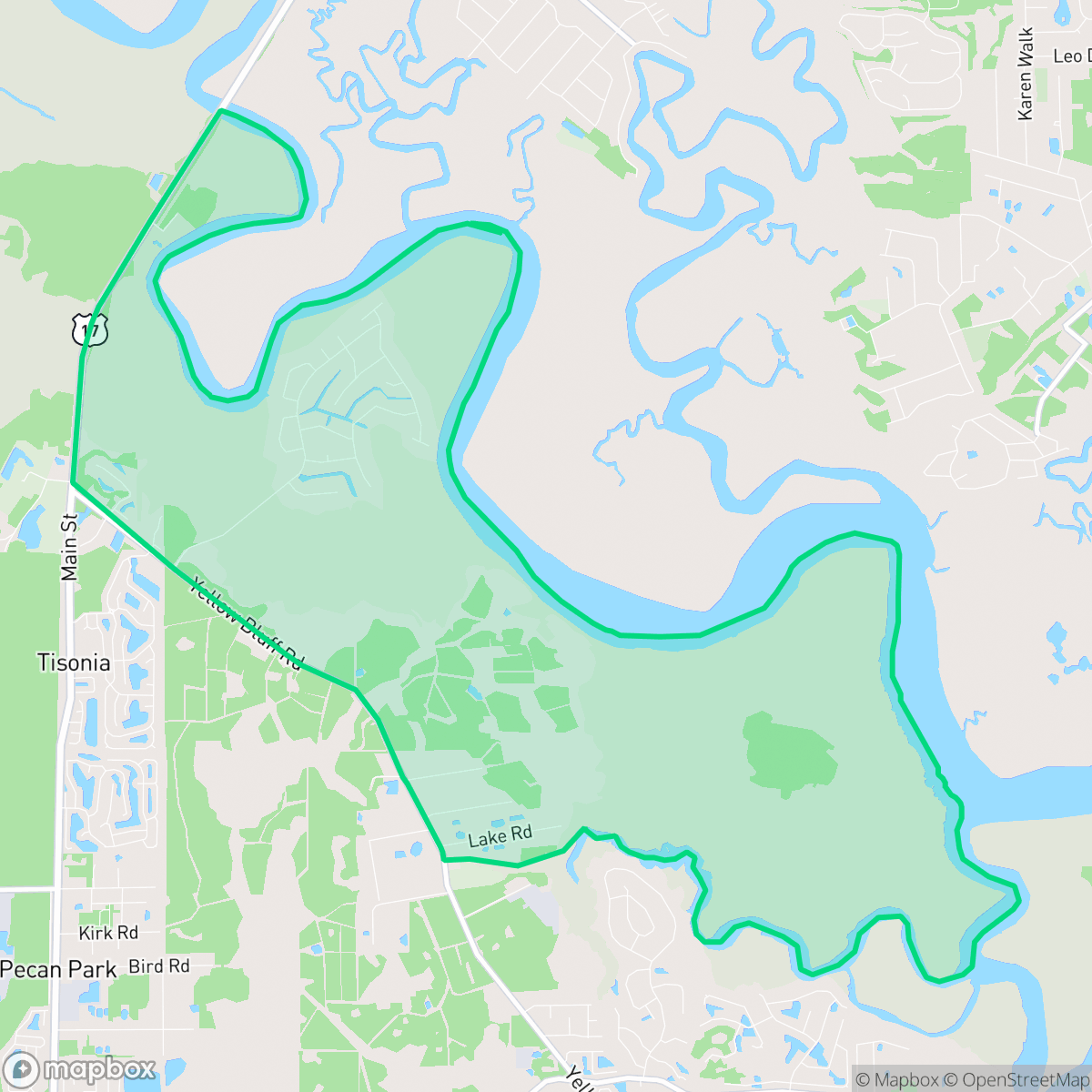
Eagle Bend is a quiet, secluded residential community in North Jacksonville that offers a semi-rural atmosphere near the Timucuan Ecological and Historic Preserve. The neighborhood is primarily car dependent with limited pedestrian infrastructure, and it features a younger demographic profile than the city average.
Key Highlights
About Eagle Bend
Eagle Bend, specifically the community known as Eagle Bend Island in North Jacksonville, sits along the Nassau River with a history rooted in 19th-century industry and local lore. Early maps divided the area into the Cyrus Briggs Grant and Pearson Island, the latter of which was the site of a sawmill operated by Jeremy Holmes in the 1860s. The island’s history includes associations with the nearby Kingsley Plantation and legends of pirate treasure, which led early residents to discover historical artifacts like pottery shards and railroad spikes. Some local properties still feature non-native granite boulders originally brought to the area as 19th-century ship ballast. Developed as a gated residential community beginning in the 1970s, the neighborhood is defined by its estate-sized lots and its integration with the surrounding Timucuan Ecological and Historic Preserve.
The area is defined by its low-density residential layout and proximity to protected natural lands. Residents here experience a tranquil environment with minimal commercial activity, providing a distinct departure from the busier urban centers of Jacksonville. The community is characterized by a utilitarian aesthetic, and homes are situated relatively close together, which limits the sense of privacy for those living in the neighborhood.
Prospective residents should note that the area is entirely car dependent, as the lack of sidewalks and heavy reliance on personal vehicles define daily transit. According to iHuus data, the location faces challenges regarding air quality and a high risk of flooding, which may necessitate specific insurance considerations. While the community offers a secluded lifestyle, it is best suited for those who prioritize a quiet, low-density setting over proximity to urban amenities or high walkability.
Neighborhood Scores Across 15 Qualities
Homes in this area are situated in close quarters with minimal separation between detached structures. According to iHuus data, this level of density results in less privacy than the typical Jacksonville neighborhood.
Pedestrian travel is difficult due to a lack of sidewalks and heavy traffic. This level of walkability is significantly lower than the Jacksonville average, according to iHuus data.
Dense housing and limited green space define the area, resulting in a landscape that is less visually varied than much of Jacksonville. According to iHuus data, small yards and few local amenities contribute to a more utilitarian aesthetic.
Sparse greenery and narrow verges make long walks with pets difficult. According to iHuus data, the area lacks the accessible outdoor spaces found more frequently across Jacksonville.
Predominantly low-density development and significant open space characterize this area. This setting feels considerably less urban than the Jacksonville average according to iHuus data.
Minimal street life and a lack of commercial activity define this area. According to iHuus data, the neighborhood is significantly more tranquil than the Jacksonville average, offering a semi-rural atmosphere with very few nearby amenities or landmarks.
A steady hum of local traffic from a nearby busy street provides a consistent background level of sound. According to iHuus data, acoustic levels in Eagle Bend are notably higher than the Jacksonville average.
Frequent unhealthy air quality levels pose significant risks to sensitive groups. According to iHuus data, the atmosphere in Eagle Bend is considerably more polluted than the Jacksonville average.
Residential streets and open green spaces dominate the area, offering much less exposure to warehouses and freight corridors than the Jacksonville average. According to iHuus data, this neighborhood is primarily composed of quiet residential zones with minimal heavy commercial activity nearby.
Health insurance access among residents is significantly lower than the Jacksonville average, according to iHuus data. This indicates a higher prevalence of uninsured individuals within the community.
Voting patterns and census indicators show a significantly more conservative leaning than the Jacksonville average, according to iHuus data.
Young adults represent the primary demographic in this area, creating a population profile that is notably younger than the Jacksonville average. According to iHuus data, there is only a modest presence of families or older residents within the neighborhood.
Frequent flooding is a significant concern in this area, as much of the neighborhood sits within a designated floodplain. According to iHuus data, the flood risk here is notably higher than the Jacksonville average and may necessitate flood insurance.
Address-Level Insights for Eagle Bend


iHuus Neighborhood Intelligence Insights
Get address-level neighborhood insights for Eagle Bend
- Street-level scores — see how individual blocks compare, not just neighborhood averages
- Micro-zone boundaries — identify quiet pockets, flood boundaries, and walkable clusters before you visit
- 15 dimensions in full — walkability, noise, air quality, school quality, insurance coverage, population age profile, urban/rural index, and more
- Boundary risk alerts — know if your address sits near a block boundary where scores drop, the kind of detail no listing will ever mention
- School insights — individual school ratings and insights, not just district-level data
- Compare before you commit — side-by-side data across neighborhoods, down to block precision
No credit card required
Compare with Any Neighborhood
| Dimension | Eagle Bend | 29th and Chase |
|---|---|---|
| 🚶 Walkabilityavg 3.96 | ||
| 🔊 Acoustic Comfortavg 4.37 | ||
| 🤫 Privacy Indexavg 4.3 | ||
| 🎨 Visual Appealavg 4.24 | ||
| 🐕 Dog Friendlinessavg 4.28 | ||
| 🗺️ Urban-Rural Indexavg 5.22 | ||
| ✨ Neighborhood Vibeavg 1.5 | ||
| 🏥 Health Insurance Coverageavg 4.35 | ||
| 🌿 Air Qualityavg 3.84 | ||
| 🏭 Industrial Proximityavg 5.11 | ||
| 🌊 Flood Safetyavg 4.01 | ||
| 🗳️ Ideological Leanavg 2.75 | ||
| 👥 Population Age Profileavg 3.26 | ||
| 🔥 Fire Safety | ||
| 🏫 School Quality |
Eagle Bend Rankings
School Districts Serving Eagle Bend
School Insights for Eagle Bend
Below average outcomes; significant attendance and academic challenges.
School Insights
See what's really behind every school rating near Eagle Bend
- Individual school ratings — each school's own score with outcome context, not just a district average
- Enrollment & class size data — student-to-teacher ratio and how it compares to the state average
- Full demographics breakdown — ethnicity and gender composition for every school in the enrollment zone
- Every school in the district — all schools within the enrollment boundary ranked by rating, not just the closest one
- Grade levels & benchmarks — elementary through high school, with below/above state-average flags
No credit card required