Deerwood, Jacksonville
Updated · 10,611 residents
Deerwood is a quiet, upscale community defined by its mature landscaping, spacious residential estates, and proximity to a championship golf course. While the area offers a semi-rural atmosphere with ample green space for pets, residents should expect frequent traffic noise from nearby transit corridors.
Key Highlights
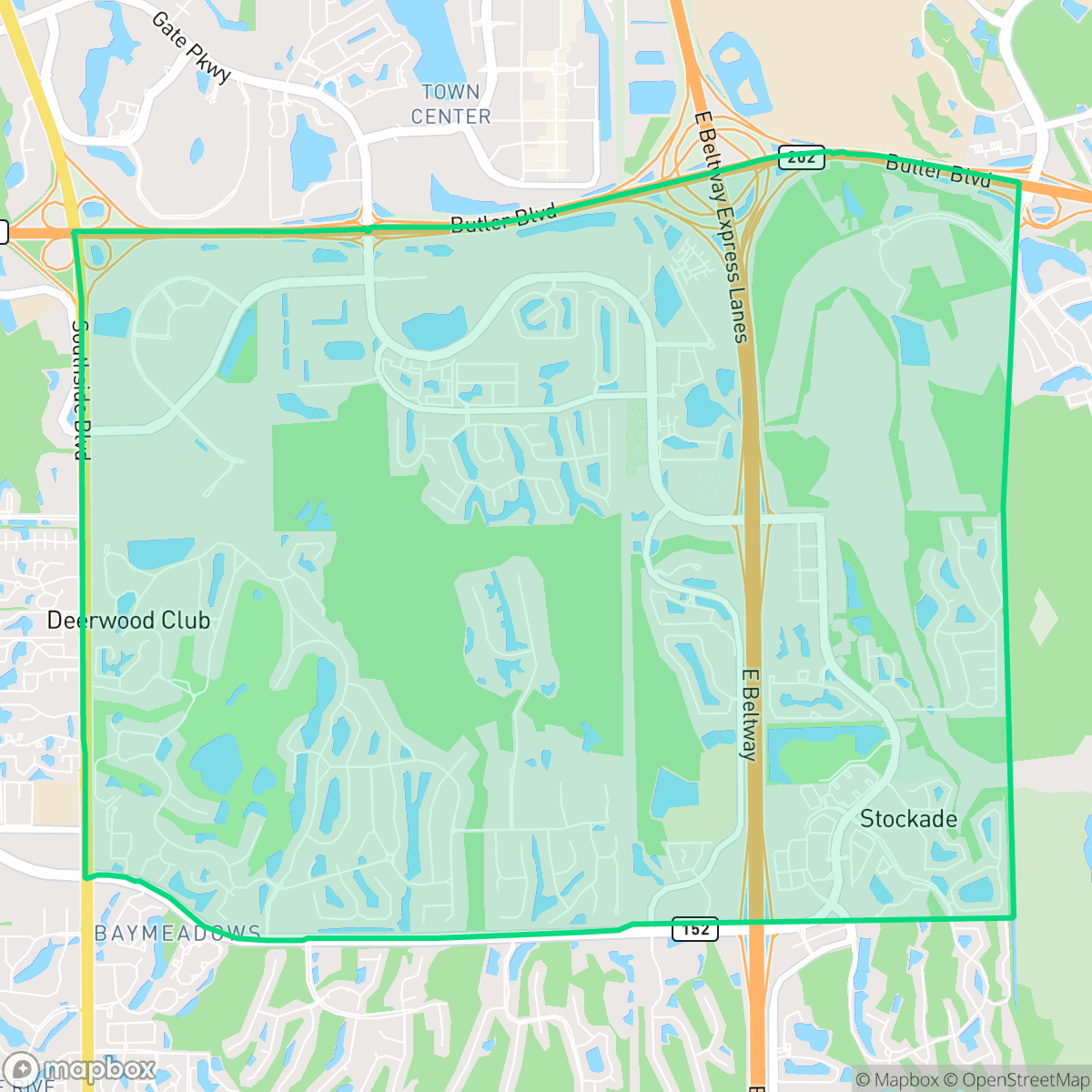
About Deerwood
Established in 1960, Deerwood holds the distinction of being Florida’s first gated community. Conceived by Bryant Skinner on land formerly part of his family’s extensive timber holdings, the neighborhood was designed as an exclusive residential enclave centered around a championship golf course laid out by architect George Cobb. Its identity is defined by a country-club lifestyle, featuring mature landscaping, winding lanes, and a mix of architectural styles ranging from mid-century estates to modern residences. Historically significant, the community served as a prominent social hub, hosting the PGA’s Greater Jacksonville Open in the late 1960s and early 1970s. In November 1975, the Deerwood Country Club gained national attention when it hosted diplomatic talks between U.S. President Gerald Ford and Egyptian President Anwar Sadat.
The neighborhood provides a distinctively upscale suburban environment characterized by large, private properties and winding, tree-lined streets. It maintains a semi-rural aesthetic through its combination of wooded areas and interconnected water features, which creates a peaceful visual backdrop. Unlike many parts of Jacksonville, the area offers a balanced demographic profile that appeals to a wide range of residents, from young professionals to retirees.
While the community is known for its aesthetic appeal and high levels of health insurance coverage, it is not without trade-offs. The acoustic environment is notably affected by its proximity to major thoroughfares, resulting in persistent traffic noise. Residents benefit from a moderate level of walkability on local residential streets, though the surrounding highway infrastructure creates significant barriers for pedestrians. Families within the Duval County School District should note the ongoing district-wide consolidation efforts, though access to specialized magnet programs remains a key advantage for those seeking advanced educational opportunities.
Neighborhood Scores Across 15 Qualities
Housing arrangements range from high-density apartments with shared walls to more detached homes near the golf course. This mix provides more personal buffer space than the typical Jacksonville neighborhood, according to iHuus data.
Quiet residential streets and cul-de-sacs allow for safe walking, though a central highway and large parking areas act as significant pedestrian barriers. According to iHuus data, the level of walkability here is notably higher than the Jacksonville average.
Large homes and frequent upscale amenities contribute to a landscape that is notably more aesthetically pleasing than the Jacksonville average. According to iHuus data, the area features spacious driveways and residential properties adjacent to golf courses.
Continuous green buffers and interconnected retention ponds provide ample walking loops for pets. According to iHuus data, these accessible grassy areas offer significantly more space for animals than the Jacksonville average.
Open land and wooded areas are frequently interspersed with scattered homes, making the area feel more semi-rural than the Jacksonville average. According to iHuus data, this landscape transitions into denser suburban pockets near major arterial roads and commercial office parks.
Street life is generally subdued, as much of the area consists of calm residential pockets with limited commercial activity. While some nodes serve as active local hubs for dining and wellness, the neighborhood overall offers a much lower level of energy than the city average.
Constant traffic noise from nearby major thoroughfares and transit corridors defines the acoustic environment. According to iHuus data, these disturbances are significantly more frequent than in most other parts of Jacksonville.
Air conditions fluctuate between acceptable and unhealthy levels, though levels remain notably better than the Jacksonville average according to iHuus data. Sensitive groups should monitor local reports during periods of poor visibility or stagnant air.
Primarily residential and light commercial, this area avoids heavy industrial activity and significant environmental hazards. According to iHuus data, the neighborhood features far less industrial proximity than the Jacksonville average.
Health insurance enrollment among residents is notably higher than the Jacksonville average, according to iHuus data.
Political leanings in Deerwood favor conservative perspectives, though a moderate presence of opposing views exists. This ideological tilt is slightly more pronounced than the average found across Jacksonville.
Residents live alongside a varied demographic of young professionals, families, and seniors. According to iHuus data, this age distribution is notably more balanced than the average found across Jacksonville.
Flood safety levels in Deerwood are notably higher than the Jacksonville average, though specific risk assessments remain undetermined due to a lack of detailed federal studies. Residents should remain aware of potential vulnerabilities as local flood mapping for this area is currently incomplete.
Address-Level Insights for Deerwood


iHuus Neighborhood Intelligence Insights
Get address-level neighborhood insights for Deerwood
- Street-level scores — see how individual blocks compare, not just neighborhood averages
- Micro-zone boundaries — identify quiet pockets, flood boundaries, and walkable clusters before you visit
- 15 dimensions in full — walkability, noise, air quality, school quality, insurance coverage, population age profile, urban/rural index, and more
- Boundary risk alerts — know if your address sits near a block boundary where scores drop, the kind of detail no listing will ever mention
- School insights — individual school ratings and insights, not just district-level data
- Compare before you commit — side-by-side data across neighborhoods, down to block precision
No credit card required
Compare with Any Neighborhood
| Dimension | Deerwood | 29th and Chase |
|---|---|---|
| 🚶 Walkabilityavg 3.96 | ||
| 🔊 Acoustic Comfortavg 4.37 | ||
| 🤫 Privacy Indexavg 4.3 | ||
| 🎨 Visual Appealavg 4.24 | ||
| 🐕 Dog Friendlinessavg 4.28 | ||
| 🗺️ Urban-Rural Indexavg 5.22 | ||
| ✨ Neighborhood Vibeavg 1.5 | ||
| 🏥 Health Insurance Coverageavg 4.35 | ||
| 🌿 Air Qualityavg 3.84 | ||
| 🏭 Industrial Proximityavg 5.11 | ||
| 🌊 Flood Safetyavg 4.01 | ||
| 🗳️ Ideological Leanavg 2.75 | ||
| 👥 Population Age Profileavg 3.26 | ||
| 🔥 Fire Safety | ||
| 🏫 School Quality |
Deerwood Rankings
School Districts Serving Deerwood
School Insights for Deerwood
Below average outcomes; significant attendance and academic challenges.
School Insights
See what's really behind every school rating near Deerwood
- Individual school ratings — each school's own score with outcome context, not just a district average
- Enrollment & class size data — student-to-teacher ratio and how it compares to the state average
- Full demographics breakdown — ethnicity and gender composition for every school in the enrollment zone
- Every school in the district — all schools within the enrollment boundary ranked by rating, not just the closest one
- Grade levels & benchmarks — elementary through high school, with below/above state-average flags
No credit card required