Cisco Gardens, Jacksonville
Updated · 1,419 residents
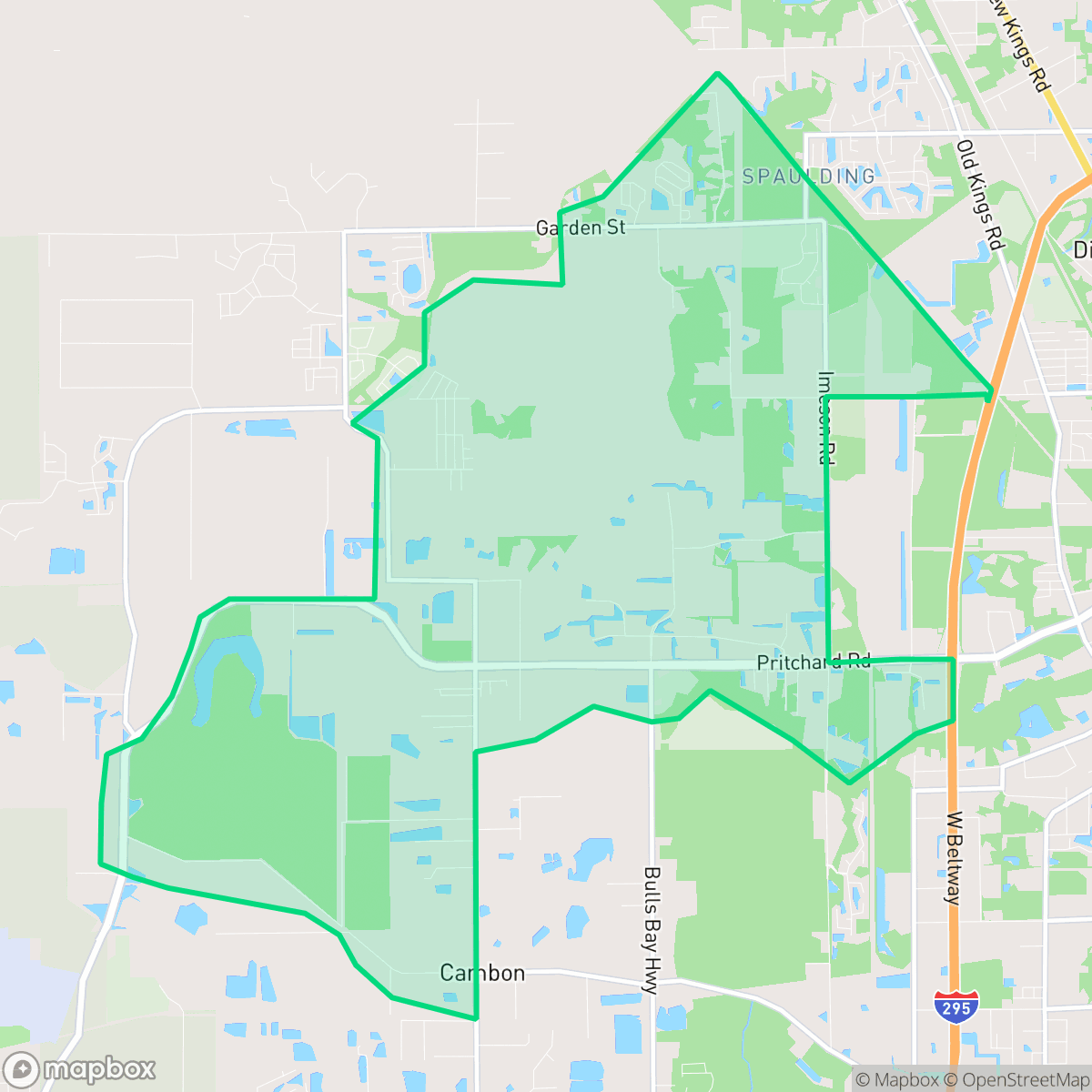
Cisco Gardens is a quiet residential enclave on Jacksonville's Westside known for its community-led park and peaceful, secluded atmosphere. While the neighborhood offers a tranquil environment with minimal ambient noise, residents should be aware of limited local amenities, poor walkability, and environmental factors like flood risk and industrial proximity.
Key Highlights
About Cisco Gardens
Cisco Gardens is a small, quiet residential community located on the Westside of Jacksonville, Florida. The neighborhood is characterized by a sparse, suburban-rural atmosphere with a strong emphasis on local community involvement. Its most notable landmark is the 22-acre Cisco Gardens Park, which was acquired in 1987 through the organized efforts of the local Cisco Gardens Area Civic Club. Beyond the establishment of this recreational space, the area lacks a distinct, documented historical or architectural legacy, functioning primarily as a residential enclave that maintains its character through the active participation of its neighborhood association.
This Westside community maintains a balanced suburban feel, characterized by its quiet streets and a lack of commercial development. It is a destination for those who prioritize a secluded, low-key lifestyle over urban convenience, as the area contains few points of interest and requires a vehicle for most daily errands. The demographic profile skews toward young adults, contributing to a neighborhood identity that is defined more by its residential privacy than by active social or retail hubs.
Prospective residents should weigh the benefits of a peaceful environment against several practical trade-offs. The neighborhood faces challenges related to poor air quality, higher flood vulnerability, and proximity to industrial sites, including a nearby Superfund location. Educational needs are served by the Duval County School District, which provides access to competitive magnet programs despite ongoing budget and consolidation pressures across the district. Given the limited sidewalk infrastructure and sparse greenery, the area is best suited for those who value a quiet, private home base and are prepared for the realities of car-dependent suburban living.
Neighborhood Scores Across 15 Qualities
Residential spacing provides some buffer between neighbors, though privacy levels are slightly lower than the Jacksonville average.
Limited sidewalk availability and high traffic volumes make pedestrian travel uncomfortable. Walking accessibility in this area is lower than the Jacksonville average, according to iHuus data.
Dense housing and small yards characterize this area, which offers less visual variety than the Jacksonville average. According to iHuus data, there is a noticeable lack of manicured landscaping or public amenities in the immediate vicinity.
Sparse greenery and narrow roadside verges make for limited off-leash areas. This neighborhood ranks below the Jacksonville average for dog accessibility according to iHuus data.
Residential streets and green spaces are distributed fairly evenly, mirroring the typical density found across Jacksonville. According to iHuus data, this area offers a standard suburban landscape with no notable lean toward high-density urbanism or rural isolation.
Minimal commercial activity and few points of interest create a very tranquil environment, even more so than the typical Jacksonville area. Residents will find this neighborhood highly peaceful but should note that most errands require a car due to the lack of local shops or landmarks.
Acoustic levels are notably lower than the Jacksonville average, consisting primarily of infrequent trains and distant vehicle traffic. According to iHuus data, residents can expect a peaceful atmosphere with very little ambient noise.
Frequent unhealthy air quality levels pose a significant risk to sensitive groups. This neighborhood's air quality is slightly below the Jacksonville average, according to iHuus data.
Heavy freight traffic and loading dock activity from nearby warehouses contribute to more industrial character than the Jacksonville average. Residents should also be aware of a nearby Superfund site that may impact local soil and groundwater quality according to iHuus data.
Health insurance access among residents is notably lower than the Jacksonville average, according to iHuus data.
Political sentiment in Cisco Gardens leans more conservative than the Jacksonville average, according to iHuus data.
Young adults make up the majority of the population, creating a demographic profile that is slightly younger than the Jacksonville average. While there is a modest presence of families and older residents, the area skews heavily toward a younger age group according to iHuus data.
Significant flood vulnerability exists within this area due to its location inside a designated floodplain. According to iHuus data, the risk level in Cisco Gardens is notably higher than the Jacksonville city average.
Address-Level Insights for Cisco Gardens


iHuus Neighborhood Intelligence Insights
Get address-level neighborhood insights for Cisco Gardens
- Street-level scores — see how individual blocks compare, not just neighborhood averages
- Micro-zone boundaries — identify quiet pockets, flood boundaries, and walkable clusters before you visit
- 15 dimensions in full — walkability, noise, air quality, school quality, insurance coverage, population age profile, urban/rural index, and more
- Boundary risk alerts — know if your address sits near a block boundary where scores drop, the kind of detail no listing will ever mention
- School insights — individual school ratings and insights, not just district-level data
- Compare before you commit — side-by-side data across neighborhoods, down to block precision
No credit card required
Compare with Any Neighborhood
| Dimension | Cisco Gardens | 29th and Chase |
|---|---|---|
| 🚶 Walkabilityavg 3.96 | ||
| 🔊 Acoustic Comfortavg 4.37 | ||
| 🤫 Privacy Indexavg 4.3 | ||
| 🎨 Visual Appealavg 4.24 | ||
| 🐕 Dog Friendlinessavg 4.28 | ||
| 🗺️ Urban-Rural Indexavg 5.22 | ||
| ✨ Neighborhood Vibeavg 1.5 | ||
| 🏥 Health Insurance Coverageavg 4.35 | ||
| 🌿 Air Qualityavg 3.84 | ||
| 🏭 Industrial Proximityavg 5.11 | ||
| 🌊 Flood Safetyavg 4.01 | ||
| 🗳️ Ideological Leanavg 2.75 | ||
| 👥 Population Age Profileavg 3.26 | ||
| 🔥 Fire Safety | ||
| 🏫 School Quality |
Cisco Gardens Rankings
School Districts Serving Cisco Gardens
School Insights for Cisco Gardens
Below average outcomes; significant attendance and academic challenges.
School Insights
See what's really behind every school rating near Cisco Gardens
- Individual school ratings — each school's own score with outcome context, not just a district average
- Enrollment & class size data — student-to-teacher ratio and how it compares to the state average
- Full demographics breakdown — ethnicity and gender composition for every school in the enrollment zone
- Every school in the district — all schools within the enrollment boundary ranked by rating, not just the closest one
- Grade levels & benchmarks — elementary through high school, with below/above state-average flags
No credit card required