Charter Point, Jacksonville
Updated · 3,792 residents
Charter Point is a quiet, waterfront residential community in Jacksonville known for its mature tree canopy and upscale, manicured properties. The neighborhood offers a peaceful, semi-rural atmosphere with minimal industrial activity, making it an ideal setting for those seeking privacy and access to riverfront recreation.
Key Highlights
About Charter Point
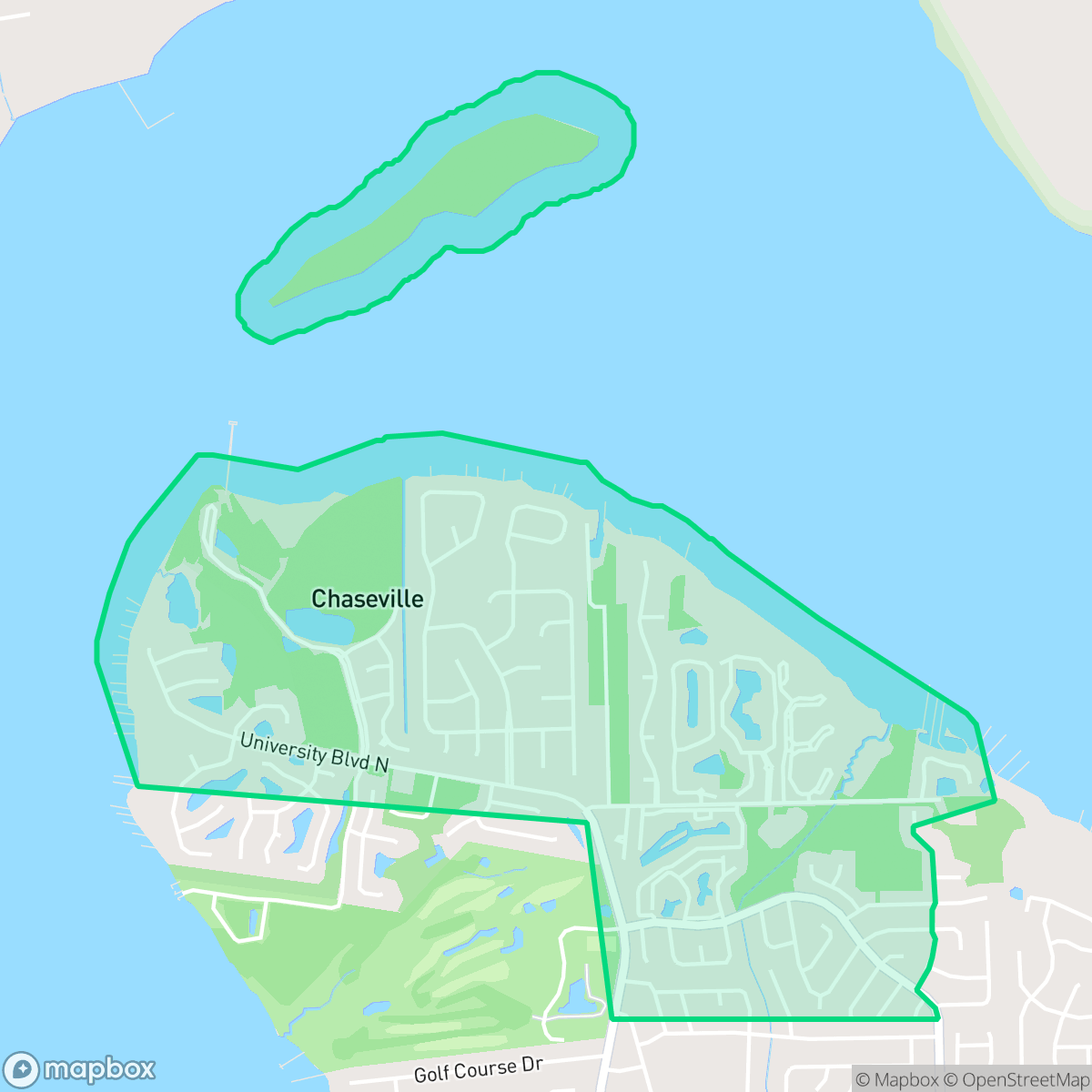
Charter Point is a waterfront neighborhood in the Arlington area of Jacksonville, situated where the St. Johns River makes a sharp turn toward the ocean. Historically known as the site of 'Reddy’s Point,' the area was purchased in 1772 by Captain William Reddy, who established a wharf for schooners. The land later passed through the hands of prominent planters, including Zephaniah Kingsley and Francis Richard. By the mid-19th century, the site was part of a community once called Chaseville, a name that persists on some local maps. Today, the neighborhood is defined by its residential character and the 102-acre Reddie Point Preserve, a riverfront park that offers nature trails and fishing access, preserving the natural landscape of this historically significant bend in the river.
Charter Point is defined by its low-density residential layout and significant green space, which provides a more open, suburban feel than much of the surrounding city. The area is characterized by large, custom homes and private waterfront properties, resulting in a visually appealing environment that emphasizes privacy through mature tree buffers. According to iHuus data, residents benefit from a notably clean setting with almost no heavy industry, alongside high rates of health insurance coverage and a diverse demographic profile that includes families and long-term residents.
While the neighborhood is exceptionally quiet and offers a peaceful lifestyle, it lacks significant commercial activity or street life, requiring travel for daily errands. The acoustic environment is occasionally marked by a consistent hum of traffic from nearby roadways, and while the quiet cul-de-sacs are suitable for walking, the sidewalk infrastructure is often limited by the dense tree canopy. Families should consider that local school experiences within the Duval County district can vary, as the system currently manages budget deficits and campus consolidations, though access to competitive magnet programs remains a key benefit for the region.
Neighborhood Scores Across 15 Qualities
Housing density remains moderate with many properties featuring mature tree buffers and wooded setbacks. This level of spacing provides more privacy than the average Jacksonville neighborhood, according to iHuus data.
Low-traffic cul-de-sacs and main collectors provide a safer environment for pedestrians than the Jacksonville average. While formal sidewalks can be inconsistent due to dense tree canopy, the quiet streets allow for steady walking.
Large custom homes, private pools, and premium waterfront properties with docks characterize this area. According to iHuus data, the visual landscape is significantly more manicured and affluent than the Jacksonville average.
Large wooded buffers, quiet cul-de-sacs, and expansive grassy verges offer significantly more space for dog walking than the Jacksonville average. According to iHuus data, many residents also benefit from access to nearby sports fields and private yards.
Low-density residential layouts feature significant tree canopy and preserved greenbelts, providing a more open feel than the typical Jacksonville landscape. According to iHuus data, this area maintains a semi-rural character with more frequent open land and woodland than the city average.
Primarily composed of single-family homes and dense tree canopies, this area offers a peaceful environment with very little commercial activity. Residents will find fewer local destinations or street life here compared to the Jacksonville average.
A consistent hum of traffic from nearby busy streets defines the local acoustic environment. According to iHuus data, this level of sound is slightly higher than the typical experience found elsewhere in Jacksonville.
Air quality levels fluctuate between acceptable and unhealthy, presenting occasional concerns for sensitive groups. According to iHuus data, the air quality in Charter Point is better than the average recorded across Jacksonville.
Land use is predominantly residential and institutional, providing a much cleaner environment than the Jacksonville average. Heavy industry is absent from the area, with only occasional light commercial structures or small utility sites visible.
Health insurance accessibility is notably higher in Charter Point than the Jacksonville average, according to iHuus data.
Political perspectives in Charter Point are evenly split between conservative and liberal leanings, representing a more moderate ideological landscape than the broader Jacksonville area according to iHuus data.
A varied demographic of young adults, families, and seniors resides here, representing a more even age distribution than the Jacksonville average according to iHuus data.
Flood safety in this area sits above the Jacksonville average, though official FEMA studies for the neighborhood are currently incomplete. Residents should remain aware of potential uncertainties regarding localized drainage and water levels.
Address-Level Insights for Charter Point


iHuus Neighborhood Intelligence Insights
Get address-level neighborhood insights for Charter Point
- Street-level scores — see how individual blocks compare, not just neighborhood averages
- Micro-zone boundaries — identify quiet pockets, flood boundaries, and walkable clusters before you visit
- 15 dimensions in full — walkability, noise, air quality, school quality, insurance coverage, population age profile, urban/rural index, and more
- Boundary risk alerts — know if your address sits near a block boundary where scores drop, the kind of detail no listing will ever mention
- School insights — individual school ratings and insights, not just district-level data
- Compare before you commit — side-by-side data across neighborhoods, down to block precision
No credit card required
Compare with Any Neighborhood
| Dimension | Charter Point | 29th and Chase |
|---|---|---|
| 🚶 Walkabilityavg 3.96 | ||
| 🔊 Acoustic Comfortavg 4.37 | ||
| 🤫 Privacy Indexavg 4.3 | ||
| 🎨 Visual Appealavg 4.24 | ||
| 🐕 Dog Friendlinessavg 4.28 | ||
| 🗺️ Urban-Rural Indexavg 5.22 | ||
| ✨ Neighborhood Vibeavg 1.5 | ||
| 🏥 Health Insurance Coverageavg 4.35 | ||
| 🌿 Air Qualityavg 3.84 | ||
| 🏭 Industrial Proximityavg 5.11 | ||
| 🌊 Flood Safetyavg 4.01 | ||
| 🗳️ Ideological Leanavg 2.75 | ||
| 👥 Population Age Profileavg 3.26 | ||
| 🔥 Fire Safety | ||
| 🏫 School Quality |
Charter Point Rankings
School Districts Serving Charter Point
School Insights for Charter Point
Below average outcomes; significant attendance and academic challenges.
School Insights
See what's really behind every school rating near Charter Point
- Individual school ratings — each school's own score with outcome context, not just a district average
- Enrollment & class size data — student-to-teacher ratio and how it compares to the state average
- Full demographics breakdown — ethnicity and gender composition for every school in the enrollment zone
- Every school in the district — all schools within the enrollment boundary ranked by rating, not just the closest one
- Grade levels & benchmarks — elementary through high school, with below/above state-average flags
No credit card required