Brown Island, Jacksonville
Updated · 284 residents
Brown Island is a secluded, rural-feeling enclave in Jacksonville characterized by a predominantly young adult population and a quiet, tranquil atmosphere. Residents here face significant car dependency and limited privacy due to high-density residential housing, while the area remains largely removed from commercial activity.
Key Highlights
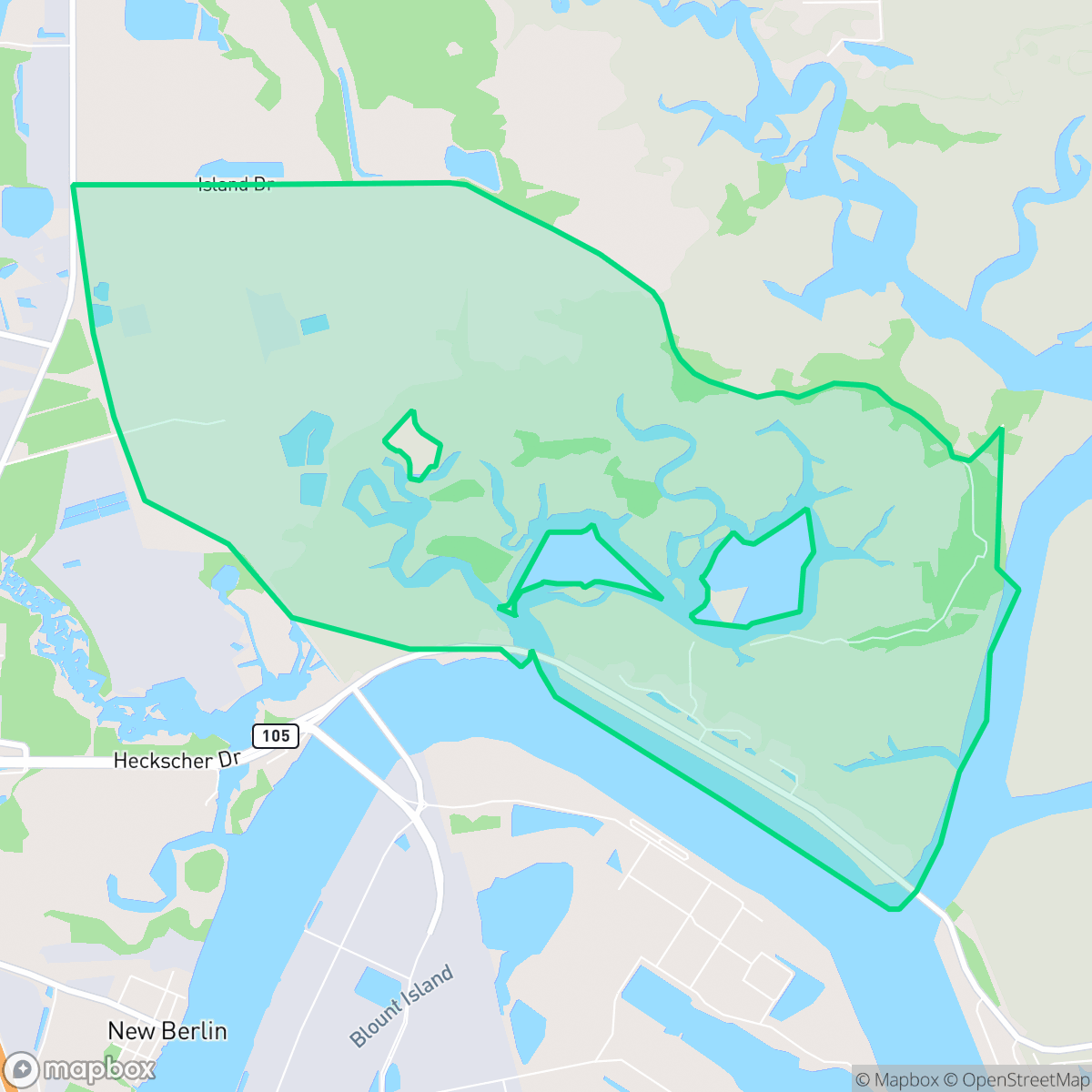
About Brown Island
Brown Island serves as a quiet, semi-rural residential pocket within Jacksonville. The landscape is defined by its low building density and abundant undeveloped land, offering a peaceful environment that stands in contrast to the city's more active urban centers. The community is largely composed of young adults, contributing to a distinct demographic profile that differs from the broader region. According to iHuus data, the area maintains a tranquil acoustic environment with minimal industrial presence, making it a quiet retreat for those seeking seclusion.
Prospective residents should note that the area presents specific livability trade-offs. The neighborhood is highly car-dependent, lacking sidewalks and accessible green spaces for pets, and it faces challenges regarding flood risk and air quality. Additionally, the close proximity of residential structures results in limited privacy, and residents often experience barriers to health insurance coverage. While the area offers a reprieve from industrial noise, families should carefully consider the fluctuating landscape of the Duval County School District, which is currently undergoing significant consolidation and budgetary adjustments.
Neighborhood Scores Across 15 Qualities
Residential lots feature close proximity between structures, with very little separation between detached homes. This level of density results in significantly less privacy than the Jacksonville average, according to iHuus data.
Pedestrian travel is difficult due to a lack of sidewalks and heavy traffic. Residents must rely on vehicles for most trips, as walking conditions are significantly lower than the Jacksonville average.
Residential surroundings consist of high density housing with limited greenery and small yards. This area features significantly less aesthetic variety and fewer amenities than the Jacksonville average, according to iHuus data.
Sparse greenery and narrow roadside verges make walking dogs difficult. According to iHuus data, the lack of open, unfenced areas is significantly lower than the Jacksonville average.
Low building density and significant open space characterize this area, which feels considerably more rural than the typical Jacksonville urban center. According to iHuus data, most of the landscape consists of undeveloped land rather than multi-storey structures.
Very little commercial activity or street life exists in this semi-rural enclave. According to iHuus data, the area is significantly more tranquil than the Jacksonville average, offering a peaceful landscape that lacks nearby shops or dining options.
Acoustic levels are notably lower than the Jacksonville average, with only infrequent sounds from distant traffic or trains. Residents can expect a tranquil environment according to iHuus data.
Frequent unhealthy air quality levels present a significant health risk to sensitive groups. According to iHuus data, the air quality in this area is notably worse than the Jacksonville average.
Industrial activity is significantly lower than the Jacksonville average, as the area remains predominantly residential with very little heavy industry nearby. Most parts of the neighborhood consist of quiet streets and open green spaces, though some sections include light commercial services.
Health insurance coverage among residents is notably lower than the Jacksonville average, according to iHuus data. This indicates a high proportion of the local population lacks employer-sponsored or private medical coverage.
Voting and census indicators suggest a predominantly conservative political landscape, which is notably more so than the Jacksonville average according to iHuus data.
Young adults make up the vast majority of the population, resulting in a much younger demographic profile than the Jacksonville average. According to iHuus data, there is a limited presence of families or older residents in this area.
Significant flood risk exists due to the area's location within a designated floodplain; according to iHuus data, this risk level is considerably higher than the Jacksonville average.
Address-Level Insights for Brown Island


iHuus Neighborhood Intelligence Insights
Get address-level neighborhood insights for Brown Island
- Street-level scores — see how individual blocks compare, not just neighborhood averages
- Micro-zone boundaries — identify quiet pockets, flood boundaries, and walkable clusters before you visit
- 15 dimensions in full — walkability, noise, air quality, school quality, insurance coverage, population age profile, urban/rural index, and more
- Boundary risk alerts — know if your address sits near a block boundary where scores drop, the kind of detail no listing will ever mention
- School insights — individual school ratings and insights, not just district-level data
- Compare before you commit — side-by-side data across neighborhoods, down to block precision
No credit card required
Compare with Any Neighborhood
| Dimension | Brown Island | 29th and Chase |
|---|---|---|
| 🚶 Walkabilityavg 3.96 | ||
| 🔊 Acoustic Comfortavg 4.37 | ||
| 🤫 Privacy Indexavg 4.3 | ||
| 🎨 Visual Appealavg 4.24 | ||
| 🐕 Dog Friendlinessavg 4.28 | ||
| 🗺️ Urban-Rural Indexavg 5.22 | ||
| ✨ Neighborhood Vibeavg 1.5 | ||
| 🏥 Health Insurance Coverageavg 4.35 | ||
| 🌿 Air Qualityavg 3.84 | ||
| 🏭 Industrial Proximityavg 5.11 | ||
| 🌊 Flood Safetyavg 4.01 | ||
| 🗳️ Ideological Leanavg 2.75 | ||
| 👥 Population Age Profileavg 3.26 | ||
| 🔥 Fire Safety | ||
| 🏫 School Quality |
Brown Island Rankings
School Districts Serving Brown Island
School Insights for Brown Island
Below average outcomes; significant attendance and academic challenges.
School Insights
See what's really behind every school rating near Brown Island
- Individual school ratings — each school's own score with outcome context, not just a district average
- Enrollment & class size data — student-to-teacher ratio and how it compares to the state average
- Full demographics breakdown — ethnicity and gender composition for every school in the enrollment zone
- Every school in the district — all schools within the enrollment boundary ranked by rating, not just the closest one
- Grade levels & benchmarks — elementary through high school, with below/above state-average flags
No credit card required