Black Hammock Island, Jacksonville
Updated · 975 residents
Black Hammock Island is a quiet, semi-rural enclave in Northeast Jacksonville defined by its preserved maritime forests and expansive coastal marshlands. While the area offers a peaceful retreat for residents seeking privacy, those living here must navigate challenges including limited walkability and the necessity for specialized flood insurance.
Key Highlights
About Black Hammock Island
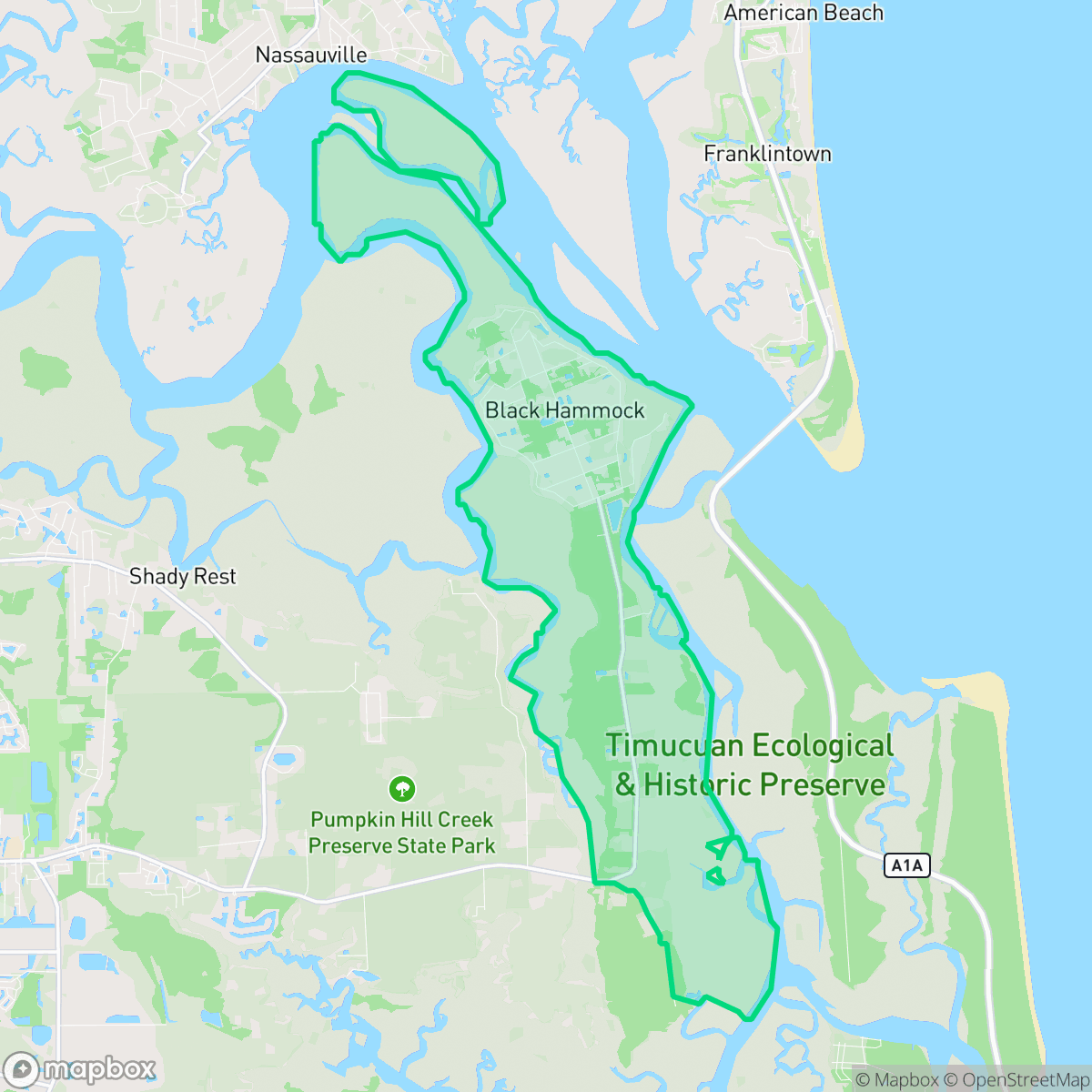
Black Hammock Island, located in Northeast Jacksonville, boasts a 6,000-year history of human settlement. Originally inhabited by the Mocama people, a Timucua group, the island features significant archaeological sites, including shell middens and remnants of the 17th-century Spanish mission, Santa Cruz de Guadalquini. In 1795, the island became home to the Fitzpatrick Plantation, where enslaved laborers cultivated sea island cotton until the site’s destruction during the Civil War. Unlike the urbanized mainland, the island has maintained a rural character, largely preserved today within the Timucuan Ecological and Historic Preserve and Cedar Point Preserve. These protected areas safeguard the island’s maritime forests and coastal marshlands, serving as a rare, largely undeveloped vestige of Florida’s coastal history that honors both its indigenous heritage and its antebellum past.
This area functions as a secluded residential pocket where standard suburban housing designs blend into a natural, woodland setting. The neighborhood is characterized by a lack of commercial activity, resulting in a quiet atmosphere that prioritizes privacy over urban convenience. Residents benefit from moderate access to outdoor spaces, which are well-suited for dog owners and those who appreciate a semi-rural lifestyle away from the industrial bustle of the city.
Living here requires careful consideration of environmental and logistical factors. The area faces consistent flood risks due to its low-lying position, and air quality can occasionally present concerns for sensitive individuals. Transportation relies entirely on personal vehicles, as the lack of sidewalks makes walking difficult. Families should also be aware that school options fall under the Duval County district, which requires navigating a complex landscape of consolidations and specialized magnet program enrollment.
Neighborhood Scores Across 15 Qualities
Properties feature mixed spacing with some buffers between neighbors, providing more privacy than the typical Jacksonville residential area. According to iHuus data, the neighborhood offers a moderate density of homes rather than highly clustered housing.
Limited sidewalk availability and vehicle traffic make navigating the area on foot uncomfortable. This level of walkability falls slightly below the Jacksonville average according to iHuus data.
Residential streets feature conventional housing designs and modest, well-kept yards. According to iHuus data, the visual landscape is slightly more varied than the Jacksonville average.
Limited green verges and public park access provide more opportunities for pet owners than the Jacksonville average. According to iHuus data, the area offers moderate amenities for walking dogs compared to other parts of the city.
Frequent open land and scattered homes amid woodland characterize this area, making it notably more rural than the Jacksonville average according to iHuus data.
This semi-rural area offers a peaceful environment with very little street life or commercial activity. According to iHuus data, the neighborhood lacks a commercial pulse and contains significantly fewer local amenities than the Jacksonville average.
Local traffic from nearby thoroughfares creates a consistent level of noise. This acoustic environment is slightly more active than the average found across Jacksonville.
Frequent periods of unhealthy air levels pose a significant risk to sensitive groups. According to iHuus data, the air quality in this area is notably worse than the Jacksonville average.
Largely residential streets and open green spaces define this area, which features fewer industrial facilities than the Jacksonville average according to iHuus data.
Health insurance accessibility in this area is slightly higher than the Jacksonville average, according to iHuus data. Residents may find that coverage rates are somewhat inconsistent compared to broader city trends.
Voting patterns and census indicators show a significantly more conservative political leaning than the Jacksonville average, according to iHuus data.
A majority of residents are young adults, reflecting a demographic profile that is slightly younger than the Jacksonville average. This creates an area with a modest presence of families and older residents.
Located within a designated floodplain, this area faces significant flood risks that are higher than the Jacksonville average. According to iHuus data, properties in this neighborhood may require specialized flood insurance due to their proximity to low-lying zones.
Address-Level Insights for Black Hammock Island


iHuus Neighborhood Intelligence Insights
Get address-level neighborhood insights for Black Hammock Island
- Street-level scores — see how individual blocks compare, not just neighborhood averages
- Micro-zone boundaries — identify quiet pockets, flood boundaries, and walkable clusters before you visit
- 15 dimensions in full — walkability, noise, air quality, school quality, insurance coverage, population age profile, urban/rural index, and more
- Boundary risk alerts — know if your address sits near a block boundary where scores drop, the kind of detail no listing will ever mention
- School insights — individual school ratings and insights, not just district-level data
- Compare before you commit — side-by-side data across neighborhoods, down to block precision
No credit card required
Compare with Any Neighborhood
| Dimension | Black Hammock Island | 29th and Chase |
|---|---|---|
| 🚶 Walkabilityavg 3.96 | ||
| 🔊 Acoustic Comfortavg 4.37 | ||
| 🤫 Privacy Indexavg 4.3 | ||
| 🎨 Visual Appealavg 4.24 | ||
| 🐕 Dog Friendlinessavg 4.28 | ||
| 🗺️ Urban-Rural Indexavg 5.22 | ||
| ✨ Neighborhood Vibeavg 1.5 | ||
| 🏥 Health Insurance Coverageavg 4.35 | ||
| 🌿 Air Qualityavg 3.84 | ||
| 🏭 Industrial Proximityavg 5.11 | ||
| 🌊 Flood Safetyavg 4.01 | ||
| 🗳️ Ideological Leanavg 2.75 | ||
| 👥 Population Age Profileavg 3.26 | ||
| 🔥 Fire Safety | ||
| 🏫 School Quality |
Black Hammock Island Rankings
School Districts Serving Black Hammock Island
School Insights for Black Hammock Island
Below average outcomes; significant attendance and academic challenges.
School Insights
See what's really behind every school rating near Black Hammock Island
- Individual school ratings — each school's own score with outcome context, not just a district average
- Enrollment & class size data — student-to-teacher ratio and how it compares to the state average
- Full demographics breakdown — ethnicity and gender composition for every school in the enrollment zone
- Every school in the district — all schools within the enrollment boundary ranked by rating, not just the closest one
- Grade levels & benchmarks — elementary through high school, with below/above state-average flags
No credit card required