Big Talbot Island, Jacksonville
Updated · 12 residents
Big Talbot Island is a remote, natural barrier island defined by its rugged landscape and secluded atmosphere. While the area offers a quiet environment with minimal industrial presence, residents face significant challenges regarding flood risks, poor air quality, and limited pedestrian infrastructure.
Key Highlights
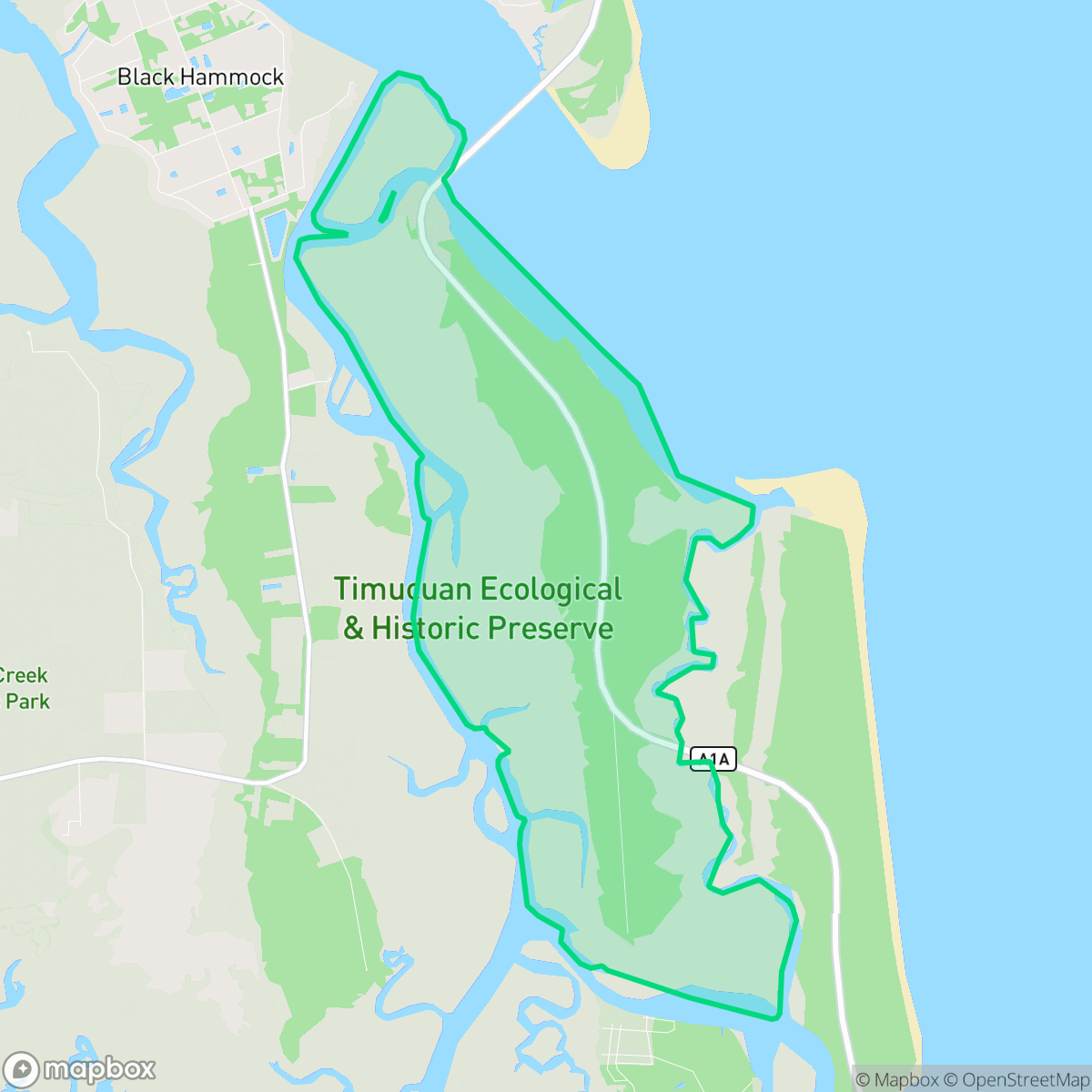
About Big Talbot Island
Big Talbot Island, a largely undeveloped barrier island near Jacksonville, possesses a rich cultural and natural history spanning over 6,000 years. Originally inhabited by the Timucua people, who left behind significant archaeological evidence including shell rings and middens—such as the National Register-listed Grand Site—the island was later named in 1735 by General James Oglethorpe for Charles Baron Talbot. During the 18th and 19th centuries, the island served as a site for plantation agriculture, producing indigo, cotton, and sugar. Today, it is defined by its status as a state park and its unique geological features, most notably the 'Boneyard Beach,' famous for the salt-bleached skeletons of ancient live oaks and cedars. The island remains a vital preserve for maritime forests and coastal habitats, maintaining a character shaped by its enduring ecological and indigenous heritage.
This neighborhood serves as a remote sanctuary with vast open spaces and natural terrain, positioned far from the urban bustle of Jacksonville. The landscape is characterized by its unrefined appearance and lack of traditional suburban infrastructure, offering a stark departure from typical residential developments. Despite its quiet and secluded nature, the area experiences moderate noise from nearby thoroughfares, and its high density of clustered housing creates a unique contrast with the surrounding wild environment. The community is primarily composed of young adults, reflecting a distinct demographic profile that differs from the broader city population.
Living in this area requires navigating significant environmental realities, including high flood vulnerability and concerning air quality levels. The neighborhood is best suited for those prioritizing isolation, as it lacks commercial amenities, pet-friendly facilities, and walkable pathways. Families should note that the area falls under the Duval County School District, where educational outcomes vary significantly based on access to specialized magnet programs versus local campus offerings. Prospective residents should be prepared for a lifestyle that favors natural surroundings over urban convenience and accessibility.
Neighborhood Scores Across 15 Qualities
Housing in this area consists primarily of shared walls and closely clustered structures, representing a much higher density than the Jacksonville average according to iHuus data.
Walking is difficult due to a lack of sidewalks and high traffic volumes. According to iHuus data, the ability to navigate this area on foot is significantly lower than the Jacksonville average.
Visible debris, unpaved surfaces, and irregular structures define the landscape. This level of visual fragmentation is notably more pronounced than in most parts of Jacksonville.
Limited infrastructure for pets exists here due to a lack of accessible parks and walking paths. According to iHuus data, this area offers significantly fewer dog-friendly spaces than the Jacksonville average.
Low density and vast open landscapes define this area, which is significantly more rural than the Jacksonville average. According to iHuus data, the environment consists of natural terrain with very little pavement or urban infrastructure.
Minimal activity and a lack of commercial pulse characterize this rural area. According to iHuus data, the neighborhood offers much less social energy and fewer amenities than the Jacksonville average.
Steady hums from nearby thoroughfares are present, though acoustic levels remain slightly more tranquil than the Jacksonville average.
Consistently hazardous air quality levels pose serious health risks for residents. According to iHuus data, the pollution levels in this area are significantly worse than the Jacksonville average.
Industrial activity and heavy pollution risks are significantly lower here than the Jacksonville average. Residents can expect a landscape composed primarily of quiet residential streets and open green spaces.
Political activity and ideological leaning in this area are notably absent compared to the broader Jacksonville average. According to iHuus data, the neighborhood lacks a distinct partisan identity.
The resident population consists largely of young adults, with significantly fewer children and seniors compared to the Jacksonville average. According to iHuus data, this demographic profile results in a lack of the multigenerational age diversity found elsewhere in the city.
Coastal high-hazard zones and wave action make this area significantly more vulnerable to flooding than the Jacksonville average. Residents should expect elevated or potentially prohibitive flood insurance costs according to iHuus data.
Address-Level Insights for Big Talbot Island


iHuus Neighborhood Intelligence Insights
Get address-level neighborhood insights for Big Talbot Island
- Street-level scores — see how individual blocks compare, not just neighborhood averages
- Micro-zone boundaries — identify quiet pockets, flood boundaries, and walkable clusters before you visit
- 15 dimensions in full — walkability, noise, air quality, school quality, insurance coverage, population age profile, urban/rural index, and more
- Boundary risk alerts — know if your address sits near a block boundary where scores drop, the kind of detail no listing will ever mention
- School insights — individual school ratings and insights, not just district-level data
- Compare before you commit — side-by-side data across neighborhoods, down to block precision
No credit card required
Compare with Any Neighborhood
| Dimension | Big Talbot Island | 29th and Chase |
|---|---|---|
| 🚶 Walkabilityavg 3.96 | ||
| 🔊 Acoustic Comfortavg 4.37 | ||
| 🤫 Privacy Indexavg 4.3 | ||
| 🎨 Visual Appealavg 4.24 | ||
| 🐕 Dog Friendlinessavg 4.28 | ||
| 🗺️ Urban-Rural Indexavg 5.22 | ||
| ✨ Neighborhood Vibeavg 1.5 | ||
| 🏥 Health Insurance Coverageavg 4.35 | ||
| 🌿 Air Qualityavg 3.84 | ||
| 🏭 Industrial Proximityavg 5.11 | ||
| 🌊 Flood Safetyavg 4.01 | ||
| 🗳️ Ideological Leanavg 2.75 | ||
| 👥 Population Age Profileavg 3.26 | ||
| 🔥 Fire Safety | ||
| 🏫 School Quality |
Big Talbot Island Rankings
School Districts Serving Big Talbot Island
School Insights for Big Talbot Island
Below average outcomes; significant attendance and academic challenges.
School Insights
See what's really behind every school rating near Big Talbot Island
- Individual school ratings — each school's own score with outcome context, not just a district average
- Enrollment & class size data — student-to-teacher ratio and how it compares to the state average
- Full demographics breakdown — ethnicity and gender composition for every school in the enrollment zone
- Every school in the district — all schools within the enrollment boundary ranked by rating, not just the closest one
- Grade levels & benchmarks — elementary through high school, with below/above state-average flags
No credit card required