Alderman Park, Jacksonville
Updated · 3,735 residents
Alderman Park is a quiet, residential neighborhood in Jacksonville known for its spacious, well-manicured properties and mature tree canopy. While the area offers a peaceful, suburban feel with strong health insurance coverage, it is frequently impacted by noise from nearby railroad tracks and major freeway traffic.
Key Highlights
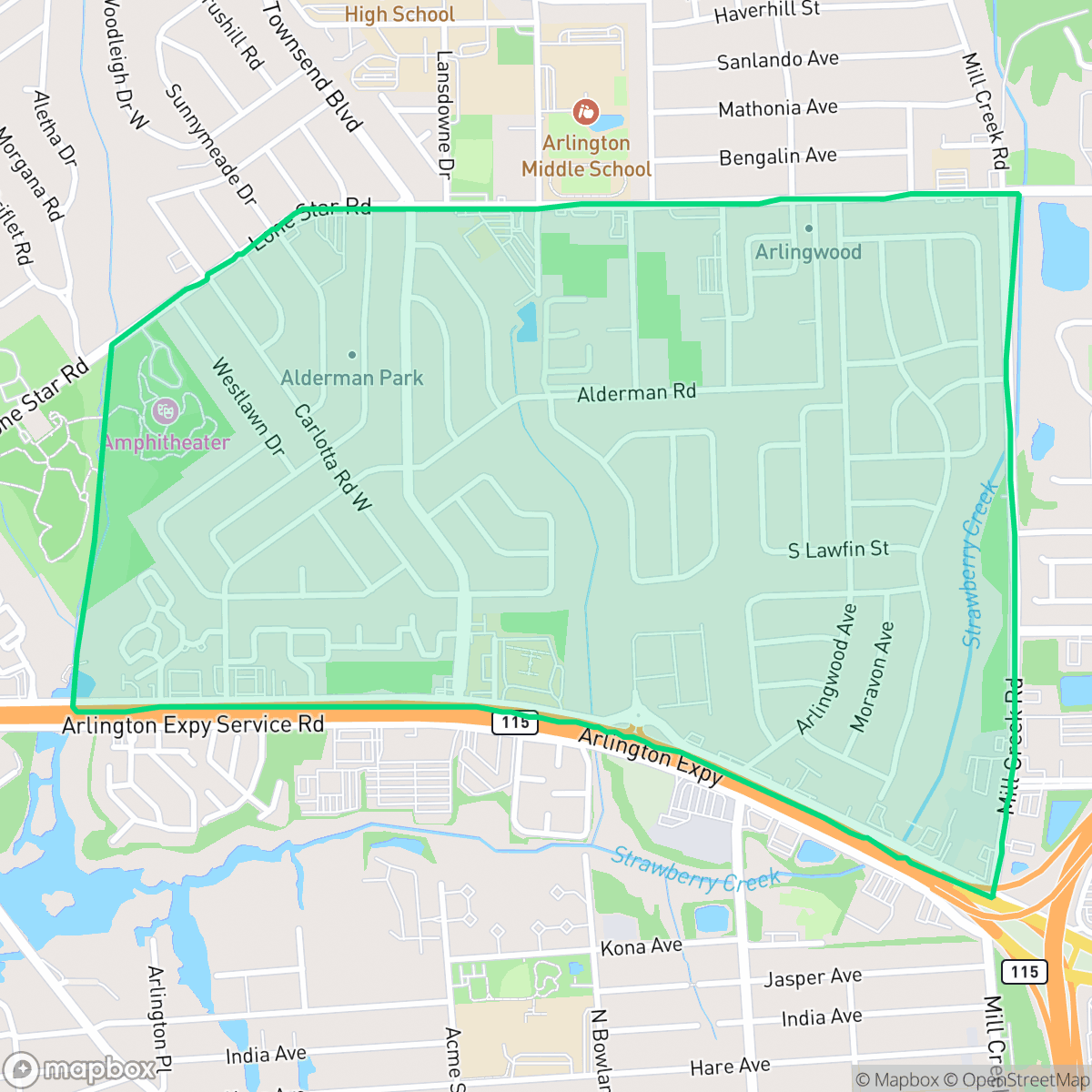
About Alderman Park
Alderman Park is characterized by its upscale visual appeal, featuring a mix of large estates and standard suburban homes nestled among preserved natural areas. The neighborhood maintains a balanced demographic, attracting a diverse mix of young adults, families, and older residents. With minimal industrial presence, the area remains focused on residential life and local schools, offering a sense of privacy supported by significant tree cover and backyard fencing. According to iHuus data, the neighborhood provides a more spacious suburban environment than the city average, with open lands and wooded wetlands contributing to its distinct character.
Potential residents should consider the trade-offs between the quiet, spacious environment and the local acoustic profile. While the interior streets are pleasant for walking, the proximity to major transit corridors results in frequent noise disturbances. The area is served by the Duval County School District, where educational outcomes vary significantly based on access to specialized magnet programs. This neighborhood is well-suited for those who prioritize a stable, suburban atmosphere and private outdoor space over a high-energy commercial environment.
Neighborhood Scores Across 15 Qualities
Housing density remains moderate with significant tree cover and backyard fencing providing more visual buffering than the Jacksonville average. According to iHuus data, residential spacing varies between single-family homes and denser multi-family clusters near major transit corridors.
Low traffic and a mature tree canopy make residential streets pleasant for walking, though the lack of consistent sidewalks and large arterial roads makes navigating between different parts of the neighborhood difficult. This level of walkability is notably higher than the Jacksonville average according to iHuus data.
Large homes and well-manicured properties contribute to a visual appeal that is significantly higher than the Jacksonville average. According to iHuus data, residents will find a mix of affluent estates with private pools alongside standard suburban housing.
Abundant tree cover and residential lawns provide ample space for pets, though limited public parks and narrow street verges make off-leash walking more difficult than in other parts of Jacksonville. According to iHuus data, greenery is primarily concentrated within private fenced backyards.
Open lands and wooded wetlands are more common here than in the rest of Jacksonville. Residents will find a mix of dense suburban housing and preserved natural areas according to iHuus data.
Daily activity remains subdued with most areas focused on residential life, schools, and parks. While more active than many other parts of Jacksonville, the neighborhood lacks a dense commercial pulse and significant nightlife.
Frequent auditory disturbances from nearby railroad tracks and major freeway traffic characterize this area. Acoustic comfort levels are lower than the Jacksonville average, according to iHuus data.
Air quality levels are generally acceptable but occasionally present concerns for sensitive groups. According to iHuus data, the air quality in Alderman Park remains significantly better than the Jacksonville city average.
Industrial exposure is significantly lower than the Jacksonville average, as the area consists primarily of residential streets and local schools. Aside from some light commercial retail along major roadways, there are no heavy industrial hazards or large-scale manufacturing facilities present in the neighborhood.
Health insurance access among residents is notably higher than the Jacksonville average, according to iHuus data.
Political perspectives in this area are evenly divided between conservative and liberal leanings. This represents a more moderate ideological landscape than the broader Jacksonville average according to iHuus data.
Residents encounter a more varied age distribution here than in the rest of Jacksonville. According to iHuus data, the area maintains a balanced presence of young adults, families, and older populations.
Residual flood risks exist within this area, though the neighborhood offers significantly better safety than the Jacksonville average. According to iHuus data, certain sections fall within a mapped floodplain.
Address-Level Insights for Alderman Park


iHuus Neighborhood Intelligence Insights
Get address-level neighborhood insights for Alderman Park
- Street-level scores — see how individual blocks compare, not just neighborhood averages
- Micro-zone boundaries — identify quiet pockets, flood boundaries, and walkable clusters before you visit
- 15 dimensions in full — walkability, noise, air quality, school quality, insurance coverage, population age profile, urban/rural index, and more
- Boundary risk alerts — know if your address sits near a block boundary where scores drop, the kind of detail no listing will ever mention
- School insights — individual school ratings and insights, not just district-level data
- Compare before you commit — side-by-side data across neighborhoods, down to block precision
No credit card required
Compare with Any Neighborhood
| Dimension | Alderman Park | 29th and Chase |
|---|---|---|
| 🚶 Walkabilityavg 3.96 | ||
| 🔊 Acoustic Comfortavg 4.37 | ||
| 🤫 Privacy Indexavg 4.3 | ||
| 🎨 Visual Appealavg 4.24 | ||
| 🐕 Dog Friendlinessavg 4.28 | ||
| 🗺️ Urban-Rural Indexavg 5.22 | ||
| ✨ Neighborhood Vibeavg 1.5 | ||
| 🏥 Health Insurance Coverageavg 4.35 | ||
| 🌿 Air Qualityavg 3.84 | ||
| 🏭 Industrial Proximityavg 5.11 | ||
| 🌊 Flood Safetyavg 4.01 | ||
| 🗳️ Ideological Leanavg 2.75 | ||
| 👥 Population Age Profileavg 3.26 | ||
| 🔥 Fire Safety | ||
| 🏫 School Quality |
Alderman Park Rankings
School Districts Serving Alderman Park
School Insights for Alderman Park
Below average outcomes; significant attendance and academic challenges.
School Insights
See what's really behind every school rating near Alderman Park
- Individual school ratings — each school's own score with outcome context, not just a district average
- Enrollment & class size data — student-to-teacher ratio and how it compares to the state average
- Full demographics breakdown — ethnicity and gender composition for every school in the enrollment zone
- Every school in the district — all schools within the enrollment boundary ranked by rating, not just the closest one
- Grade levels & benchmarks — elementary through high school, with below/above state-average flags
No credit card required