29th and Chase, Jacksonville
Updated · 1,706 residents
29th and Chase is a historically significant community in Northwest Jacksonville that balances a semi-rural atmosphere with a steady, local rhythm. Residents benefit from higher health insurance coverage and better walkability than many surrounding areas, though the neighborhood experiences notable noise from nearby rail lines and heavy traffic.
Key Highlights
About 29th and Chase
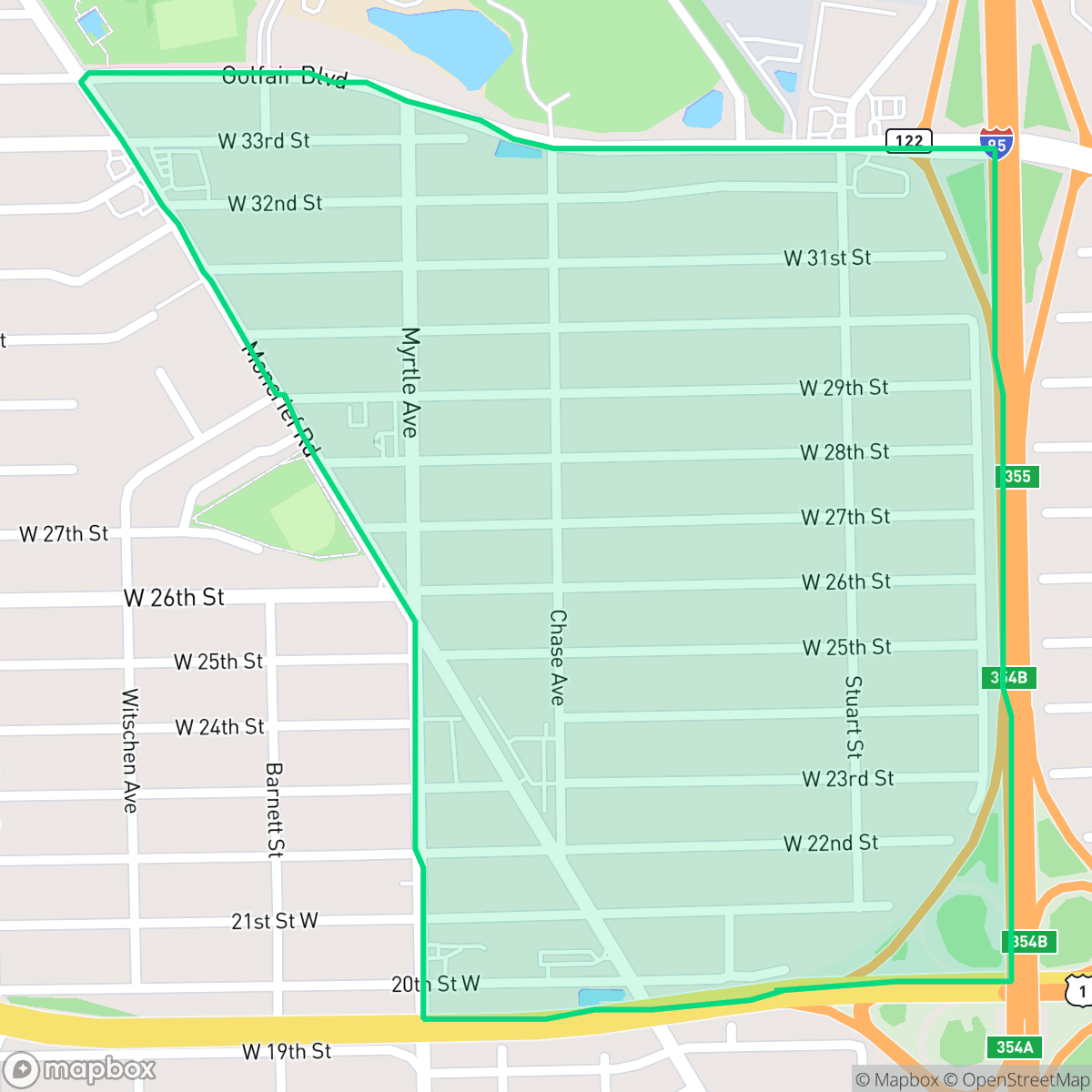
The 29th and Chase neighborhood in Northwest Jacksonville is historically linked to the late 19th-century development of the Moncrief Springs resort area. Following the Civil War, Jacksonville mayor Peter Jones acquired property near present-day Moncrief Road to establish a winter tourist destination that featured a racetrack, baseball field, and dancing pavilion, which were famously visited by poet Sidney Lanier in 1874. Today, the neighborhood is recognized for its historically significant housing stock and has been the focus of revitalization efforts led by the Northwest Jacksonville Community Development Corporation (NJCDC). The area, situated between Moncrief Park and Brentwood Park, continues to evolve through community-led action plans aimed at preserving its character while fostering residential development and leadership.
The area offers a distinct suburban landscape characterized by a diverse age demographic and a strong sense of community identity. With its roots in the former Moncrief Springs resort area, the neighborhood maintains a semi-rural feel through its pockets of greenery and open space. It serves as a functional hub where residents find a consistent pace of life supported by local institutions and a notably liberal political environment, according to iHuus data.
Prospective residents should weigh the benefits of moderate walkability and established residential spacing against specific environmental trade-offs. While the area features a relatively low industrial presence, the proximity to rail infrastructure and major highways results in frequent noise. Furthermore, while the Duval County School District provides access to elite magnet programs, families should be aware of the ongoing district-wide consolidation efforts and budget challenges that impact local school stability.
Neighborhood Scores Across 15 Qualities
Homes are situated with typical suburban spacing, providing more separation between neighbors than the Jacksonville average. While single-family houses offer a moderate buffer, some multi-unit clusters feature much closer proximity.
Pedestrian access is notably better than the Jacksonville average, though heavy highways and discontinuous sidewalks on some residential streets create significant barriers. Some areas offer good accessibility near school infrastructure, but many routes still require walking along the road edge.
Uniform rooflines and modest yards characterize this area, which offers more visual variety than the typical Jacksonville neighborhood. According to iHuus data, the landscape consists primarily of high-density housing and simple residential geometries.
Access to green space for pets is slightly above the Jacksonville average due to nearby sports fields and school grounds. However, residential streets often feature narrow sidewalks and limited greenery along private yards.
Open land and scattered woodlands are more common here than in the typical Jacksonville urban center. According to iHuus data, the area features a suburban landscape with frequent pockets of greenery and unbuilt space.
Local dining and civic institutions provide a level of activity that is notably higher than the Jacksonville average. This mixed-use area offers a functional suburban atmosphere where residents can find various restaurants and cultural centers within a steady, moderate rhythm of life.
Frequent noise from nearby railroad tracks and heavy freeway traffic characterizes this area. According to iHuus data, acoustic comfort levels are notably lower than the Jacksonville average.
Air quality fluctuates between acceptable and unhealthy levels, though conditions remain significantly better than the Jacksonville average according to iHuus data. Sensitive groups may experience occasional concern during certain periods.
Residential life predominates this area, though residents may encounter occasional noise or traffic from nearby warehouse facilities and rail lines. This level of industrial proximity is notably higher than the Jacksonville average due to specific commercial storage and utility infrastructure.
Health insurance enrollment among residents is significantly higher than the Jacksonville average, according to iHuus data.
Voting patterns and census indicators show a much more liberal political leaning here than the Jacksonville average, according to iHuus data.
Residents will find a more varied age distribution than the typical Jacksonville neighborhood, featuring a balanced presence of young adults, families, and seniors. According to iHuus data, this area lacks the heavy concentration of a single age demographic seen elsewhere in the city.
Flood risk in this area is higher than the Jacksonville average, though official assessments from FEMA remain incomplete for this specific location. Residents should exercise caution during heavy rain events due to this undetermined level of vulnerability.
Address-Level Insights for 29th and Chase


iHuus Neighborhood Intelligence Insights
Get address-level neighborhood insights for 29th and Chase
- Street-level scores — see how individual blocks compare, not just neighborhood averages
- Micro-zone boundaries — identify quiet pockets, flood boundaries, and walkable clusters before you visit
- 15 dimensions in full — walkability, noise, air quality, school quality, insurance coverage, population age profile, urban/rural index, and more
- Boundary risk alerts — know if your address sits near a block boundary where scores drop, the kind of detail no listing will ever mention
- School insights — individual school ratings and insights, not just district-level data
- Compare before you commit — side-by-side data across neighborhoods, down to block precision
No credit card required
Compare with Any Neighborhood
| Dimension | 29th and Chase | 45th and Moncrief |
|---|---|---|
| 🚶 Walkabilityavg 3.96 | ||
| 🔊 Acoustic Comfortavg 4.37 | ||
| 🤫 Privacy Indexavg 4.3 | ||
| 🎨 Visual Appealavg 4.24 | ||
| 🐕 Dog Friendlinessavg 4.28 | ||
| 🗺️ Urban-Rural Indexavg 5.22 | ||
| ✨ Neighborhood Vibeavg 1.5 | ||
| 🏥 Health Insurance Coverageavg 4.35 | ||
| 🌿 Air Qualityavg 3.84 | ||
| 🏭 Industrial Proximityavg 5.11 | ||
| 🌊 Flood Safetyavg 4.01 | ||
| 🗳️ Ideological Leanavg 2.75 | ||
| 👥 Population Age Profileavg 3.26 | ||
| 🔥 Fire Safety | ||
| 🏫 School Quality |
29th and Chase Rankings
School Districts Serving 29th and Chase
School Insights for 29th and Chase
Below average outcomes; significant attendance and academic challenges.
School Insights
See what's really behind every school rating near 29th and Chase
- Individual school ratings — each school's own score with outcome context, not just a district average
- Enrollment & class size data — student-to-teacher ratio and how it compares to the state average
- Full demographics breakdown — ethnicity and gender composition for every school in the enrollment zone
- Every school in the district — all schools within the enrollment boundary ranked by rating, not just the closest one
- Grade levels & benchmarks — elementary through high school, with below/above state-average flags
No credit card required