Walteria, Torrance
Updated · 2,846 residents
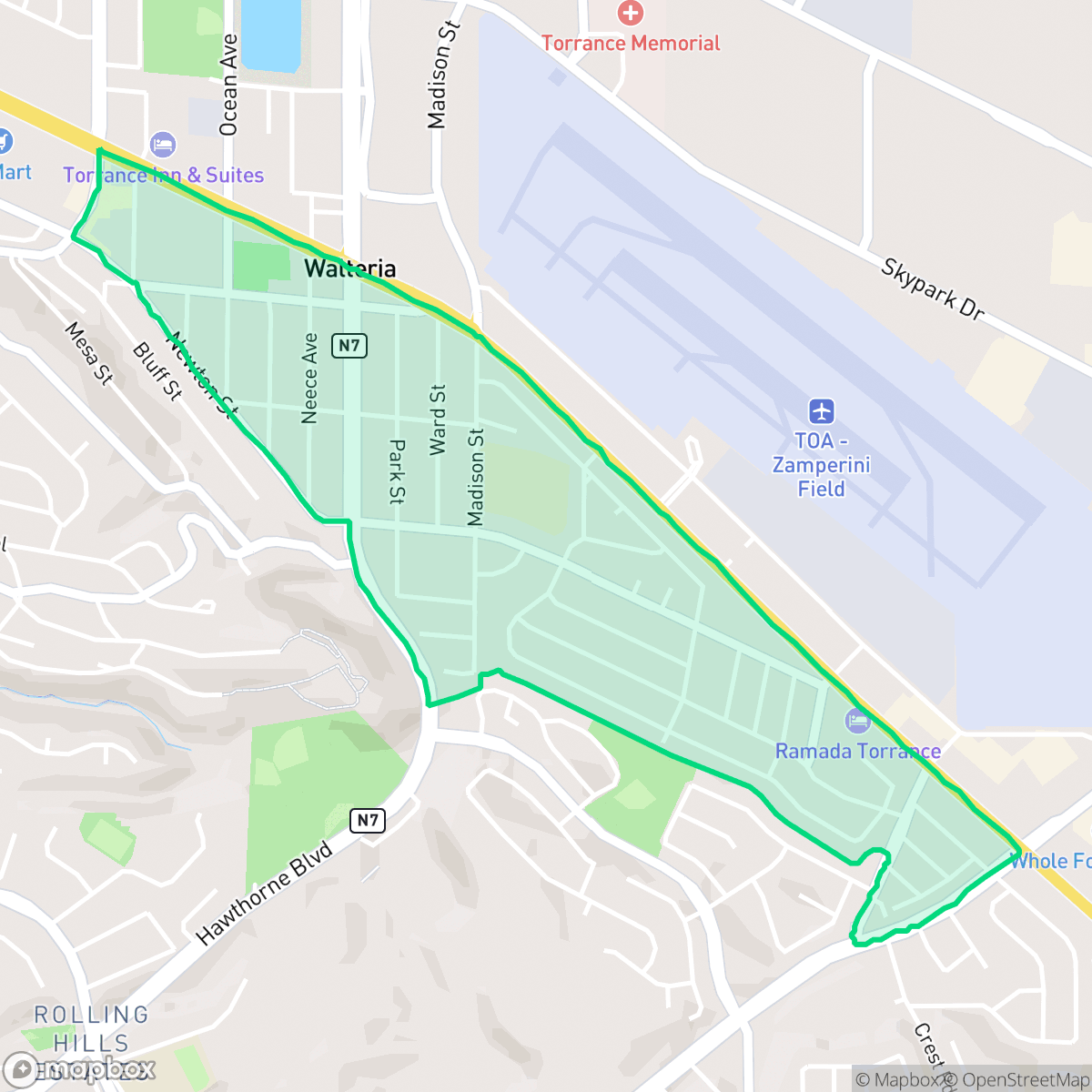
Walteria is a quiet, suburban community in Torrance characterized by its gridded, walkable streets and well-maintained residential properties. According to iHuus data, the area offers high air quality and access to top-rated schools, though residents should expect noticeable noise levels from local road traffic.
Key Highlights
About Walteria
Originally part of Rancho Palos Verdes, the Walteria neighborhood in southern Torrance traces its roots to the 1880s when Captain A. Richard Walters built a stagecoach stop along the Redondo–Wilmington road. In 1888, real estate developers coined the faux-Spanish name "Walteria" to market a scenic subdivision, though the area remained largely agricultural—cultivated in part by Japanese-American truck farmers—until oil was discovered on the Kettler ranch in 1924. Formally annexed by Torrance in 1928, Walteria evolved into a suburban community. Mid-20th-century landmarks included the Palos Verdes Begonia Farm (which operated from 1941 to 1997 and inspired the name of Begonia Park) and the Palos Verdes Bird Farm, a beloved local attraction that opened in 1952.
The neighborhood maintains a suburban atmosphere defined by its mix of single-family homes and mid-density residential structures. It is known for its visual appeal, featuring well-kept yards and private amenities like pools. The area provides a stable environment for families, supported by the highly regarded Torrance Unified School District and the local Walteria Elementary School. While the landscape is largely residential, it includes accessible green spaces and parks that serve the local pet-owning community.
Prospective residents should note that the area is relatively quiet, with limited commercial activity and a lower level of daily liveliness. While the neighborhood is walkable, the primary trade-off is the acoustic environment, as the area experiences significant road traffic noise. Additionally, while it benefits from high health insurance coverage and strong infrastructure, it is situated near industrial zones that may contribute to local truck traffic. It is best suited for those seeking a stable, education-focused environment who are comfortable with a suburban pace of life.
Neighborhood Scores Across 15 Qualities
Residential spacing provides a moderate level of separation between structures, offering more distance between neighbors than the typical Torrance area. According to iHuus data, the neighborhood features a mix of shared walls in denser blocks and detached homes with private backyard buffers.
Pedestrians can navigate the area easily via continuous sidewalk networks and clear crosswalks at major intersections. While highly accessible, the walkability is slightly below the Torrance city average.
Large, well-maintained homes with private pools and manicured landscapes characterize this area. According to iHuus data, the visual landscape is more polished than the average Torrance neighborhood.
Ample open green spaces, canyon trails, and wide sidewalks provide much better opportunities for pet owners than the Torrance average. According to iHuus data, the neighborhood features several large parks and connected pathways that are largely separated from heavy traffic.
Open land and scattered residential pockets provide a more semi-rural feel than most of Torrance. According to iHuus data, the area features significant green space and lower density compared to the city average.
Primarily characterized by industrial warehouses and suburban blocks near major highways, this area offers a quiet atmosphere but lacks the high level of activity found elsewhere in Torrance. While various dining options are available, the neighborhood is largely car-oriented with limited walkability to local businesses.
Frequent noise from nearby freeways and rail lines makes this area significantly louder than the Torrance average. Residents should expect consistent ambient disturbances from heavy traffic and transit corridors.
Air quality remains mostly clean with rare instances of elevated readings, performing slightly above the Torrance average according to iHuus data.
Residential and light commercial spaces dominate the area, making it notably clearer of heavy industry than much of Torrance. While some warehouse structures and airport proximity may introduce occasional truck traffic, the neighborhood lacks significant industrial hazards or large-scale manufacturing facilities.
Nearly all residents in this area are covered by health insurance, which is higher than the average for Torrance. According to iHuus data, this reflects a high level of healthcare access within the community.
Political leanings in this area lean liberal, though this tendency is less pronounced than in the rest of Torrance. According to iHuus data, the neighborhood maintains a more balanced political landscape compared to the city average.
A balanced mix of young adults, families, and seniors characterizes the local community. According to iHuus data, the age distribution is slightly more varied than the average seen across Torrance.
Flood risk levels in this area are higher than the Torrance average, though a detailed federal study is currently unavailable to confirm specific vulnerability. According to iHuus data, the neighborhood sits in an area where flood patterns have not yet been fully assessed by FEMA.
Address-Level Insights for Walteria


iHuus Neighborhood Intelligence Insights
Get address-level neighborhood insights for Walteria
- Street-level scores — see how individual blocks compare, not just neighborhood averages
- Micro-zone boundaries — identify quiet pockets, flood boundaries, and walkable clusters before you visit
- 15 dimensions in full — walkability, noise, air quality, school quality, insurance coverage, population age profile, urban/rural index, and more
- Boundary risk alerts — know if your address sits near a block boundary where scores drop, the kind of detail no listing will ever mention
- School insights — individual school ratings and insights, not just district-level data
- Compare before you commit — side-by-side data across neighborhoods, down to block precision
No credit card required
Compare with Any Neighborhood
| Dimension | Walteria | Chatelaine |
|---|---|---|
| 🚶 Walkabilityavg 9.22 | ||
| 🔊 Acoustic Comfortavg 2.86 | ||
| 🤫 Privacy Indexavg 4.5 | ||
| 🎨 Visual Appealavg 6.49 | ||
| 🐕 Dog Friendlinessavg 5.97 | ||
| 🗺️ Urban-Rural Indexavg 6.5 | ||
| ✨ Neighborhood Vibeavg 4.9 | ||
| 🏥 Health Insurance Coverageavg 8.4 | ||
| 🌿 Air Qualityavg 7.82 | ||
| 🏭 Industrial Proximityavg 7.83 | ||
| 🌊 Flood Safetyavg 3.32 | ||
| 🗳️ Ideological Leanavg 7.66 | ||
| 👥 Population Age Profileavg 5.25 | ||
| 🔥 Fire Safetyavg 0.06 | ||
| 🏫 School Quality |
Walteria Rankings
School Districts Serving Walteria
School Insights for Walteria
Below average outcomes; significant attendance and academic challenges.
School Insights
See what's really behind every school rating near Walteria
- Individual school ratings — each school's own score with outcome context, not just a district average
- Enrollment & class size data — student-to-teacher ratio and how it compares to the state average
- Full demographics breakdown — ethnicity and gender composition for every school in the enrollment zone
- Every school in the district — all schools within the enrollment boundary ranked by rating, not just the closest one
- Grade levels & benchmarks — elementary through high school, with below/above state-average flags
No credit card required