Valencia, Santa Clarita
Updated · 45,981 residents
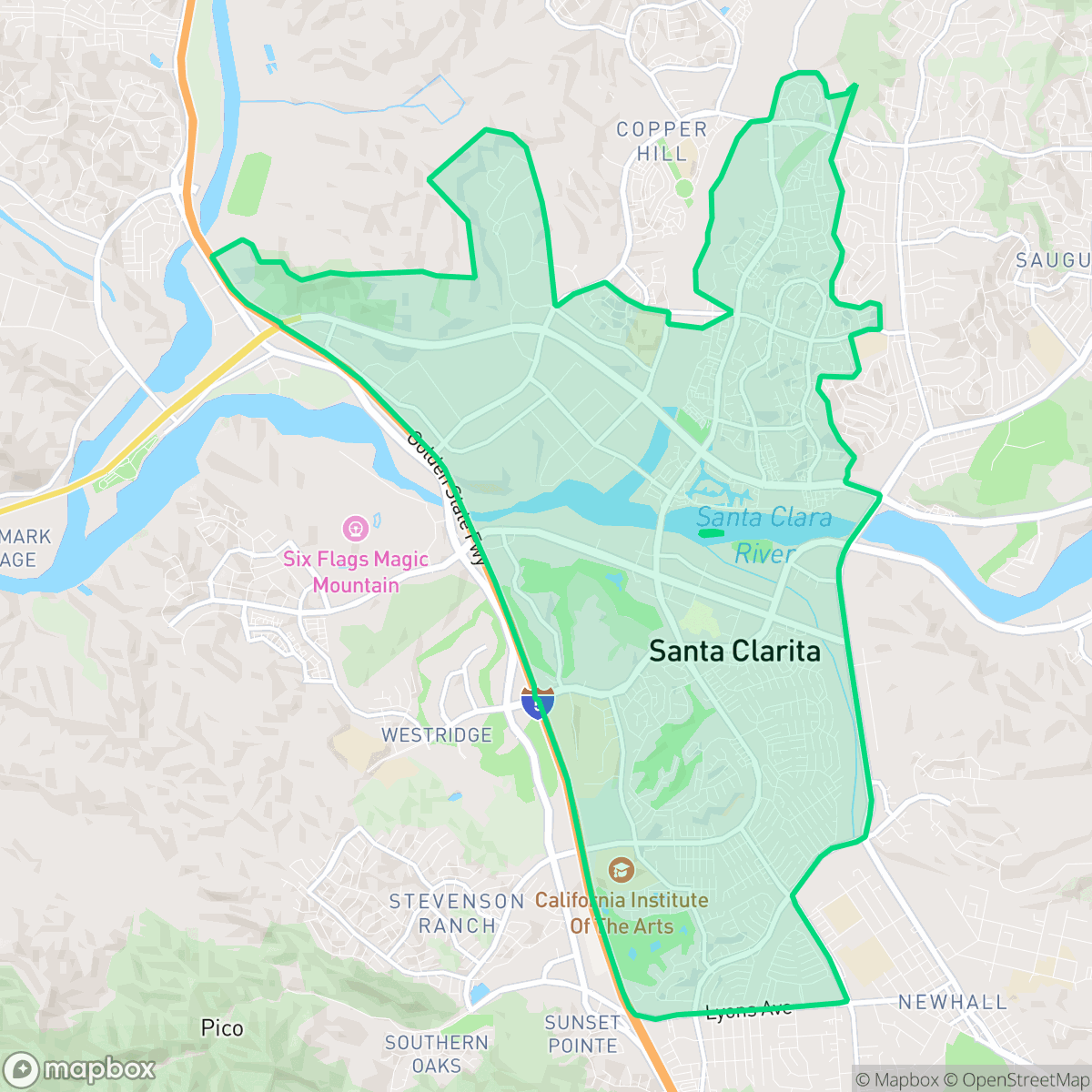
Valencia is a master-planned community defined by its extensive network of pedestrian paseos that allow residents to navigate the area without using major roads. The neighborhood features high walkability and excellent air quality, making it a popular choice for families seeking a quiet, well-manicured suburban environment.
Key Highlights
About Valencia
Valencia was founded in the 1960s as an innovative master-planned community designed by the prominent Viennese urban architect Victor Gruen for the Newhall Land and Farming Company. Named after the Valencia oranges historically cultivated on the land, the neighborhood welcomed its first residents to the Old Orchard I subdivision in 1967. Valencia is architecturally and socially defined by its signature network of "paseos"—paved pedestrian and bicycle paths that bridge over or tunnel under major roadways, allowing residents to travel between schools, parks, and shopping districts without interacting with vehicular traffic. This highly structured design made Valencia a model of mid-century suburban planning before it merged with three neighboring communities to incorporate as the city of Santa Clarita in 1987.
The area is characterized by its affluent, well-maintained aesthetic, featuring large single-family homes with private pools and landscaped yards. Residents benefit from a highly developed infrastructure that connects residential clusters to local commercial centers through continuous sidewalks and green belts, fostering an environment that is both dog-friendly and accessible. While the neighborhood maintains a calm, suburban atmosphere, it offers a variety of dining and social hubs that serve the local population.
Prospective residents should consider that the area is primarily car-oriented for longer commutes, despite its internal walkability. While the community boasts top-tier schools and a clean, safe environment, it experiences moderate noise levels from local road traffic. It is best suited for families and professionals who prioritize access to high-quality public education, outdoor recreational space, and a structured, predictable community layout.
Neighborhood Scores Across 15 Qualities
Housing density remains consistent with typical suburban patterns, offering a degree of separation between neighbors that is slightly higher than the Santa Clarita average. Most homes feature standard setbacks and fenced yards, providing a moderate level of privacy between adjacent properties.
Extensive sidewalk networks and pedestrian bridges connect residential clusters to commercial centers, making most local trips easy to complete on foot. This level of pedestrian connectivity is consistent with the average found throughout Santa Clarita.
Well-maintained landscaping, large homes, and frequent private pools characterize this area. This level of visual upkeep is largely consistent with the broader Santa Clarita average.
Extensive greenbelts, unpaved canyon trails, and wide landscaped parkways provide ample space for pet exercise. This level of accessibility to walking paths and continuous green buffers is very similar to the city average.
Residential areas feature a mix of dense suburban housing tracts and significant pockets of undeveloped natural hillsides. This landscape offers more integrated open space than the typical Santa Clarita neighborhood, according to iHuus data.
A balanced mix of residential life and functional services creates a consistent atmosphere that is nearly identical to the city average. While some pockets offer walkable dining and social hubs, many areas remain car-dependent due to the low-density, suburban layout.
Frequent noise from nearby freeways and rail lines is a characteristic of this area. According to iHuus data, acoustic comfort levels here are consistent with the city average.
Air quality is consistently high with minimal health concerns, performing slightly above the Santa Clarita average according to iHuus data.
Land use is almost entirely residential and light commercial with no heavy industrial hazards or large warehouses detected. This area remains very similar to the Santa Clarita average regarding the absence of industrial proximity.
Health insurance access is widespread among residents, remaining slightly above the Santa Clarita average according to iHuus data.
Political leanings in this area are evenly split between conservative and liberal residents. This balance is slightly more moderate than the overall average for Santa Clarita.
A balanced variety of young adults, families, and older residents characterizes this area, closely mirroring the demographic distribution found throughout Santa Clarita.
Significant flood risk exists due to the area being located within a designated floodplain. According to iHuus data, this level of risk is consistent with the broader Santa Clarita area and typically necessitates flood insurance.
Extreme fire hazards are present in this area, indicating a level of risk that is higher than the Santa Clarita average. Residents should remain vigilant and adhere to maximum protection measures according to iHuus data.
Address-Level Insights for Valencia


iHuus Neighborhood Intelligence Insights
Get address-level neighborhood insights for Valencia
- Street-level scores — see how individual blocks compare, not just neighborhood averages
- Micro-zone boundaries — identify quiet pockets, flood boundaries, and walkable clusters before you visit
- 15 dimensions in full — walkability, noise, air quality, school quality, insurance coverage, population age profile, urban/rural index, and more
- Boundary risk alerts — know if your address sits near a block boundary where scores drop, the kind of detail no listing will ever mention
- School insights — individual school ratings and insights, not just district-level data
- Compare before you commit — side-by-side data across neighborhoods, down to block precision
No credit card required
Compare with Any Neighborhood
| Dimension | Valencia | Newhall |
|---|---|---|
| 🚶 Walkabilityavg 8.6 | ||
| 🔊 Acoustic Comfortavg 2.63 | ||
| 🤫 Privacy Indexavg 5.67 | ||
| 🎨 Visual Appealavg 7.55 | ||
| 🐕 Dog Friendlinessavg 7.99 | ||
| 🗺️ Urban-Rural Indexavg 7.22 | ||
| ✨ Neighborhood Vibeavg 4.68 | ||
| 🏥 Health Insurance Coverageavg 8.34 | ||
| 🌿 Air Qualityavg 9.84 | ||
| 🏭 Industrial Proximityavg 9.07 | ||
| 🌊 Flood Safetyavg 2.26 | ||
| 🗳️ Ideological Leanavg 5.65 | ||
| 👥 Population Age Profileavg 4.86 | ||
| 🔥 Fire Safetyavg 0.83 | ||
| 🏫 School Quality |
Valencia Rankings
School Districts Serving Valencia
School Insights for Valencia
Below average outcomes; significant attendance and academic challenges.
School Insights
See what's really behind every school rating near Valencia
- Individual school ratings — each school's own score with outcome context, not just a district average
- Enrollment & class size data — student-to-teacher ratio and how it compares to the state average
- Full demographics breakdown — ethnicity and gender composition for every school in the enrollment zone
- Every school in the district — all schools within the enrollment boundary ranked by rating, not just the closest one
- Grade levels & benchmarks — elementary through high school, with below/above state-average flags
No credit card required