North Waterfront, San Francisco
Updated · 5,696 residents
North Waterfront is a highly walkable urban district defined by its proximity to the bay and a dense grid of historic warehouses and modern high-rise residences. Residents enjoy immediate access to iconic waterfront landmarks and diverse dining, though the area is characterized by high-density living and significant road noise.
Key Highlights
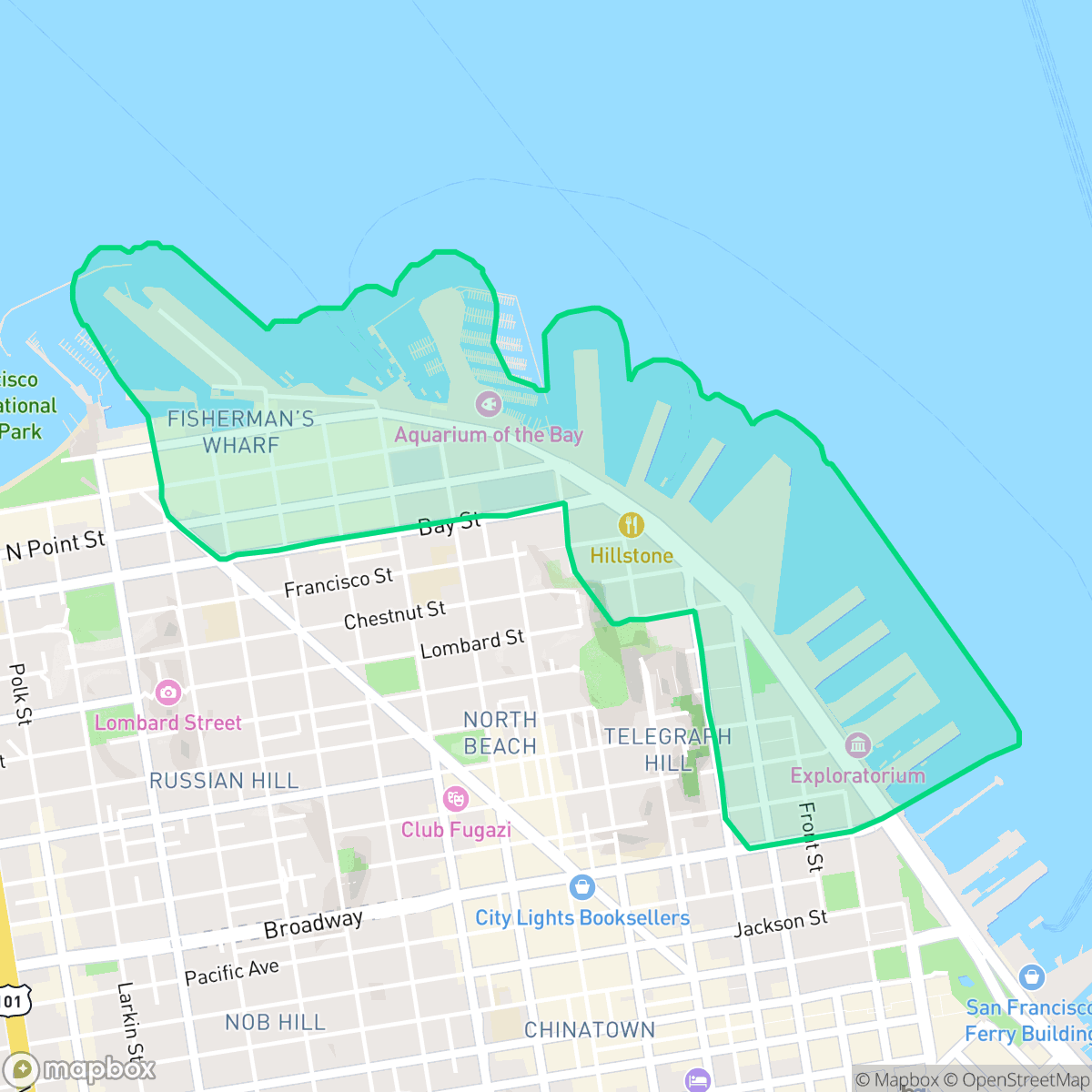
About North Waterfront
San Francisco's North Waterfront neighborhood, stretching from the base of Telegraph Hill to the bay, is built largely on landfill created during the Gold Rush by quarrying Telegraph Hill. The area is anchored by the Northeast Waterfront Landmark District, the city’s oldest industrial district. It features a prominent collection of brick and reinforced concrete warehouses dating from the 1850s to World War II. Historically, the neighborhood began at Clark’s Point, the site of San Francisco’s first deep-water landing in 1848, which welcomed the first Pacific Mail steamships and clipper ships. Notable pioneers like Scotsman Daniel Gibb built early warehouses here in the 1850s. Today, the neighborhood blends its maritime-industrial past with modern residences, featuring iconic landmarks like Ghirardelli Square, Fisherman’s Wharf, and the historic Embarcadero seawall.
The area functions as a dense urban core where maritime heritage meets contemporary residential living. It is defined by its exceptional walkability, allowing residents to navigate a complete grid of sidewalks and harbor-front promenades with ease. The streetscape is dominated by a mix of converted industrial structures and modern luxury apartment complexes, creating a distinct visual identity that favors high-density infrastructure over open space.
Prospective residents should consider the trade-offs of living in such a central location. While air quality remains favorable, the neighborhood experiences notable road traffic noise and a lack of private outdoor space due to its dense building configuration. The area is best suited for those who prioritize proximity to city amenities and waterfront recreation over quiet, suburban-style privacy. Families should be aware that local school district performance is currently impacted by significant budgetary and operational challenges.
Neighborhood Scores Across 15 Qualities
Dense residential blocks and buildings with shared walls create a high-density living environment. According to iHuus data, privacy levels here are slightly lower than the San Francisco average due to the close proximity of structures.
Extremely pedestrian-friendly infrastructure, featuring a complete sidewalk grid and wide waterfront promenades, places this area slightly above the city average for walkability. Continuous crossings and harbor-front access allow for seamless movement throughout the neighborhood.
Premium waterfront real estate and luxury apartment complexes with rooftop amenities define much of the area. This level of visual amenity is slightly above the San Francisco average according to iHuus data.
Waterfront piers and various green plazas along the promenade provide sufficient space for walking dogs. According to iHuus data, the availability of these walking paths and small interior squares is slightly below the city average.
High-rise structures and heavy gray infrastructure dominate the landscape, resulting in a much more built-up environment than the typical San Francisco neighborhood. According to iHuus data, the area features significant pavement and a notable lack of greenery or open natural spaces.
Social hubs and diverse dining options provide a steady energy, though the overall level of activity is slightly below the city average. According to iHuus data, the area features a mix of coastal landmarks and waterfront eateries that contribute to a noticeable local pulse.
Steady traffic noise from nearby busy streets is a common feature here. According to iHuus data, acoustic levels are slightly higher than the San Francisco average.
Air quality remains consistently high with rare instances of elevated readings, performing slightly better than the San Francisco average according to iHuus data.
Maritime docks and commercial warehouses introduce moderate activity and noise levels, though the area remains primarily residential with fewer heavy manufacturing plants than the San Francisco average. According to iHuus data, the presence of shipping infrastructure may contribute to occasional daytime traffic and maritime-related noise.
Health insurance accessibility is high in this area, remaining slightly above the San Francisco average according to iHuus data.
Voting patterns and census indicators show a high level of liberal political alignment, which is consistent with the broader San Francisco average according to iHuus data.
A balanced mix of young professionals, families, and older adults resides here; according to iHuus data, this age distribution is slightly more varied than the San Francisco average.
Significant flood risk exists because portions of the area sit within a designated floodplain; according to iHuus data, this level of vulnerability is notably higher than the San Francisco average.
Address-Level Insights for North Waterfront


iHuus Neighborhood Intelligence Insights
Get address-level neighborhood insights for North Waterfront
- Street-level scores — see how individual blocks compare, not just neighborhood averages
- Micro-zone boundaries — identify quiet pockets, flood boundaries, and walkable clusters before you visit
- 15 dimensions in full — walkability, noise, air quality, school quality, insurance coverage, population age profile, urban/rural index, and more
- Boundary risk alerts — know if your address sits near a block boundary where scores drop, the kind of detail no listing will ever mention
- School insights — individual school ratings and insights, not just district-level data
- Compare before you commit — side-by-side data across neighborhoods, down to block precision
No credit card required
Compare with Any Neighborhood
| Dimension | North Waterfront | Alamo Square |
|---|---|---|
| 🚶 Walkabilityavg 9.91 | ||
| 🔊 Acoustic Comfortavg 3.4 | ||
| 🤫 Privacy Indexavg 2.14 | ||
| 🎨 Visual Appealavg 6.26 | ||
| 🐕 Dog Friendlinessavg 6.55 | ||
| 🗺️ Urban-Rural Indexavg 4.07 | ||
| ✨ Neighborhood Vibeavg 6.4 | ||
| 🏥 Health Insurance Coverageavg 7.87 | ||
| 🌿 Air Qualityavg 7.78 | ||
| 🏭 Industrial Proximityavg 9.37 | ||
| 🌊 Flood Safetyavg 1.89 | ||
| 🗳️ Ideological Leanavg 9.92 | ||
| 👥 Population Age Profileavg 5.18 | ||
| 🔥 Fire Safetyavg 0.01 | ||
| 🏫 School Quality |
North Waterfront Rankings
School Districts Serving North Waterfront
School Insights for North Waterfront
Below average outcomes; significant attendance and academic challenges.
School Insights
See what's really behind every school rating near North Waterfront
- Individual school ratings — each school's own score with outcome context, not just a district average
- Enrollment & class size data — student-to-teacher ratio and how it compares to the state average
- Full demographics breakdown — ethnicity and gender composition for every school in the enrollment zone
- Every school in the district — all schools within the enrollment boundary ranked by rating, not just the closest one
- Grade levels & benchmarks — elementary through high school, with below/above state-average flags
No credit card required