Merced Heights, San Francisco
Updated · 2,886 residents
Merced Heights is a residential neighborhood in San Francisco defined by its steep, view-heavy streets and a dense grid of post-WWII stucco row homes. The area offers exceptional walkability and high-quality air, though residents should expect significant road traffic noise and limited privacy due to the closely packed housing.
Key Highlights
About Merced Heights
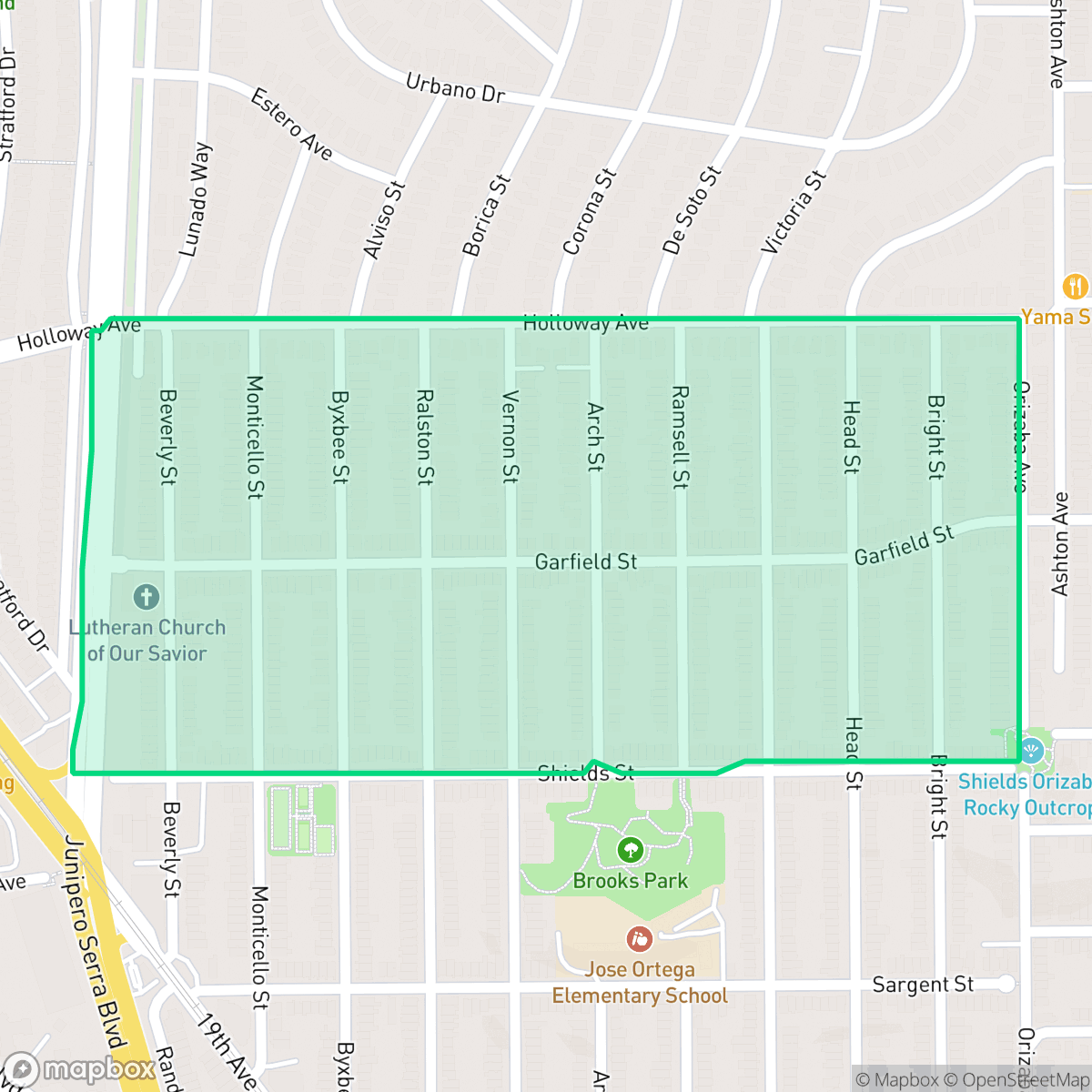
Situated on a prominent southwestern ridge in San Francisco, Merced Heights—part of the OMI (Ocean View-Merced Heights-Ingleside) district—was largely undeveloped open hillside known to early locals as "Poppy Hill" or "Kite Hill". Although platted in the 1860s, the area grew slowly until a post-World War II housing boom transformed the ridge with streamlined stucco tract row homes. Crucially, during the mid-20th century, Merced Heights emerged as a vital island of African-American homeownership, offering minority families a rare opportunity to purchase homes uphill from surrounding residential parks that enforced racially restrictive covenants. Today, the neighborhood's distinct character is anchored by its steep, view-heavy residential streets and Brooks Park, which was established on land settled by the Brooks family in the 1930s.
This neighborhood is characterized by its uniform, high-density residential blocks that occupy a prominent southwestern ridge. The layout follows a traditional grid system with consistent sidewalks, making it highly accessible for pedestrians. While the architecture consists largely of standard tract housing with small yards, the elevated position of the area provides significant scenic views. Local life centers around accessible green spaces like Brooks Park and small neighborhood cafes, fostering a calm, suburban atmosphere within the city limits. According to iHuus data, the area maintains a high rate of health insurance coverage and a strong, consistent ideological profile among its residents.
Prospective residents should consider several livability trade-offs. The neighborhood experiences high levels of ambient noise, primarily from nearby road traffic, and the close proximity of homes results in limited individual privacy. Additionally, the local school district faces significant financial and operational challenges that may impact families. While the area benefits from a lack of industrial activity, it is important to note that the location faces elevated risks regarding fire and flood safety. As a dense, low-density urban environment, it is best suited for those who prioritize walkability and community stability over expansive private outdoor space.
Neighborhood Scores Across 15 Qualities
Close proximity between dwellings and shared walls in many residential clusters result in limited visual and acoustic separation. This density of housing is slightly higher than the San Francisco average, according to iHuus data.
Continuous sidewalks and frequent, clearly marked crosswalks make navigating the area on foot effortless. This level of accessibility is slightly above the San Francisco average according to iHuus data.
Residential streetscapes consist of dense, standard tract housing with uniform rooflines and minimal yard space. This level of visual variety is slightly below the San Francisco average according to iHuus data.
Access to several neighborhood parks and athletic fields provides reliable green space for pets. This level of accessibility is roughly in line with the rest of San Francisco.
Residential streets and green spaces are distributed in roughly equal measure, providing a more suburban character than the dense urban core of San Francisco. According to iHuus data, this balance of built environment and open space is notably higher than the city average.
Suburban streets and green spaces are interspersed with occasional social hubs like Brooks Park and various local cafes. Activity levels are generally comparable to the city average, offering a mix of calm residential blocks and pockets of diverse dining options.
Frequent acoustic disturbances from nearby freeway and railroad corridors characterize this area. According to iHuus data, the level of noise is slightly higher than the San Francisco city average.
Air quality remains consistently clear with infrequent periods of poor ventilation. This level of cleanliness is slightly higher than the average found throughout San Francisco, according to iHuus data.
Residential and light commercial uses dominate the area, with no warehouses or hazardous industrial facilities detected. This absence of heavy industry makes the neighborhood even more purely residential than the San Francisco average, according to iHuus data.
Health insurance accessibility is exceptionally high for residents in this area. According to iHuus data, coverage rates in Merced Heights are notably higher than the San Francisco city average.
Voting patterns and census indicators reflect a deeply liberal political leaning, consistent with the broader San Francisco average according to iHuus data.
Residents live alongside a balanced spread of young adults, families, and older individuals. This demographic distribution is consistent with the typical age profile found across San Francisco.
Property within the 100-year floodplain is subject to higher flood risks than much of San Francisco. According to iHuus data, residents should expect that flood insurance is typically required for homes in this area.
Address-Level Insights for Merced Heights


iHuus Neighborhood Intelligence Insights
Get address-level neighborhood insights for Merced Heights
- Street-level scores — see how individual blocks compare, not just neighborhood averages
- Micro-zone boundaries — identify quiet pockets, flood boundaries, and walkable clusters before you visit
- 15 dimensions in full — walkability, noise, air quality, school quality, insurance coverage, population age profile, urban/rural index, and more
- Boundary risk alerts — know if your address sits near a block boundary where scores drop, the kind of detail no listing will ever mention
- School insights — individual school ratings and insights, not just district-level data
- Compare before you commit — side-by-side data across neighborhoods, down to block precision
No credit card required
Compare with Any Neighborhood
| Dimension | Merced Heights | Alamo Square |
|---|---|---|
| 🚶 Walkabilityavg 9.91 | ||
| 🔊 Acoustic Comfortavg 3.4 | ||
| 🤫 Privacy Indexavg 2.14 | ||
| 🎨 Visual Appealavg 6.26 | ||
| 🐕 Dog Friendlinessavg 6.55 | ||
| 🗺️ Urban-Rural Indexavg 4.07 | ||
| ✨ Neighborhood Vibeavg 6.4 | ||
| 🏥 Health Insurance Coverageavg 7.87 | ||
| 🌿 Air Qualityavg 7.78 | ||
| 🏭 Industrial Proximityavg 9.37 | ||
| 🌊 Flood Safetyavg 1.89 | ||
| 🗳️ Ideological Leanavg 9.92 | ||
| 👥 Population Age Profileavg 5.18 | ||
| 🔥 Fire Safetyavg 0.01 | ||
| 🏫 School Quality |
Merced Heights Rankings
School Districts Serving Merced Heights
School Insights for Merced Heights
Below average outcomes; significant attendance and academic challenges.
School Insights
See what's really behind every school rating near Merced Heights
- Individual school ratings — each school's own score with outcome context, not just a district average
- Enrollment & class size data — student-to-teacher ratio and how it compares to the state average
- Full demographics breakdown — ethnicity and gender composition for every school in the enrollment zone
- Every school in the district — all schools within the enrollment boundary ranked by rating, not just the closest one
- Grade levels & benchmarks — elementary through high school, with below/above state-average flags
No credit card required