Lower Haight, San Francisco
Updated · 4,193 residents
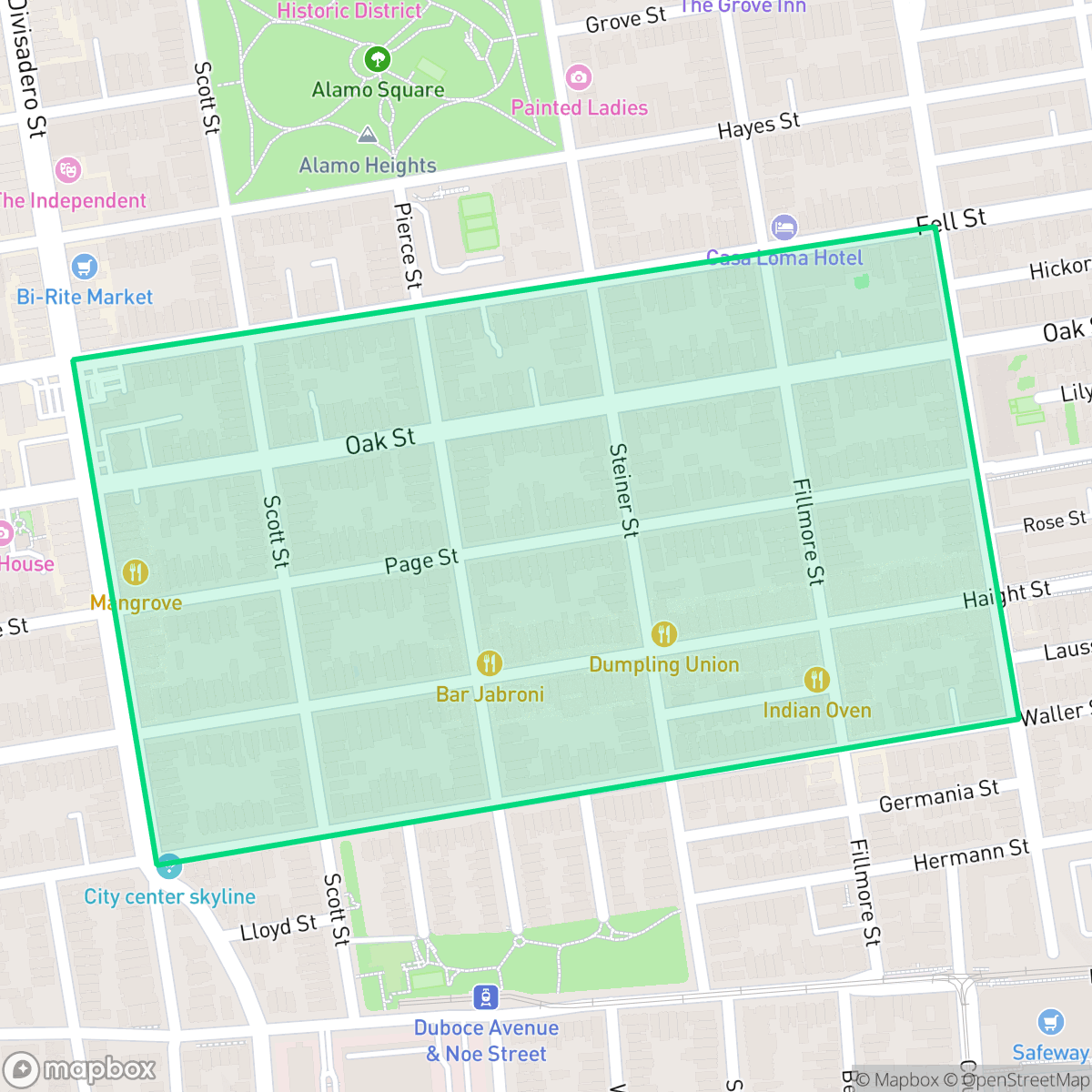
Lower Haight is a high-density urban neighborhood celebrated for its exceptional walkability and role as a key transit artery via the Wiggle bicycle route. The area features a vibrant mix of local dining and cultural venues, though residents must contend with tightly packed housing and limited private outdoor space.
Key Highlights
About Lower Haight
Once a rural landscape of sand dunes, San Francisco’s Lower Haight (historically Haight-Fillmore) transformed rapidly following the 1883 opening of the Haight Street Cable Railway. Developed as part of the Western Addition, the neighborhood was built out with dense Stick-style and Queen Anne Victorian residences that largely survived the 1906 earthquake. During World War II, many of these homes were subdivided to house African American shipyard workers. Architecturally, the area features landmarks like the 1922 Julia Morgan-designed San Francisco Zen Center. By the late 20th century, the neighborhood established its own distinct identity separate from the tourist-heavy Upper Haight, embracing a gritty, post-punk bohemian culture. Today, it is also famous for "The Wiggle," a zig-zagging bicycle route that bypasses the city's steepest hills.
The neighborhood functions as a dense, transit-oriented hub that seamlessly connects to surrounding districts like Hayes Valley and the Duboce Triangle. Its streetscape is defined by a consistent grid of row houses and multi-unit buildings, fostering a lively and active atmosphere. Residents benefit from a high concentration of local businesses, including popular eateries and art centers, which contribute to a strong sense of community engagement and urban convenience.
Living here requires accepting the trade-offs typical of a highly active, central San Francisco location. While the area boasts excellent walkability and decent air quality, the density of the housing stock results in minimal privacy between neighbors. Noise levels, primarily driven by road traffic, are moderate, and the lack of significant unpaved open space makes the area better suited for those who prioritize proximity to city amenities over quiet, suburban-style seclusion. According to iHuus data, the neighborhood maintains a consistent, high-energy urban fabric that is ideal for those who prefer to navigate the city on foot or by bicycle.
Neighborhood Scores Across 15 Qualities
Dense housing layouts feature shared walls and very little separation between buildings. This level of density is consistent with the broader San Francisco average, according to iHuus data.
A dense street grid with wide, continuous sidewalks and frequent marked crosswalks makes navigating the area on foot exceptionally easy. According to iHuus data, the level of accessibility and pedestrian safety here is slightly above the San Francisco average.
Dense row housing and flat roofs characterize this area, which offers a typical urban residential aesthetic slightly below the San Francisco average. According to iHuus data, the neighborhood features well-maintained but modest yards and lacks large estates or luxury amenities.
Immediate access to large central parks and various green spaces with clear trails provides better amenities for pet owners than the city average. While many surrounding blocks consist of dense concrete, the proximity to open fields and wide paths supports easy exercise for dogs.
Streetscapes offer a mix of multi-story buildings and accessible green space, providing a slightly more suburban balance of density and nature than the city average. This blend of dense urban fabric and park infrastructure creates an environment that is neither purely metropolitan nor sprawling.
Frequent foot traffic and a concentrated variety of dining and cultural spots create a more vibrant atmosphere than the typical San Francisco neighborhood. According to iHuus data, the area features a notable presence of local eateries and community centers that contribute to a steady level of neighborhood activity.
Steady traffic noise from local thoroughfares persists throughout the area; however, acoustic levels remain slightly more tranquil than the San Francisco average according to iHuus data.
Air quality is consistently good with rare instances of elevated readings. This level of cleanliness remains slightly above the San Francisco average according to iHuus data.
Industrial facilities, warehouses, and heavy machinery are entirely absent from the neighborhood fabric. According to iHuus data, this area is strictly residential and commercial, offering a cleaner environment than the city average.
Health insurance access is exceptionally high among residents, significantly surpassing the San Francisco average according to iHuus data.
Voting patterns and census indicators reflect a deeply liberal political landscape that is slightly more pronounced than the San Francisco average, according to iHuus data.
A balanced distribution of young professionals, families, and seniors characterizes this area. This demographic spread is slightly more varied than the typical San Francisco profile, according to iHuus data.
Address-Level Insights for Lower Haight


iHuus Neighborhood Intelligence Insights
Get address-level neighborhood insights for Lower Haight
- Street-level scores — see how individual blocks compare, not just neighborhood averages
- Micro-zone boundaries — identify quiet pockets, flood boundaries, and walkable clusters before you visit
- 15 dimensions in full — walkability, noise, air quality, school quality, insurance coverage, population age profile, urban/rural index, and more
- Boundary risk alerts — know if your address sits near a block boundary where scores drop, the kind of detail no listing will ever mention
- School insights — individual school ratings and insights, not just district-level data
- Compare before you commit — side-by-side data across neighborhoods, down to block precision
No credit card required
Compare with Any Neighborhood
| Dimension | Lower Haight | Alamo Square |
|---|---|---|
| 🚶 Walkabilityavg 9.91 | ||
| 🔊 Acoustic Comfortavg 3.4 | ||
| 🤫 Privacy Indexavg 2.14 | ||
| 🎨 Visual Appealavg 6.26 | ||
| 🐕 Dog Friendlinessavg 6.55 | ||
| 🗺️ Urban-Rural Indexavg 4.07 | ||
| ✨ Neighborhood Vibeavg 6.4 | ||
| 🏥 Health Insurance Coverageavg 7.87 | ||
| 🌿 Air Qualityavg 7.78 | ||
| 🏭 Industrial Proximityavg 9.37 | ||
| 🌊 Flood Safetyavg 1.89 | ||
| 🗳️ Ideological Leanavg 9.92 | ||
| 👥 Population Age Profileavg 5.18 | ||
| 🔥 Fire Safetyavg 0.01 | ||
| 🏫 School Quality |
Lower Haight Rankings
School Districts Serving Lower Haight
School Insights for Lower Haight
Below average outcomes; significant attendance and academic challenges.
School Insights
See what's really behind every school rating near Lower Haight
- Individual school ratings — each school's own score with outcome context, not just a district average
- Enrollment & class size data — student-to-teacher ratio and how it compares to the state average
- Full demographics breakdown — ethnicity and gender composition for every school in the enrollment zone
- Every school in the district — all schools within the enrollment boundary ranked by rating, not just the closest one
- Grade levels & benchmarks — elementary through high school, with below/above state-average flags
No credit card required