The Avenue, San Buenaventura (Ventura)
Updated · 10,985 residents
The Avenue is a historically rich neighborhood known for its cultural diversity, local culinary landmarks, and a vibrant arts scene. While the area offers high walkability and excellent air quality, residents experience a dense residential environment with proximity to industrial zones and notable road noise.
Key Highlights
About The Avenue
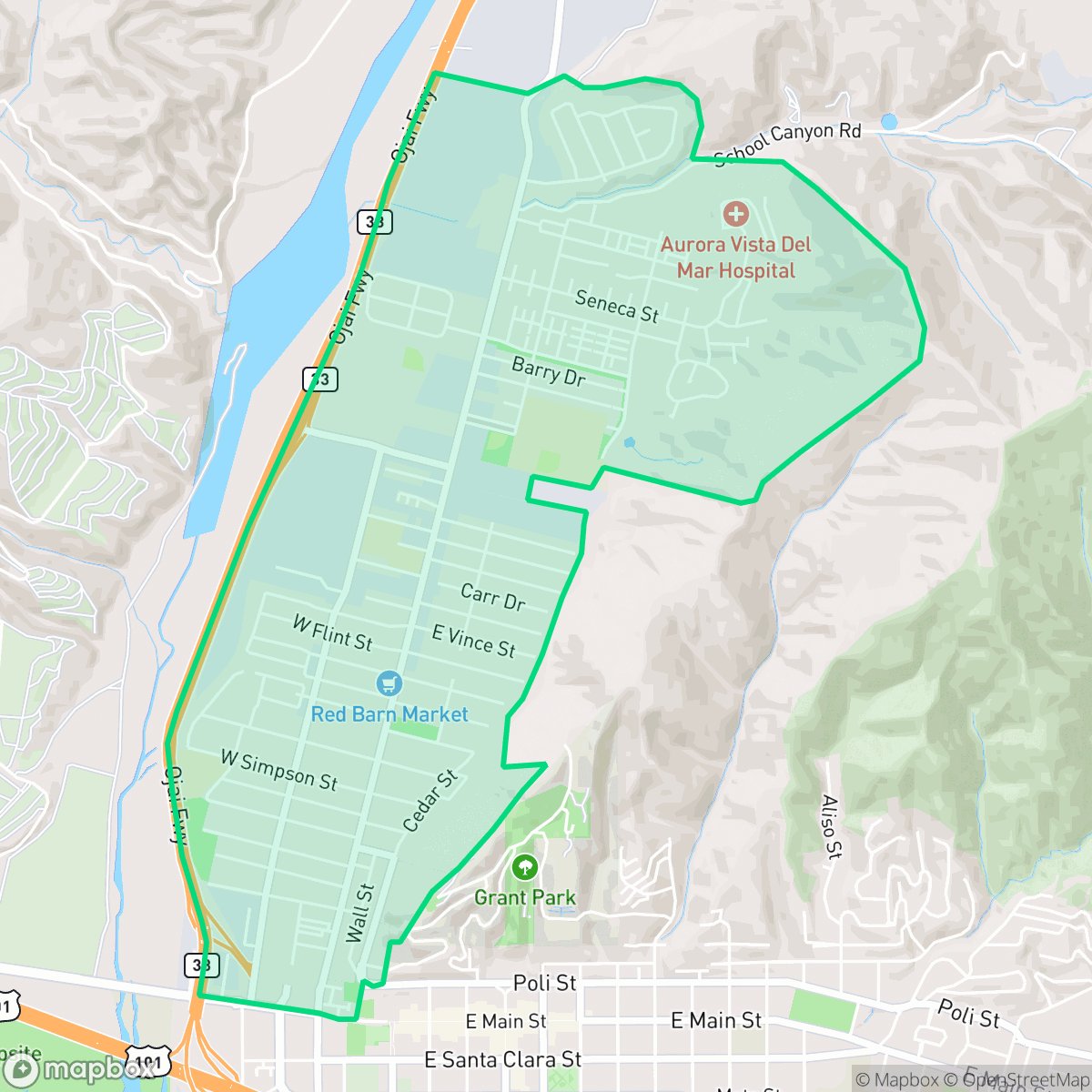
The Avenue, also known as Ventura's Westside, is one of the city's oldest and most culturally diverse neighborhoods. Originally home to Chumash ancestors and later cultivated for citrus and apricot orchards, the area transformed in the early 20th century during the Ventura Avenue Oilfield boom. To house arriving workers, the Simpson Tract was subdivided in 1925 as Ventura’s first designated housing tract, featuring single-story Craftsman and Mediterranean Revival bungalows. Historically, the southern edge of the neighborhood included Tortilla Flats, a vibrant, multi-ethnic working-class community that was displaced in the 1950s and 1960s by the construction of the Ventura Freeway (US 101). Today, the neighborhood is celebrated for its rich Mexican heritage, local culinary landmarks, and a thriving bohemian arts scene centered around galleries like the Bell Arts Factory.
The neighborhood serves as a distinct residential corridor in Ventura, defined by its dense grid of early 20th-century bungalows and proximity to mountainous open space. It functions as a transition zone where suburban residential blocks sit alongside light industrial facilities and logistics centers. According to iHuus data, the area maintains a high level of pedestrian connectivity, allowing residents to navigate the local grid with ease. The presence of the Bell Arts Factory and various local eateries highlights the area's cultural identity, which remains deeply rooted in its Mexican heritage. Living here involves navigating specific trade-offs, particularly regarding acoustic comfort and privacy. Homes are typically situated close together, and the proximity to major transit routes and industrial sites contributes to a consistent level of road noise. While the area provides access to expansive trails and maintains perfect air quality, prospective residents should be aware of the elevated fire risk associated with the nearby hilly terrain. It is best suited for those who value a walkable, culturally authentic community and are comfortable with the noise and density typical of a mixed-use industrial and residential environment.
Neighborhood Scores Across 15 Qualities
Residential spacing is somewhat varied, with some homes positioned very close to their neighbors. According to iHuus data, the level of privacy is slightly lower than the Ventura average due to these higher density pockets.
Consistent sidewalks and a dense grid system facilitate easy movement on foot through the neighborhood. While connectivity is slightly below the city average, the area features low traffic streets and accessible nature paths for residents.
Standard tract housing and apartment complexes define the landscape, featuring tidy yards and uniform rooflines. This area sits slightly below the city average for visual variety due to the dense and consistent architectural style.
Direct access to extensive hill trails and nearby riverbed paths provides ample space for pets. According to iHuus data, the presence of green verges and wide sidewalks makes this area more dog friendly than the Ventura average.
Open landscapes and undeveloped hilly spaces define this area, which is slightly less developed than the Ventura average. Residents will find a mix of residential clusters and industrial corridors alongside natural, unbuilt terrain.
A steady rhythm of suburban life exists here, though the area feels slightly less active than the Ventura average. Most residents will find a calm environment characterized by a mix of light industrial units, green spaces, and occasional local eateries.
Frequent noise from nearby railroad tracks and heavy freeway traffic is a notable feature of this area, which is slightly more audible than the city average according to iHuus data.
Air quality remains consistently high with minimal health concerns, matching the typical standard found throughout San Buenaventura.
Residential life is largely undisturbed by heavy industry, as this area contains only occasional light commercial activity. The neighborhood experiences significantly less industrial proximity than the Ventura city average.
Health insurance enrollment among residents is lower than the average seen throughout San Buenaventura, according to iHuus data.
Voting patterns and census indicators show a markedly more liberal political leaning than the San Buenaventura average, according to iHuus data.
A varied demographic of young professionals, families, and seniors characterizes this area. According to iHuus data, the population distribution is slightly more concentrated toward specific age brackets compared to the broader San Buenaventura average.
Residual flood risk exists within this area due to its location in a 500 year floodplain. According to iHuus data, flood safety in The Avenue is notably higher than the San Buenaventura average.
Significant fire hazards are present in this area, representing a much higher risk level than the San Buenaventura average. According to iHuus data, residents may require enhanced mitigation measures due to the substantial presence of combustible materials nearby.
Address-Level Insights for The Avenue


iHuus Neighborhood Intelligence Insights
Get address-level neighborhood insights for The Avenue
- Street-level scores — see how individual blocks compare, not just neighborhood averages
- Micro-zone boundaries — identify quiet pockets, flood boundaries, and walkable clusters before you visit
- 15 dimensions in full — walkability, noise, air quality, school quality, insurance coverage, population age profile, urban/rural index, and more
- Boundary risk alerts — know if your address sits near a block boundary where scores drop, the kind of detail no listing will ever mention
- School insights — individual school ratings and insights, not just district-level data
- Compare before you commit — side-by-side data across neighborhoods, down to block precision
No credit card required
Compare with Any Neighborhood
| Dimension | The Avenue | Arundell |
|---|---|---|
| 🚶 Walkabilityavg 8.94 | ||
| 🔊 Acoustic Comfortavg 2.96 | ||
| 🤫 Privacy Indexavg 4.99 | ||
| 🎨 Visual Appealavg 6.55 | ||
| 🐕 Dog Friendlinessavg 6.7 | ||
| 🗺️ Urban-Rural Indexavg 6.9 | ||
| ✨ Neighborhood Vibeavg 4.55 | ||
| 🏥 Health Insurance Coverageavg 8.28 | ||
| 🌿 Air Qualityavg 9.98 | ||
| 🏭 Industrial Proximityavg 8.77 | ||
| 🌊 Flood Safetyavg 5.24 | ||
| 🗳️ Ideological Leanavg 8.09 | ||
| 👥 Population Age Profileavg 5.15 | ||
| 🔥 Fire Safetyavg 0.58 | ||
| 🏫 School Quality |
The Avenue Rankings
School Districts Serving The Avenue
School Insights for The Avenue
Below average outcomes; significant attendance and academic challenges.
School Insights
See what's really behind every school rating near The Avenue
- Individual school ratings — each school's own score with outcome context, not just a district average
- Enrollment & class size data — student-to-teacher ratio and how it compares to the state average
- Full demographics breakdown — ethnicity and gender composition for every school in the enrollment zone
- Every school in the district — all schools within the enrollment boundary ranked by rating, not just the closest one
- Grade levels & benchmarks — elementary through high school, with below/above state-average flags
No credit card required