Taylor Ranch, San Buenaventura (Ventura)
Updated · 1,002 residents
Taylor Ranch is a quiet, semi-rural neighborhood characterized by a standard suburban layout and high pedestrian connectivity. While the area offers clean air and a peaceful atmosphere, residents should be aware of elevated noise levels from nearby transit corridors and a higher risk of fire compared to the broader city.
Key Highlights
About Taylor Ranch
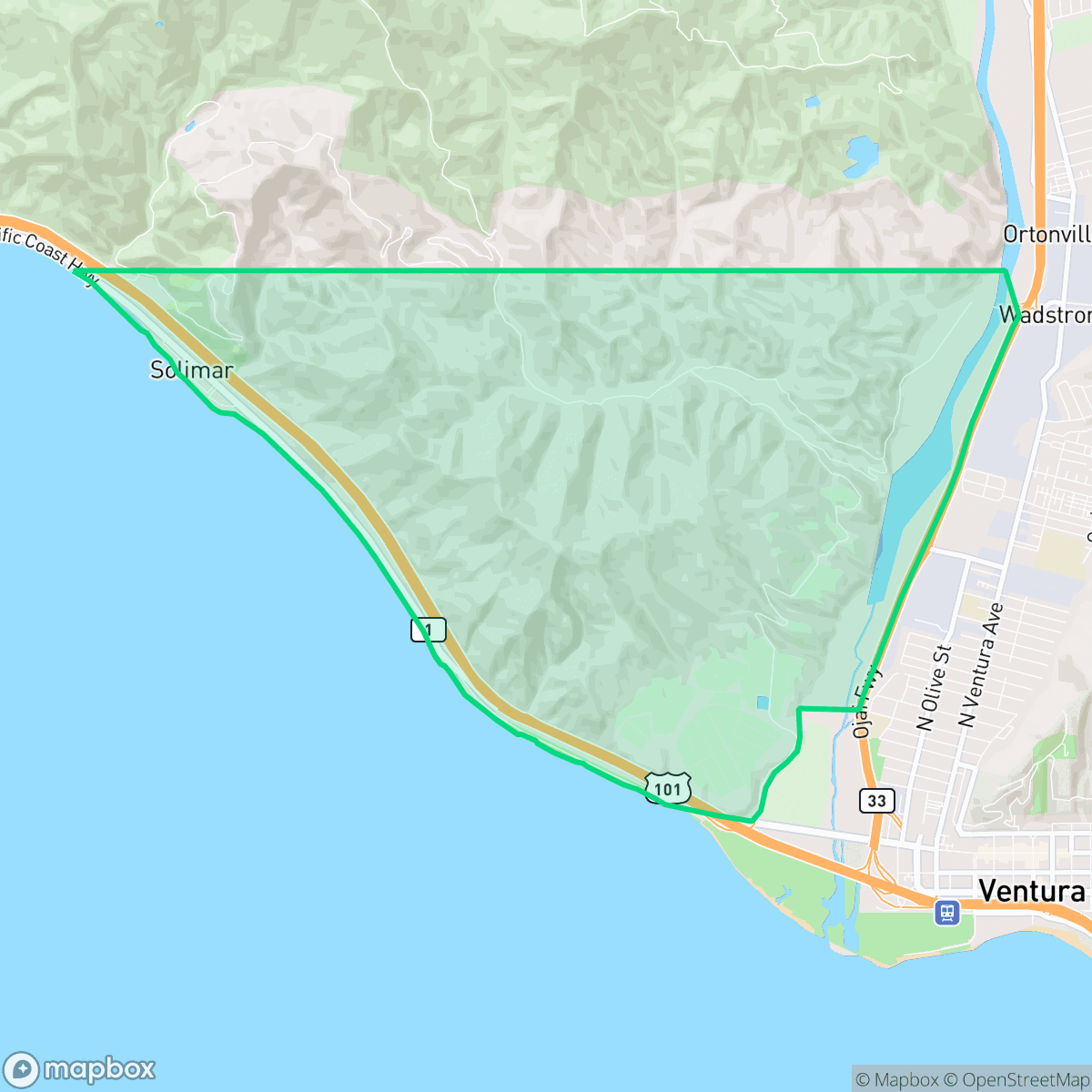
Taylor Ranch in Ventura, California, derives its name from the historic Rancho Cañada de San Miguelito, an 8,000-acre Mexican land grant awarded to Don Ramon Rodriguez in 1840. The property was purchased in 1872 by Green B. Taylor, whose family operated it as a sheep ranch. Throughout the 20th century, the land became a significant regional oil field following discoveries in 1931 and was later managed by the Wood-Claeyssens family, who were notable for their philanthropic contributions, including the donation of land for Emma Wood State Beach. While the ranch was historically considered for large-scale industrial projects and a university campus, much of its original vast acreage remains distinct from the modern, smaller residential neighborhood that carries its name today.
The area maintains a semi-rural feel with open landscapes and scattered woodland, providing a distinct atmosphere compared to more densely developed parts of the city. The residential environment consists primarily of uniform tract housing and apartment complexes, creating a consistent visual profile. Despite the quiet nature of the streets, the neighborhood benefits from a well-established grid system that makes the area highly accessible for pedestrians.
Prospective residents should consider the trade-offs of living in this location, including consistent noise disturbances from nearby freeway and railroad infrastructure. According to data, the area also features a notable presence of light industrial facilities and logistics yards, which contributes to its unique character. While the neighborhood offers excellent air quality, it requires active fire mitigation and preparedness due to local environmental conditions. It is best suited for those who prioritize walkability and a tranquil suburban setting, though it may be less ideal for those sensitive to transit noise or industrial proximity.
Neighborhood Scores Across 15 Qualities
Residential density is moderate with some areas featuring houses positioned very close together. According to iHuus data, this level of privacy is slightly lower than the average for the wider San Buenaventura area.
A well-established grid system with sidewalks on both sides of nearly every street provides high connectivity for pedestrians. This level of walkability is slightly below the city average for Ventura.
Uniform tract housing and apartment complexes dominate the landscape, featuring simple rooflines and modest yard spaces. This area presents a less varied visual profile than the wider Ventura area, according to iHuus data.
Street trees and green verges provide some space for walks, though access to large recreational areas is below the Ventura average. Nearby riverbed trails and small parks offer limited options for pet owners.
Open landscapes and scattered woodland areas provide a semi-rural atmosphere that is slightly less developed than the Ventura city average. Residential clusters in this area often sit alongside large-scale industrial or storage corridors.
Suburban streets and industrial corridors create a tranquil atmosphere, though this area lacks the vibrant commercial activity found in other parts of the city. Most of the neighborhood is characterized by a low-density, car-oriented landscape with limited walkable amenities, according to iHuus data.
Frequent noise from nearby freeway and railroad corridors makes this area significantly louder than the Ventura average. According to iHuus data, residents can expect consistent auditory disturbances from heavy transit traffic.
Air quality remains consistently high with minimal health concerns for residents. This level of air purity is nearly identical to the city average, according to iHuus data.
Light industrial buildings, warehouses, and storage yards are present alongside residential areas, making the level of industrial proximity notably higher than the Ventura city average. According to iHuus data, certain sectors of the neighborhood feature active logistics yards and heavy equipment staging.
Health insurance access is notably lower in Taylor Ranch than the Ventura city average, according to iHuus data.
Voting patterns and census indicators reflect a significantly more liberal political leaning than the San Buenaventura average, according to iHuus data.
A diverse mix of young adults, families, and older residents resides here. According to iHuus data, the population distribution is slightly less varied than the Ventura city average.
Flood risk in this area is notably lower than the Ventura average, although some residual risk exists within the 500-year floodplain according to iHuus data.
Fire hazards in this area are notably higher than the city average, requiring residents to maintain standard mitigation and preparedness measures. According to iHuus data, the surrounding landscape presents a more significant risk than most other parts of San Buenaventura.
Address-Level Insights for Taylor Ranch


iHuus Neighborhood Intelligence Insights
Get address-level neighborhood insights for Taylor Ranch
- Street-level scores — see how individual blocks compare, not just neighborhood averages
- Micro-zone boundaries — identify quiet pockets, flood boundaries, and walkable clusters before you visit
- 15 dimensions in full — walkability, noise, air quality, school quality, insurance coverage, population age profile, urban/rural index, and more
- Boundary risk alerts — know if your address sits near a block boundary where scores drop, the kind of detail no listing will ever mention
- School insights — individual school ratings and insights, not just district-level data
- Compare before you commit — side-by-side data across neighborhoods, down to block precision
No credit card required
Compare with Any Neighborhood
| Dimension | Taylor Ranch | Arundell |
|---|---|---|
| 🚶 Walkabilityavg 8.94 | ||
| 🔊 Acoustic Comfortavg 2.96 | ||
| 🤫 Privacy Indexavg 4.99 | ||
| 🎨 Visual Appealavg 6.55 | ||
| 🐕 Dog Friendlinessavg 6.7 | ||
| 🗺️ Urban-Rural Indexavg 6.9 | ||
| ✨ Neighborhood Vibeavg 4.55 | ||
| 🏥 Health Insurance Coverageavg 8.28 | ||
| 🌿 Air Qualityavg 9.98 | ||
| 🏭 Industrial Proximityavg 8.77 | ||
| 🌊 Flood Safetyavg 5.24 | ||
| 🗳️ Ideological Leanavg 8.09 | ||
| 👥 Population Age Profileavg 5.15 | ||
| 🔥 Fire Safetyavg 0.58 | ||
| 🏫 School Quality |
Taylor Ranch Rankings
School Districts Serving Taylor Ranch
School Insights for Taylor Ranch
Below average outcomes; significant attendance and academic challenges.
School Insights
See what's really behind every school rating near Taylor Ranch
- Individual school ratings — each school's own score with outcome context, not just a district average
- Enrollment & class size data — student-to-teacher ratio and how it compares to the state average
- Full demographics breakdown — ethnicity and gender composition for every school in the enrollment zone
- Every school in the district — all schools within the enrollment boundary ranked by rating, not just the closest one
- Grade levels & benchmarks — elementary through high school, with below/above state-average flags
No credit card required