North Avenue, San Buenaventura (Ventura)
Updated · 1,803 residents
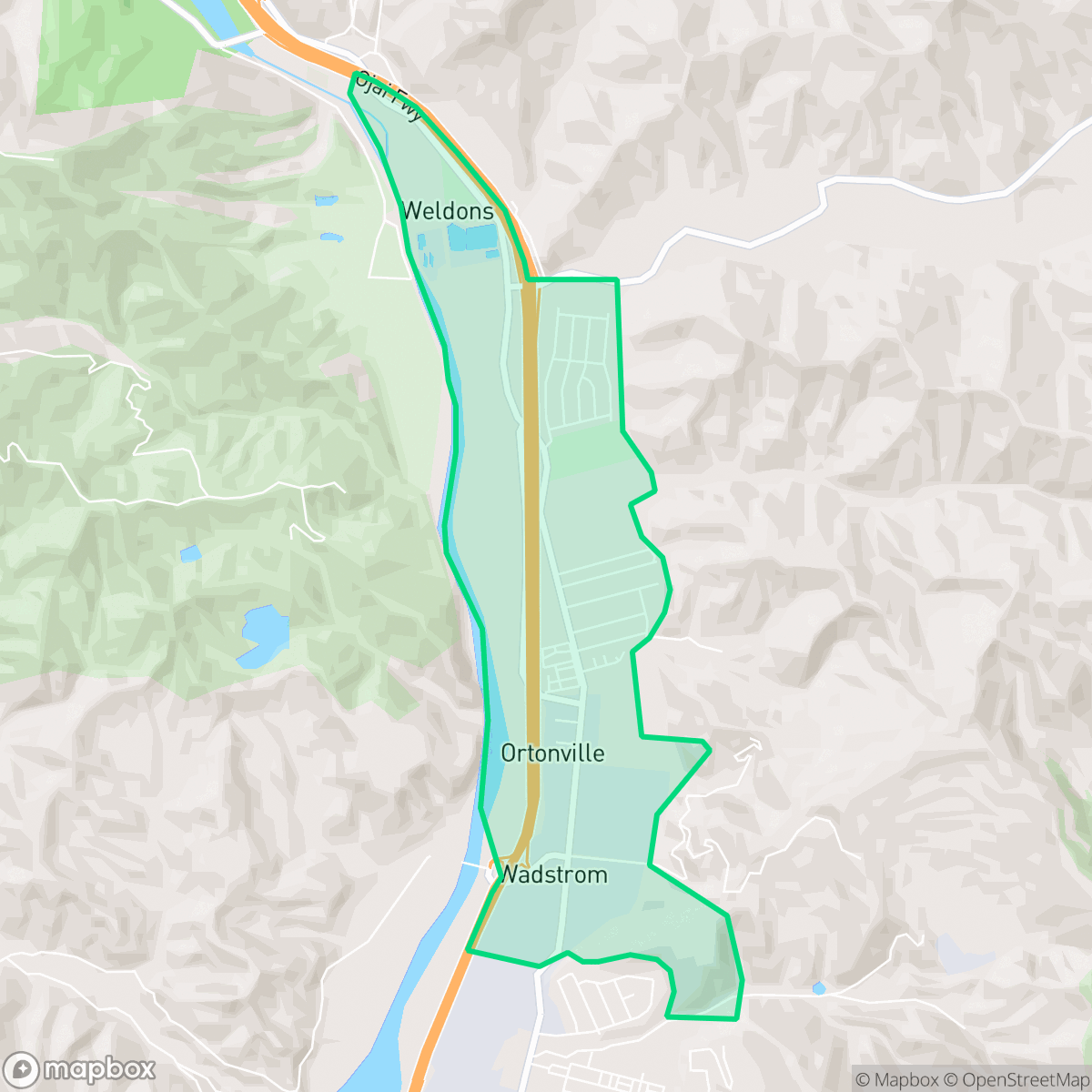
North Avenue is a semi-rural neighborhood defined by its open landscapes and historical industrial legacy within the Ventura River Valley. While the area offers a quiet, pet-friendly environment, residents contend with significant noise from nearby rail and freeway traffic, as well as limited sidewalk infrastructure.
Key Highlights
About North Avenue
The North Ventura Avenue area, situated within the Ventura River Valley, possesses a distinct development history characterized by its rural atmosphere and long-standing association with the oil industry. Unlike other parts of the city, the area is defined by significant agricultural land and a legacy of oilfield operations that have shaped its industrial character since the early 20th century. The neighborhood's unique evolution is formalized in the North Ventura Avenue Area Plan, which addresses its transition from unincorporated county land to its role within the City of San Buenaventura's sphere of influence. Notable landmarks include the Ventura Avenue Water Treatment Facility, which features a Spanish Colonial Revival administrative building constructed in 1938, representing over a century of local water development history.
North Avenue serves as a distinct transition zone between suburban residential pockets and industrial utility sites. The area is characterized by its semi-rural feel, featuring expansive open landscapes and hilly scrubland that provide a different visual experience than the rest of the city. Residents benefit from exceptionally clean air and a pet-friendly environment with accessible paths for walking, though the neighborhood maintains a subdued, car-oriented atmosphere due to its low commercial density and industrial warehouse zones.
Living in this area requires navigating specific environmental and infrastructure considerations. The neighborhood faces extreme fire risks and elevated flood potential, which often necessitates specialized insurance coverage for homeowners. Furthermore, the proximity to industrial facilities and major transportation corridors results in higher noise levels and occasional heavy truck traffic. Prospective residents should also note that local health insurance coverage rates are lower than the city average, and the nearby Ventura Unified School District is currently undergoing significant structural and budgetary reorganization.
Neighborhood Scores Across 15 Qualities
Residential spacing is mixed, providing more distance between neighbors than the typical Ventura area. According to iHuus data, the neighborhood offers a balance of density and some buffering between properties.
Quiet streets allow for easy strolling, though the lack of sidewalks makes the area significantly less walkable than the city average according to iHuus data.
Housing consists primarily of traditional tract homes with modest yards. This level of visual variety is lower than the average found throughout Ventura.
Connected green spaces and wide, traffic-safe paths make this area more suitable for dog owners than the Ventura city average. According to iHuus data, the neighborhood offers reliable access to areas conducive to walking pets.
Expansive open landscapes and hilly scrubland define this area, offering a more open and less dense environment than the Ventura city average. According to iHuus data, the neighborhood serves as a transition zone between suburban clusters, agricultural fields, and industrial utility sites.
Low commercial density and significant industrial warehouse zones create a subdued atmosphere that is less vibrant than the Ventura average. While some residential pockets are easy to navigate, much of the area is characterized by remote, car-oriented corridors and limited local services.
Frequent noise from nearby railroad tracks and heavy freeway traffic characterizes the area. This level of acoustic disturbance is slightly higher than the average for San Buenaventura.
Air quality is exceptionally high with minimal pollutants, performing nearly identically to the city average. Residents can expect clear skies and negligible health concerns related to airborne particulates according to iHuus data.
Visible industrial operations, including a wastewater treatment plant and nearby quarrying activities, create significantly more industrial proximity than the Ventura average. Residents may encounter more heavy truck traffic, dust, and noise from these facilities compared to other parts of the city.
Health insurance access in this area is below the Ventura city average. According to iHuus data, a notable portion of the North Avenue population lacks coverage.
Political views in this area align closely with the broader San Buenaventura community, characterized by a liberal majority and a modest opposing presence according to iHuus data.
Residents live alongside a balanced demographic of young professionals, families, and seniors. This age distribution is largely consistent with the broader San Buenaventura area, according to iHuus data.
Properties in this area fall within a designated floodplain, which presents a higher risk of flooding than the Ventura average. According to iHuus data, residents may find that flood insurance is a typical requirement for homes in this neighborhood.
High levels of fire hazard exist in this area, presenting a risk that is notably higher than the Ventura city average. According to iHuus data, residents should prepare for extreme fire safety requirements due to the severe nature of the local threat.
Address-Level Insights for North Avenue


iHuus Neighborhood Intelligence Insights
Get address-level neighborhood insights for North Avenue
- Street-level scores — see how individual blocks compare, not just neighborhood averages
- Micro-zone boundaries — identify quiet pockets, flood boundaries, and walkable clusters before you visit
- 15 dimensions in full — walkability, noise, air quality, school quality, insurance coverage, population age profile, urban/rural index, and more
- Boundary risk alerts — know if your address sits near a block boundary where scores drop, the kind of detail no listing will ever mention
- School insights — individual school ratings and insights, not just district-level data
- Compare before you commit — side-by-side data across neighborhoods, down to block precision
No credit card required
Compare with Any Neighborhood
| Dimension | North Avenue | Arundell |
|---|---|---|
| 🚶 Walkabilityavg 8.94 | ||
| 🔊 Acoustic Comfortavg 2.96 | ||
| 🤫 Privacy Indexavg 4.99 | ||
| 🎨 Visual Appealavg 6.55 | ||
| 🐕 Dog Friendlinessavg 6.7 | ||
| 🗺️ Urban-Rural Indexavg 6.9 | ||
| ✨ Neighborhood Vibeavg 4.55 | ||
| 🏥 Health Insurance Coverageavg 8.28 | ||
| 🌿 Air Qualityavg 9.98 | ||
| 🏭 Industrial Proximityavg 8.77 | ||
| 🌊 Flood Safetyavg 5.24 | ||
| 🗳️ Ideological Leanavg 8.09 | ||
| 👥 Population Age Profileavg 5.15 | ||
| 🔥 Fire Safetyavg 0.58 | ||
| 🏫 School Quality |
North Avenue Rankings
School Districts Serving North Avenue
School Insights for North Avenue
Below average outcomes; significant attendance and academic challenges.
School Insights
See what's really behind every school rating near North Avenue
- Individual school ratings — each school's own score with outcome context, not just a district average
- Enrollment & class size data — student-to-teacher ratio and how it compares to the state average
- Full demographics breakdown — ethnicity and gender composition for every school in the enrollment zone
- Every school in the district — all schools within the enrollment boundary ranked by rating, not just the closest one
- Grade levels & benchmarks — elementary through high school, with below/above state-average flags
No credit card required