Downtown, Napa
Updated · 1,464 residents
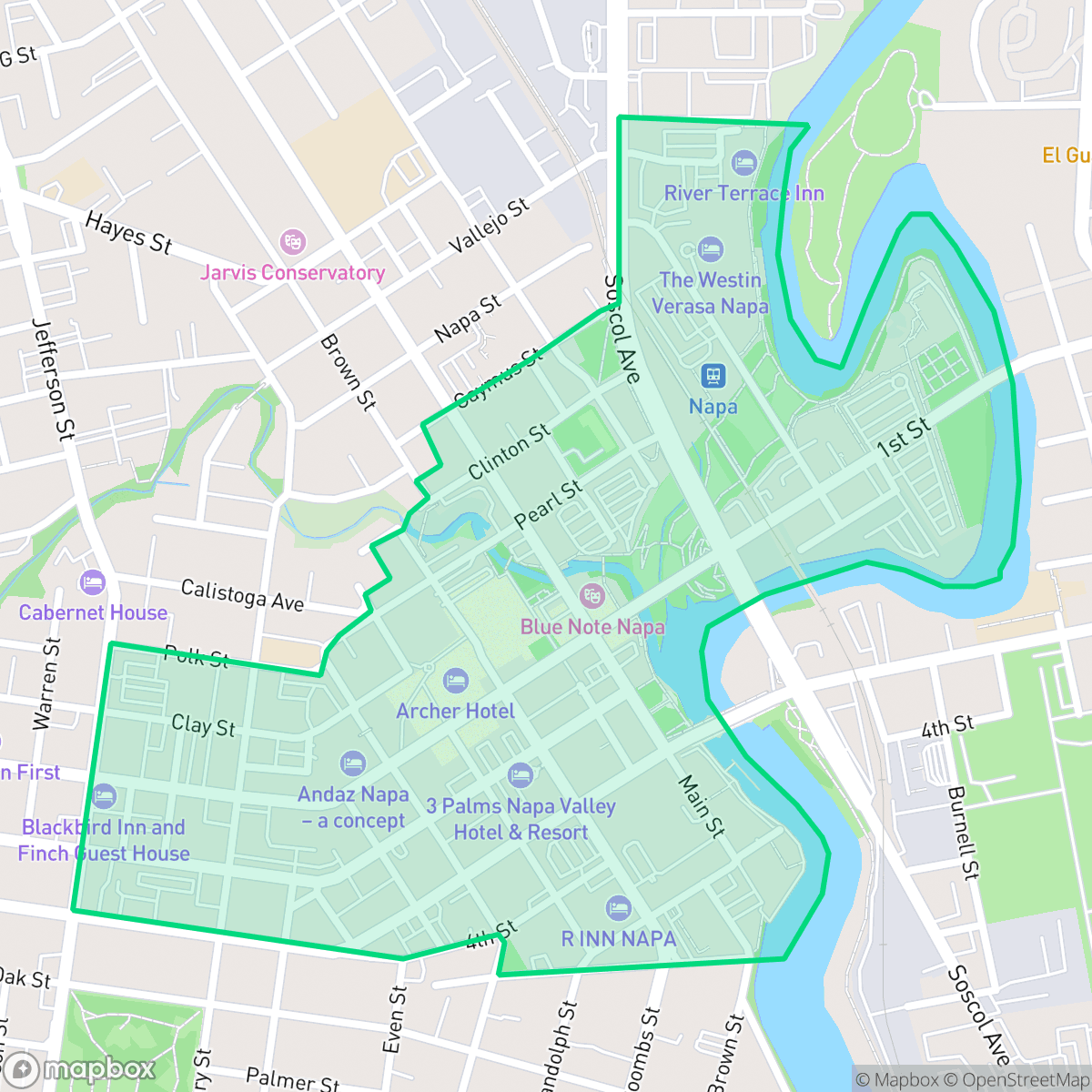
Downtown Napa serves as the city's primary social and cultural hub, defined by its exceptional walkability and vibrant collection of dining, nightlife, and historic architecture. Residents enjoy easy access to riverfront paths and community amenities, though the area is characterized by a dense urban feel and consistent traffic noise.
Key Highlights
About Downtown
Downtown Napa, laid out by Nathan Coombs in 1848, flourished as a vital trade and transportation hub at the head of navigation on the Napa River. The area is defined by its rich collection of 19th-century architecture, including Italianate Victorian commercial buildings like the 1888 Winship-Smernes Building and the 1880 Napa Valley Opera House. Historically, the neighborhood included 'Spanishtown,' a multicultural working-class district north of the core. Once a center for industrial tanning and riverboat commerce, the downtown underwent significant transformation following the 1998 flood control plan, which revitalized the riverfront. Today, landmarks such as the 1884 Napa Mill and the 1901 Goodman Library reflect the neighborhood's evolution from a rugged industrial center to a prominent cultural and culinary destination.
This neighborhood functions as a central nexus for activity, where residents can easily navigate between art galleries, restaurants, and local services on foot. The area maintains a lively atmosphere that attracts a diverse demographic, ranging from families to young professionals, who value the proximity to the Napa River and established community infrastructure. With minimal industrial presence, the environment remains focused on commerce and residential living, supported by a school district known for strong arts programs and extracurricular opportunities despite some academic proficiency variations. The neighborhood features a mix of Victorian-era architecture and modern developments like the First Street Napa district, creating a distinct blend of historical character and contemporary convenience.
Living here involves balancing high accessibility with certain urban trade-offs. The high level of pedestrian connectivity is paired with a steady hum of traffic noise and a dense residential layout that offers varied levels of privacy. Prospective residents should note that the area is situated within a designated floodplain, which may necessitate specific insurance considerations. While the neighborhood provides a convenient lifestyle for those who prioritize walkability and social engagement, it is best suited for individuals who are comfortable with the rhythms of a bustling, mixed-use urban core.
Neighborhood Scores Across 15 Qualities
Residential spacing varies from dense urban blocks to detached homes with moderate buffers, resulting in a privacy level that is roughly comparable to the Napa city average.
Pedestrian infrastructure is exceptionally strong here, featuring continuous sidewalks on both sides of most streets and ample crossings. This area offers a much higher level of walkability than the rest of Napa.
Residential views consist of typical suburban housing with modest yards and simple rooflines. According to iHuus data, the visual variety in this area is slightly below the Napa city average.
River trails, local parks, and wide paths offer reliable green space for pets. According to iHuus data, the area is slightly below the city average for dog friendliness due to the concentrated urban nature of the downtown core.
Densely populated commercial blocks and residential neighborhoods coexist with nearby open spaces. This area feels slightly more urban than the Napa average due to its concentrated mix of buildings and infrastructure.
Concentrated social hubs, including various restaurants and galleries, create a steady level of activity that is slightly higher than the Napa city average. Residents can find a balanced mix of dining, nightlife, and green spaces situated near the local railway and waterfront.
Ongoing noise from nearby busy streets is a common feature of this area. According to iHuus data, acoustic levels are slightly higher than the average for Napa.
Air quality remains consistently high with negligible health concerns. This level of cleanliness is consistent with the rest of Napa.
Industrial activity is very low in this area, with only occasional light commercial zones and some warehouse presence on the eastern edge. This neighborhood contains significantly less industrial proximity than the Napa average, offering a primarily residential environment.
Health insurance access is lower in this area than the Napa city average, according to iHuus data.
Voting patterns and census indicators show a predominantly liberal political leaning that is even more pronounced than the Napa average, according to iHuus data.
Residents encounter a balanced demographic of young adults, families, and older individuals. This age distribution is slightly more varied than the average found across Napa.
Located within a recognized floodplain, this area carries a significant risk of flooding during major weather events. According to iHuus data, this risk level is consistent with the broader Napa area and may necessitate specialized flood insurance.
Address-Level Insights for Downtown


iHuus Neighborhood Intelligence Insights
Get address-level neighborhood insights for Downtown
- Street-level scores — see how individual blocks compare, not just neighborhood averages
- Micro-zone boundaries — identify quiet pockets, flood boundaries, and walkable clusters before you visit
- 15 dimensions in full — walkability, noise, air quality, school quality, insurance coverage, population age profile, urban/rural index, and more
- Boundary risk alerts — know if your address sits near a block boundary where scores drop, the kind of detail no listing will ever mention
- School insights — individual school ratings and insights, not just district-level data
- Compare before you commit — side-by-side data across neighborhoods, down to block precision
No credit card required
Compare with Any Neighborhood
| Dimension | Downtown | Alta Heights |
|---|---|---|
| 🚶 Walkabilityavg 8.58 | ||
| 🔊 Acoustic Comfortavg 3.79 | ||
| 🤫 Privacy Indexavg 5.57 | ||
| 🎨 Visual Appealavg 6.84 | ||
| 🐕 Dog Friendlinessavg 7.44 | ||
| 🗺️ Urban-Rural Indexavg 7.13 | ||
| ✨ Neighborhood Vibeavg 6.19 | ||
| 🏥 Health Insurance Coverageavg 7.18 | ||
| 🌿 Air Qualityavg 9.99 | ||
| 🏭 Industrial Proximityavg 9.18 | ||
| 🌊 Flood Safetyavg 3.04 | ||
| 🗳️ Ideological Leanavg 9.09 | ||
| 👥 Population Age Profileavg 5.16 | ||
| 🔥 Fire Safetyavg 0.34 | ||
| 🏫 School Quality |
Downtown Rankings
School Districts Serving Downtown
School Insights for Downtown
Below average outcomes; significant attendance and academic challenges.
School Insights
See what's really behind every school rating near Downtown
- Individual school ratings — each school's own score with outcome context, not just a district average
- Enrollment & class size data — student-to-teacher ratio and how it compares to the state average
- Full demographics breakdown — ethnicity and gender composition for every school in the enrollment zone
- Every school in the district — all schools within the enrollment boundary ranked by rating, not just the closest one
- Grade levels & benchmarks — elementary through high school, with below/above state-average flags
No credit card required