Village Homes, Davis
Updated · 952 residents
Village Homes is a highly walkable, sustainable enclave in West Davis defined by its interconnected pedestrian paths and serene, quiet atmosphere. Residents enjoy excellent air quality and a lack of industrial proximity, though the area faces specific environmental challenges regarding fire and flood safety.
Key Highlights
About Village Homes
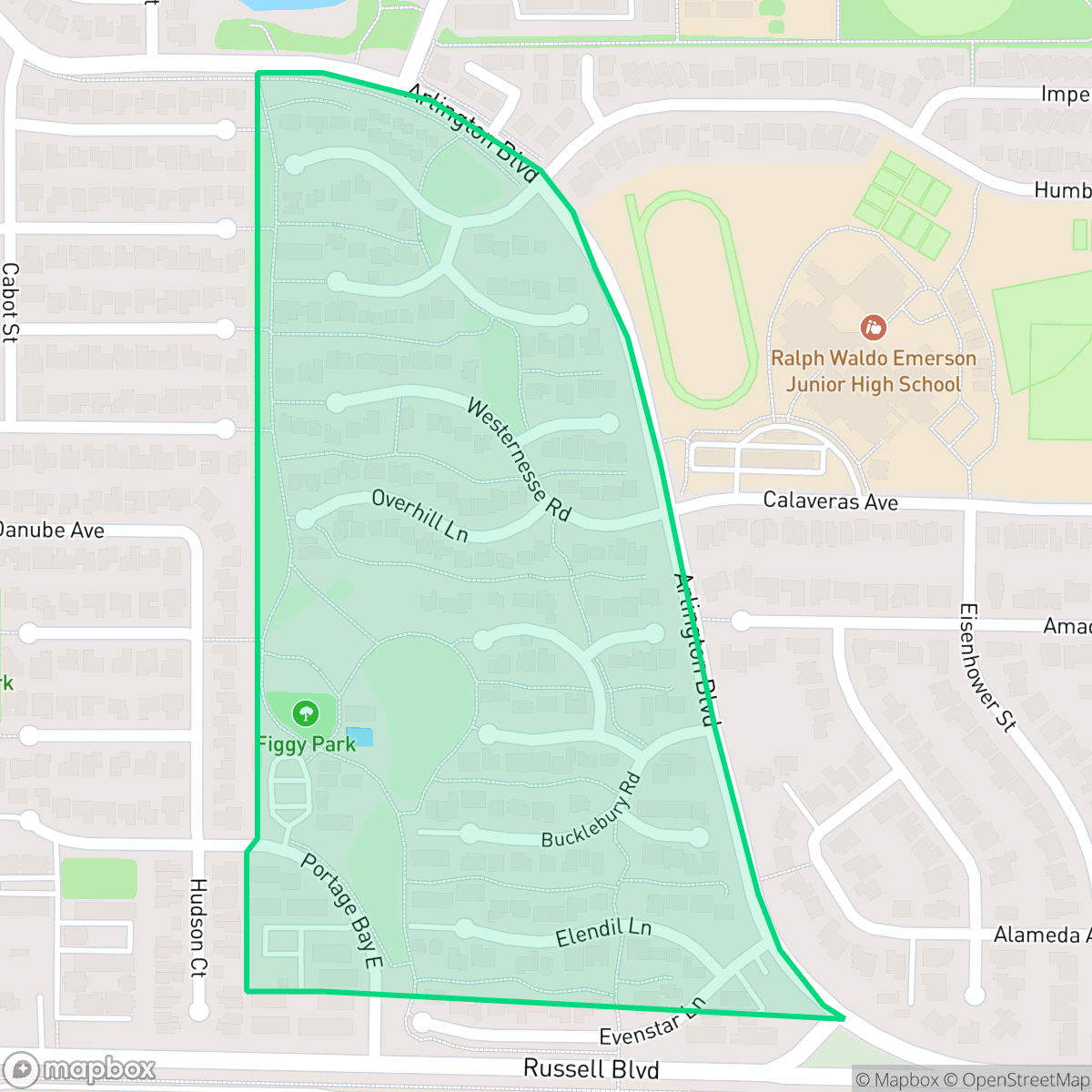
Designed by visionaries Mike and Judy Corbett, Village Homes broke ground in 1975 as a radical, 70-acre experiment in sustainable community living in West Davis. Completed in 1982, the neighborhood gained international recognition for its ecological innovations, drawing high-profile visitors like First Lady Rosalynn Carter in 1979 and French President François Mitterrand in 1984. The 245-residence subdivision features passive solar homes situated along narrow, curving streets oriented east-west to maximize natural heating and cooling. Eschewing traditional storm drains, the community utilizes natural bioswales and stream beds to capture rainwater, which irrigates extensive shared greenbelts, orchards, vineyards, and edible landscaping. To foster social harmony, homes feature unfenced backyards facing shared common spaces, while many neighborhood streets are whimsically named after characters and places from J.R.R. Tolkien's Middle-earth.
The daily experience in this neighborhood is defined by a commitment to pedestrian movement and communal green space. It is one of the most walkable areas in Davis, offering a quiet environment where residential blocks are punctuated by complex rooflines and private pools. According to iHuus data, the community benefits from high levels of health insurance coverage and a stable, engaged population. The aesthetic appeal remains high, as the neighborhood maintains a distinct character that balances suburban comfort with an emphasis on shared outdoor access.
Prospective residents should weigh these benefits against the environmental profile of the area. The neighborhood currently records low scores for flood and fire safety, which are significant considerations for property owners. While the local Davis Joint Unified School District is well regarded for its academic performance, some families report that the district maintains a high pressure academic culture. This area is best suited for individuals who prioritize sustainable, community-oriented living and walkability over proximity to dense urban commercial hubs.
Neighborhood Scores Across 15 Qualities
Residential spacing provides a moderate level of separation between neighbors, slightly higher than the Davis average. Some properties benefit from increased buffers due to proximity to local greenbelts.
Extensive networks of dedicated sidewalks and off-street greenbelt trails provide superior pedestrian connectivity throughout the area. This level of accessibility for walkers and cyclists is even higher than the typical Davis average, according to iHuus data.
Spacious properties featuring complex architecture and manicured lakeside estates contribute to an aesthetic that is largely in line with the Davis average. According to iHuus data, many residences include premium amenities such as private pools and expansive driveways.
Extensive greenbelts and walking paths weave through residential blocks, providing more access to open space and trails than the typical Davis neighborhood. According to iHuus data, the presence of large parks and interconnected trails makes this area ideal for pet owners.
Low-density housing and adjacent agricultural fields provide a more open, semi-rural feel than the typical Davis suburban landscape. Residents can expect frequent views of open land and woodland integrated with the residential area, according to iHuus data.
Serene streets and green spaces define most blocks, though scattered social hubs and dining spots offer slightly more activity than the city average. According to iHuus data, the area features a low-density environment with pockets of leisure activity near local parks.
Acoustic levels remain low, with sound primarily limited to infrequent trains or distant vehicle traffic. This area is notably quieter than the Davis average, according to iHuus data.
Air quality remains consistently good with only rare instances of elevated readings. This level of cleanliness is consistent with the city average according to iHuus data.
Industrial activity and large warehouses are entirely absent from this area. Residents can enjoy a landscape consisting strictly of residential and recreational spaces, which is notably more free of industrial proximity than the Davis average according to iHuus data.
Health insurance access is nearly universal among residents, which is notably higher than the Davis average according to iHuus data.
Voting patterns and census indicators reflect a predominantly liberal political leaning, which is consistent with the broader Davis area according to iHuus data.
Young adults make up the majority of the population here, though there is a small presence of families and older residents. This demographic profile is slightly younger than the Davis city average, according to iHuus data.
Located within a designated 100-year floodplain, this area carries a significantly higher risk of flooding than the Davis average. Residents should prepare for potential insurance requirements according to iHuus data.
Address-Level Insights for Village Homes


iHuus Neighborhood Intelligence Insights
Get address-level neighborhood insights for Village Homes
- Street-level scores — see how individual blocks compare, not just neighborhood averages
- Micro-zone boundaries — identify quiet pockets, flood boundaries, and walkable clusters before you visit
- 15 dimensions in full — walkability, noise, air quality, school quality, insurance coverage, population age profile, urban/rural index, and more
- Boundary risk alerts — know if your address sits near a block boundary where scores drop, the kind of detail no listing will ever mention
- School insights — individual school ratings and insights, not just district-level data
- Compare before you commit — side-by-side data across neighborhoods, down to block precision
No credit card required
Compare with Any Neighborhood
| Dimension | Village Homes | Adams Terrace |
|---|---|---|
| 🚶 Walkabilityavg 9.47 | ||
| 🔊 Acoustic Comfortavg 4.41 | ||
| 🤫 Privacy Indexavg 5.8 | ||
| 🎨 Visual Appealavg 7.21 | ||
| 🐕 Dog Friendlinessavg 8.49 | ||
| 🗺️ Urban-Rural Indexavg 6.91 | ||
| ✨ Neighborhood Vibeavg 5.48 | ||
| 🏥 Health Insurance Coverageavg 8.51 | ||
| 🌿 Air Qualityavg 8 | ||
| 🏭 Industrial Proximityavg 7.1 | ||
| 🌊 Flood Safetyavg 5.58 | ||
| 🗳️ Ideological Leanavg 9.76 | ||
| 👥 Population Age Profileavg 4.21 | ||
| 🔥 Fire Safety | ||
| 🏫 School Quality |
Village Homes Rankings
School Districts Serving Village Homes
School Insights for Village Homes
Below average outcomes; significant attendance and academic challenges.
School Insights
See what's really behind every school rating near Village Homes
- Individual school ratings — each school's own score with outcome context, not just a district average
- Enrollment & class size data — student-to-teacher ratio and how it compares to the state average
- Full demographics breakdown — ethnicity and gender composition for every school in the enrollment zone
- Every school in the district — all schools within the enrollment boundary ranked by rating, not just the closest one
- Grade levels & benchmarks — elementary through high school, with below/above state-average flags
No credit card required