Carver, Waco
Updated · 6,067 residents
Carver is a quiet, historically significant community in East Waco defined by its blend of residential streets, industrial zones, and proximity to green spaces. While the area offers a serene environment with high air quality, residents primarily rely on vehicles for daily errands due to limited local commercial density.
Key Highlights
About Carver
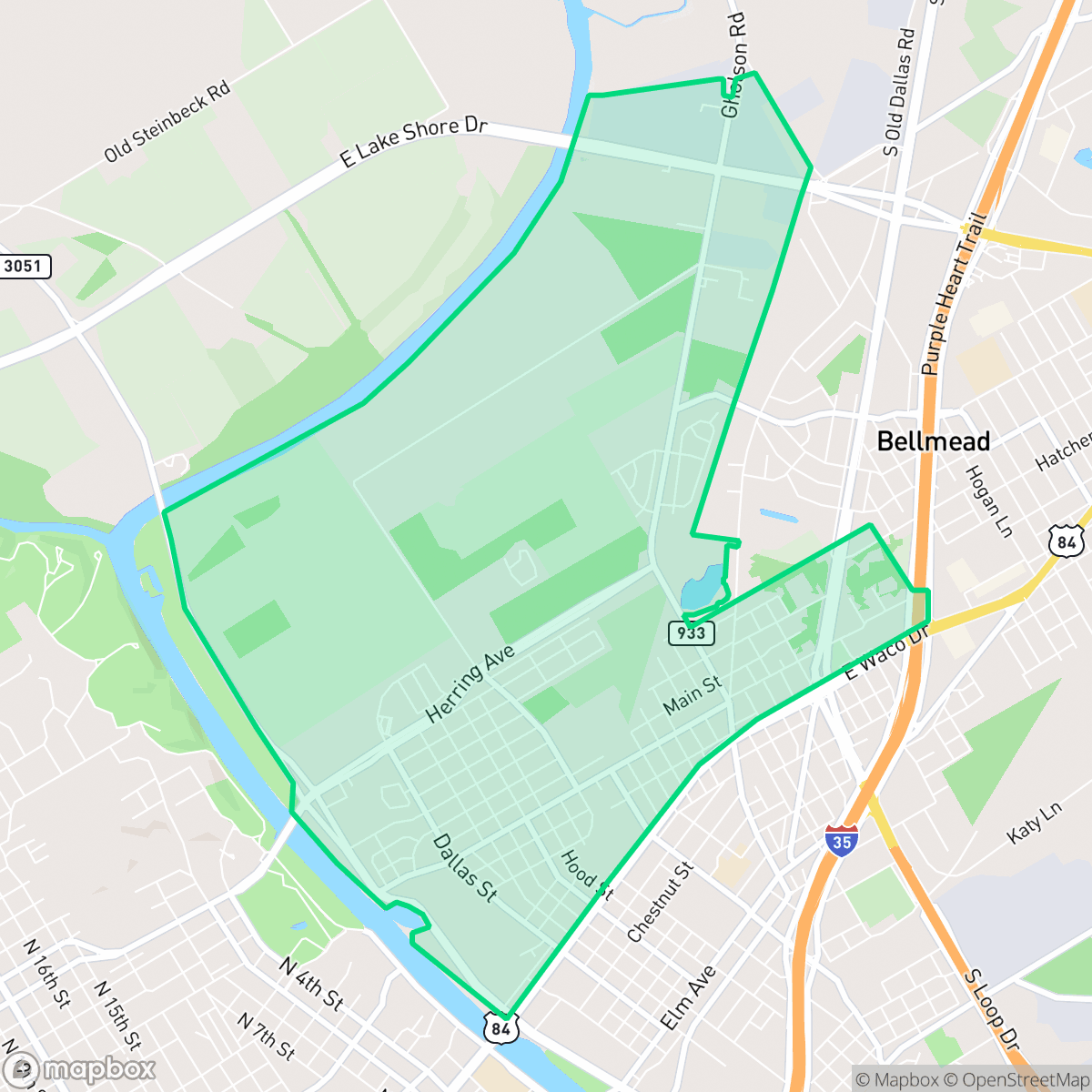
Located in East Waco, Texas, the Carver neighborhood is a historically African American community deeply tied to the legacy of G.W. Carver High School (now G.W. Carver Middle School). Opened in 1956 on Dripping Springs Road—later renamed J.J. Flewellen Road in honor of the school's pioneering principal—the school served as a vital cultural anchor. Its student body excelled academically and culturally, notably boasting an award-winning marching band that won the grand prize at the 1967 Montreal World's Fair. In 1970, following court-ordered desegregation, Carver students staged a historic walkout to protest the loss of their community leaders and Black head coach, Clarence Chase. This act of civil disobedience prompted federal court intervention, incorporating the neighborhood into the Waco Independent School District and cementing Carver's place in local civil rights history.
The neighborhood is characterized by a mix of suburban housing and light industrial infrastructure, often situated near small bodies of water and open green spaces. The landscape is predominantly quiet, offering a slower pace of life compared to more central parts of Waco. While the area features a few local religious institutions and niche dining options, it remains largely car-dependent, with few daily services accessible by foot. Residents benefit from high air quality and a peaceful atmosphere, though the proximity to industrial sites and the potential for flood-related challenges are factors to consider when evaluating the location. The community is well-suited for those seeking a more rural or industrial-suburban aesthetic who prioritize quiet surroundings over immediate access to dense commercial hubs. Given the current state of local schools and the limited walkability, the area is best navigated by those with reliable transportation who value a serene, low-density environment.
Neighborhood Scores Across 15 Qualities
Large residential lots provide more separation between homes than the typical Waco neighborhood. According to iHuus data, this spacing offers a greater sense of seclusion for residents.
Low traffic volumes make for peaceful strolls, although the lack of sidewalks makes walking slightly less convenient than the Waco average.
Standard tract housing with uniform rooflines and small yards defines the landscape. This area offers less visual variety than the Waco average.
Access to public parks and wide grassy verges is slightly better than the Waco average. Residents may find more opportunities for walking pets compared to other parts of the city.
Open fields and wooded areas are common throughout the neighborhood, providing a more rural feel than the Waco average. According to iHuus data, the landscape features a mix of sparse industrial structures and large patches of greenery.
Low density and industrial zones create a serene but subdued atmosphere with limited social activity. Most daily needs require driving, as the area lacks the commercial vibrancy found in other parts of Waco.
Ongoing traffic sounds from nearby busy streets are common in this area. This level of acoustic activity is slightly higher than the average found across Waco.
Air quality remains consistently high with rare instances of elevated readings, performing slightly better than the Waco average according to iHuus data.
Industrial presence is minimal throughout most of the area, though certain sections contain large liquid storage tanks and heavy distribution centers with significant truck activity. While some parts of the neighborhood remain quiet, others feature utility infrastructure and light commercial services that are slightly more prevalent than the Waco average.
Health insurance coverage levels in Carver are slightly lower than the Waco city average. According to iHuus data, a significant portion of the resident population remains uninsured.
Voting patterns and census indicators show a notably progressive political leaning, which is much more liberal than the Waco city average according to iHuus data.
Residents live alongside a balanced mix of young adults, families, and older individuals. This demographic spread is slightly more varied than the typical age distribution seen across Waco.
Located within a 100-year floodplain, this area presents a significant risk of flooding that is higher than the Waco average. Residents should be aware that flood insurance is typically required for properties here according to iHuus data.
Address-Level Insights for Carver


iHuus Neighborhood Intelligence Insights
Get address-level neighborhood insights for Carver
- Street-level scores — see how individual blocks compare, not just neighborhood averages
- Micro-zone boundaries — identify quiet pockets, flood boundaries, and walkable clusters before you visit
- 15 dimensions in full — walkability, noise, air quality, school quality, insurance coverage, population age profile, urban/rural index, and more
- Boundary risk alerts — know if your address sits near a block boundary where scores drop, the kind of detail no listing will ever mention
- School insights — individual school ratings and insights, not just district-level data
- Compare before you commit — side-by-side data across neighborhoods, down to block precision
No credit card required
Compare with Any Neighborhood
| Dimension | Carver | Alta Vista |
|---|---|---|
| 🚶 Walkabilityavg 6.02 | ||
| 🔊 Acoustic Comfortavg 4.77 | ||
| 🤫 Privacy Indexavg 6 | ||
| 🎨 Visual Appealavg 5.94 | ||
| 🐕 Dog Friendlinessavg 5.69 | ||
| 🗺️ Urban-Rural Indexavg 7.16 | ||
| ✨ Neighborhood Vibeavg 4.51 | ||
| 🏥 Health Insurance Coverageavg 6 | ||
| 🌿 Air Qualityavg 8.5 | ||
| 🏭 Industrial Proximityavg 8.03 | ||
| 🌊 Flood Safetyavg 2.66 | ||
| 🗳️ Ideological Leanavg 4.79 | ||
| 👥 Population Age Profileavg 4.52 | ||
| 🔥 Fire Safety | ||
| 🏫 School Quality |
Carver Rankings
School Districts Serving Carver
School Insights for Carver
Below average outcomes; significant attendance and academic challenges.
School Insights
See what's really behind every school rating near Carver
- Individual school ratings — each school's own score with outcome context, not just a district average
- Enrollment & class size data — student-to-teacher ratio and how it compares to the state average
- Full demographics breakdown — ethnicity and gender composition for every school in the enrollment zone
- Every school in the district — all schools within the enrollment boundary ranked by rating, not just the closest one
- Grade levels & benchmarks — elementary through high school, with below/above state-average flags
No credit card required