Tanglewood, San Marcos
Updated · 1,634 residents
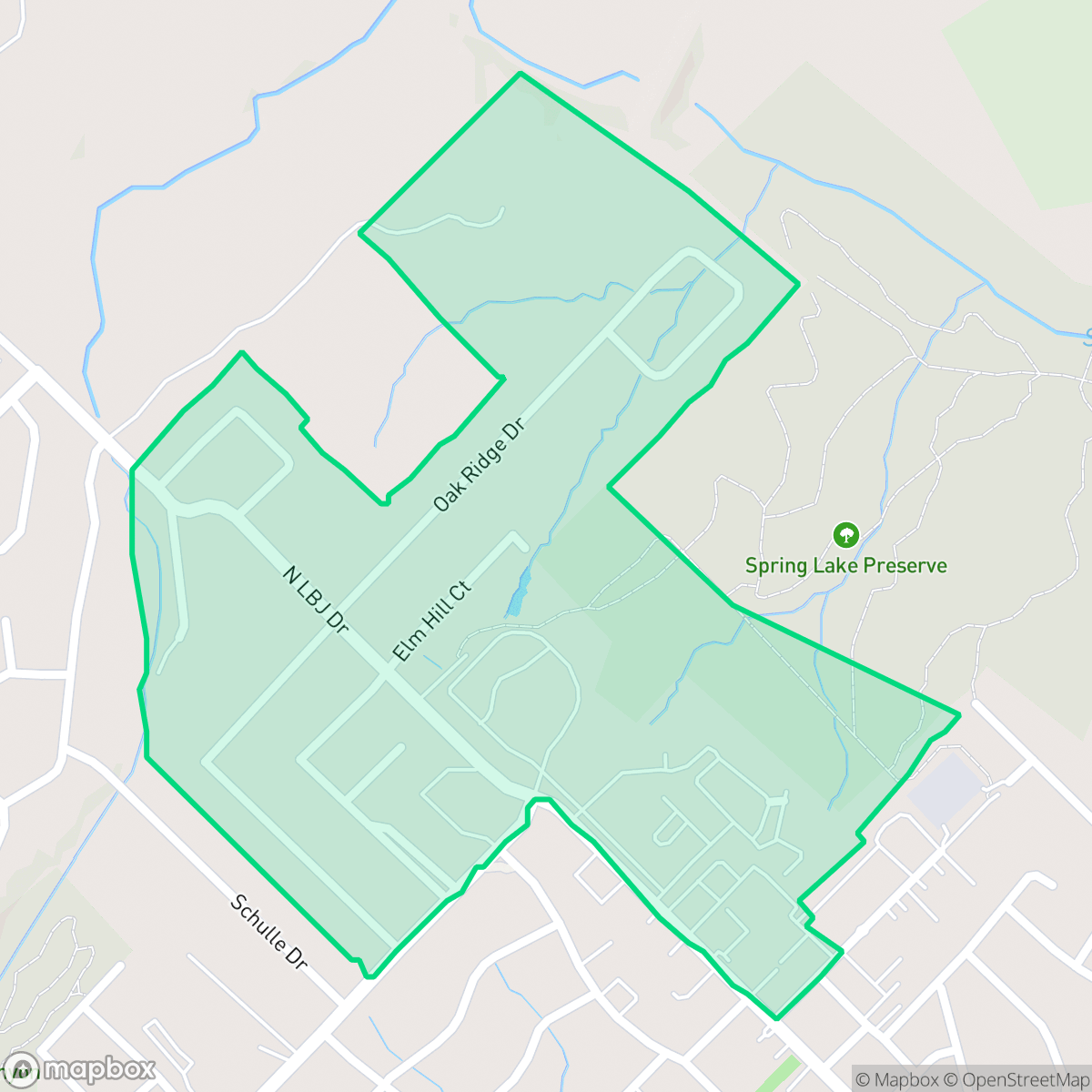
Tanglewood is a quiet, semi-rural neighborhood in San Marcos known for its spacious, wooded lots and peaceful atmosphere. Residents enjoy a private, residential setting that offers excellent space for dog walking and outdoor activity despite being located within the broader San Marcos area.
Key Highlights
About Tanglewood
Tanglewood is characterized by its low-density, single-family homes nestled among heavy tree canopies and open land. The area maintains a semi-rural aesthetic that stands out for its visual appeal and architectural diversity. With minimal industrial presence and a quiet acoustic environment, the neighborhood provides a secluded retreat from the busier sections of San Marcos. It is a predominantly residential enclave where natural buffers between properties ensure a high level of privacy for homeowners.
For prospective residents, the area offers a balanced suburban experience that is particularly well-suited for young adults and pet owners who value outdoor access. While the neighborhood lacks sidewalks, its low-traffic lanes are suitable for walking. Residents benefit from higher-than-average health insurance coverage and a lower risk of flooding compared to the city at large. Families considering the area should note that it falls within the San Marcos Consolidated Independent School District, which currently faces challenges regarding budget stability and academic performance.
Neighborhood Scores Across 15 Qualities
Large lots and dense tree buffers provide more seclusion than the typical San Marcos neighborhood. While some apartment clusters feature closer proximity, single-family homes offer significant separation between residences according to iHuus data.
Low-traffic wooded lanes and connected trails provide safe routes for pedestrians, though many residential streets lack sidewalks. This level of walkability is roughly in line with the San Marcos average, according to iHuus data.
Upscale amenities and large homes with wooded lot buffers create an aesthetic that is notably more attractive than the San Marcos average. Residents can expect a landscape characterized by complex architecture and well-maintained private properties.
Extensive natural woodlands and large residential yards provide ample space for pets. According to iHuus data, these connected green spaces offer much more walking area than the San Marcos average.
Frequent open land and heavy tree canopy create a semi-rural atmosphere that is slightly more open than the San Marcos average. Residential areas consist primarily of low-density single-family homes nestled among woodland and fields.
Social hubs and local amenities are more accessible here than in the San Marcos average. Residents can find a mix of quiet, low-density green spaces and lively pockets of suburban life near local water features.
Acoustic levels remain low with only infrequent sounds from distant traffic or trains. This area is significantly quieter than the San Marcos average according to iHuus data.
Air quality levels in Tanglewood are generally acceptable, though residents may experience occasional periods of concern similar to the broader San Marcos area. According to iHuus data, sensitive groups should monitor local conditions during days when pollutants are more prevalent.
Industrial presence is minimal in Tanglewood, as the area consists almost entirely of residential streets and green spaces. Aside from a single electrical substation on the east side, the neighborhood lacks warehouses or heavy industrial facilities, making it even more residential than the San Marcos average.
Health insurance enrollment is notably higher in Tanglewood than the San Marcos average, according to iHuus data. This indicates a greater proportion of the resident population has access to medical coverage.
Political leanings in Tanglewood lean liberal, though this presence is slightly less pronounced than the average seen across San Marcos.
A significant majority of residents are young adults, creating a demographic that is slightly younger than the San Marcos average. According to iHuus data, there is a modest presence of families and older residents within the area.
Flood safety in this area is significantly higher than the San Marcos average, though some residual risk remains due to its location within a 500-year floodplain. According to iHuus data, the neighborhood is situated in a zone with much lower flood exposure than most of the city.
Address-Level Insights for Tanglewood


iHuus Neighborhood Intelligence Insights
Get address-level neighborhood insights for Tanglewood
- Street-level scores — see how individual blocks compare, not just neighborhood averages
- Micro-zone boundaries — identify quiet pockets, flood boundaries, and walkable clusters before you visit
- 15 dimensions in full — walkability, noise, air quality, school quality, insurance coverage, population age profile, urban/rural index, and more
- Boundary risk alerts — know if your address sits near a block boundary where scores drop, the kind of detail no listing will ever mention
- School insights — individual school ratings and insights, not just district-level data
- Compare before you commit — side-by-side data across neighborhoods, down to block precision
No credit card required
Compare with Any Neighborhood
| Dimension | Tanglewood | Blanco Gardens |
|---|---|---|
| 🚶 Walkabilityavg 6.09 | ||
| 🔊 Acoustic Comfortavg 3.79 | ||
| 🤫 Privacy Indexavg 6.04 | ||
| 🎨 Visual Appealavg 6.1 | ||
| 🐕 Dog Friendlinessavg 6.89 | ||
| 🗺️ Urban-Rural Indexavg 7.6 | ||
| ✨ Neighborhood Vibeavg 5.43 | ||
| 🏥 Health Insurance Coverageavg 5.95 | ||
| 🌿 Air Qualityavg 6.09 | ||
| 🏭 Industrial Proximityavg 8.2 | ||
| 🌊 Flood Safetyavg 3.71 | ||
| 🗳️ Ideological Leanavg 8.3 | ||
| 👥 Population Age Profileavg 3.91 | ||
| 🔥 Fire Safety | ||
| 🏫 School Quality |
Tanglewood Rankings
School Districts Serving Tanglewood
School Insights for Tanglewood
Below average outcomes; significant attendance and academic challenges.
School Insights
See what's really behind every school rating near Tanglewood
- Individual school ratings — each school's own score with outcome context, not just a district average
- Enrollment & class size data — student-to-teacher ratio and how it compares to the state average
- Full demographics breakdown — ethnicity and gender composition for every school in the enrollment zone
- Every school in the district — all schools within the enrollment boundary ranked by rating, not just the closest one
- Grade levels & benchmarks — elementary through high school, with below/above state-average flags
No credit card required