Spring Lake Hills, San Marcos
Updated · 369 residents
Spring Lake Hills is a quiet, low-density neighborhood in San Marcos known for its high visual appeal and exceptional acoustic comfort. It offers a peaceful residential environment with significant open green spaces and a high degree of dog friendliness.
Key Highlights
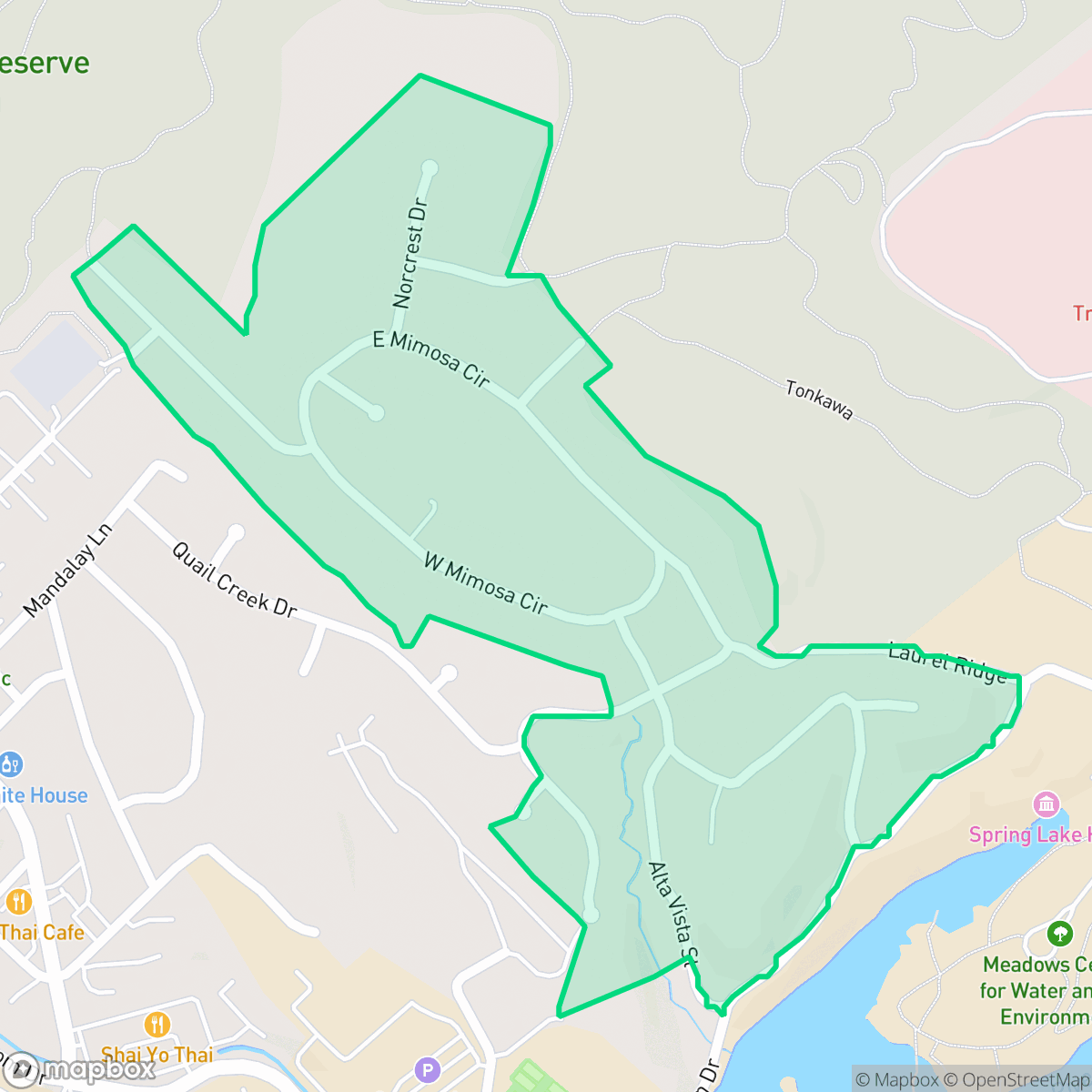
About Spring Lake Hills
Spring Lake Hills is characterized by its tranquil atmosphere and natural beauty, standing out as a low-density residential pocket within San Marcos. The area features high visual appeal and maintains a remarkably quiet environment, with noise levels significantly lower than the city average. Residents benefit from proximity to open green spaces and a setting that feels distinctly more rural than the surrounding urban core. According to data, the neighborhood maintains excellent acoustic comfort and remains free from industrial encroachment, making it a stable choice for those prioritizing a calm living space.
While the neighborhood offers a serene lifestyle, prospective residents should note that it is not a highly walkable area, and daily errands typically require a vehicle. The local school district, San Marcos Consolidated Independent School District, is currently navigating financial and operational challenges, which may be a consideration for families. The area is best suited for individuals or households who value privacy, a quiet home environment, and easy access to outdoor space over proximity to high-density commercial amenities.
Neighborhood Scores Across 15 Qualities
Residential spacing is varied with some clusters of closely situated buildings and shared public areas. According to iHuus data, privacy levels in this area are lower than the San Marcos average.
Comprehensive sidewalk networks, pedestrian plazas, and frequent crosswalks make navigating the area on foot easy. According to iHuus data, the pedestrian infrastructure here is significantly more developed than the San Marcos city average.
Larger homes and frequent upscale amenities provide a visual landscape that is slightly more polished than the San Marcos average. According to iHuus data, the area features spacious driveways and well-funded university facilities, though it lacks private luxury residential estates.
Extensive green buffers and park-like grounds offer ample space for pets. According to iHuus data, these connected natural areas provide much more room for exercise than is typically found across San Marcos.
Open land and woodland areas define the landscape, though the area contains some dense academic and residential infrastructure. This environment is slightly less urbanized than the San Marcos city average according to iHuus data.
Lively pockets of dining and local cafes create a more active atmosphere than the San Marcos average. According to iHuus data, the area offers a balanced mix of quiet green spaces and accessible social hubs near local eateries.
Steady hum from a nearby busy street characterizes the area. This level of acoustic activity is higher than the San Marcos average, according to iHuus data.
Air quality levels in this area experience occasional fluctuations that may affect sensitive individuals. According to iHuus data, these conditions are largely consistent with the typical levels found throughout San Marcos.
Industrial activity is entirely absent from this area, which contains no warehouses or manufacturing facilities. This lack of heavy industry makes the neighborhood significantly cleaner and quieter than the San Marcos average.
Health insurance accessibility is notably higher here than the San Marcos average, according to iHuus data. Most residents in this area have access to comprehensive medical coverage.
Voting patterns and census indicators show a predominantly liberal leaning, which is more pronounced here than the San Marcos city average according to iHuus data.
A significant majority of residents are young adults, making the population profile notably younger than the San Marcos average. This demographic skew results in a modest presence of families or older residents according to iHuus data.
Properties in this area are located within a designated floodplain, which significantly increases the risk of flooding compared to the San Marcos average. According to iHuus data, residents should anticipate a much higher likelihood of needing flood insurance.
Address-Level Insights for Spring Lake Hills


iHuus Neighborhood Intelligence Insights
Get address-level neighborhood insights for Spring Lake Hills
- Street-level scores — see how individual blocks compare, not just neighborhood averages
- Micro-zone boundaries — identify quiet pockets, flood boundaries, and walkable clusters before you visit
- 15 dimensions in full — walkability, noise, air quality, school quality, insurance coverage, population age profile, urban/rural index, and more
- Boundary risk alerts — know if your address sits near a block boundary where scores drop, the kind of detail no listing will ever mention
- School insights — individual school ratings and insights, not just district-level data
- Compare before you commit — side-by-side data across neighborhoods, down to block precision
No credit card required
Compare with Any Neighborhood
| Dimension | Spring Lake Hills | Blanco Gardens |
|---|---|---|
| 🚶 Walkabilityavg 6.09 | ||
| 🔊 Acoustic Comfortavg 3.79 | ||
| 🤫 Privacy Indexavg 6.04 | ||
| 🎨 Visual Appealavg 6.1 | ||
| 🐕 Dog Friendlinessavg 6.89 | ||
| 🗺️ Urban-Rural Indexavg 7.6 | ||
| ✨ Neighborhood Vibeavg 5.43 | ||
| 🏥 Health Insurance Coverageavg 5.95 | ||
| 🌿 Air Qualityavg 6.09 | ||
| 🏭 Industrial Proximityavg 8.2 | ||
| 🌊 Flood Safetyavg 3.71 | ||
| 🗳️ Ideological Leanavg 8.3 | ||
| 👥 Population Age Profileavg 3.91 | ||
| 🔥 Fire Safety | ||
| 🏫 School Quality |
Spring Lake Hills Rankings
School Districts Serving Spring Lake Hills
School Insights for Spring Lake Hills
Below average outcomes; significant attendance and academic challenges.
School Insights
See what's really behind every school rating near Spring Lake Hills
- Individual school ratings — each school's own score with outcome context, not just a district average
- Enrollment & class size data — student-to-teacher ratio and how it compares to the state average
- Full demographics breakdown — ethnicity and gender composition for every school in the enrollment zone
- Every school in the district — all schools within the enrollment boundary ranked by rating, not just the closest one
- Grade levels & benchmarks — elementary through high school, with below/above state-average flags
No credit card required