Millview East, San Marcos
Updated · 4,736 residents
Millview East is a quiet, mixed-use neighborhood in San Marcos characterized by a blend of multi-family housing and light commercial activity. While the area offers convenient access to local amenities and green spaces, residents often experience significant noise from nearby road traffic.
Key Highlights
About Millview East
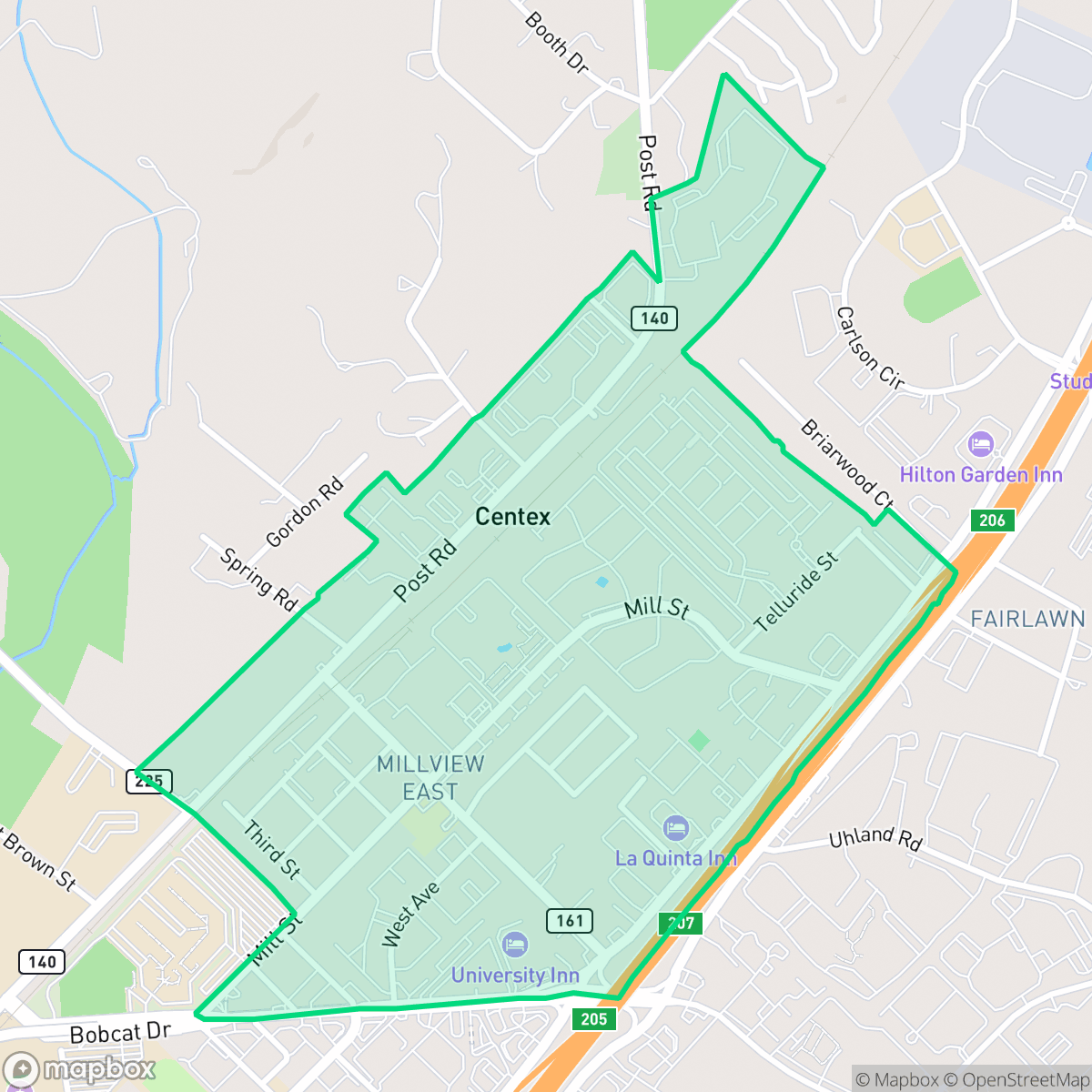
The Millview East neighborhood in San Marcos, Texas, historically grew around "The Old Mill," which began construction in 1924 as a poured-in-place reinforced concrete cotton mill. In 1938, it was converted into the San Marcos Wool Mill (later the Bollman Wool Mill), becoming one of the largest wool processing plants west of the Mississippi River. The surrounding neighborhood originally developed to house the mill's workforce. During World War War II, the facility operated around the clock to produce tens of thousands of military blankets, later manufacturing "Blue Bonnet Blankets" for nationwide distribution. Although the mill closed in 1985, its historic structures, including the main facility and a former wool hat factory, remain local landmarks. Today, these repurposed buildings serve as administrative offices, preserving the area's rich industrial heritage.
The neighborhood currently functions as a suburban residential zone with a mix of apartment complexes, mobile home parks, and light commercial units. It maintains a distinct suburban character, featuring open green margins and undeveloped wooded lots that provide space for pet owners and outdoor activity. The area is positioned near major transit routes and railway lines, which contributes to its status as a quiet, low-density space despite its proximity to essential services and community centers like the Abundant Life Christian Church. Prospective residents should note the trade-offs associated with living in this area. According to iHuus data, acoustic comfort is a primary concern due to consistent road traffic noise, and the neighborhood faces challenges regarding flood safety. While the local school district offers a diverse environment, it currently manages significant financial and operational pressures. This area is best suited for those prioritizing proximity to light industrial and commercial hubs over absolute quiet or high-end aesthetic appeal.
Neighborhood Scores Across 15 Qualities
Residential density is slightly higher than the San Marcos average, characterized by a mix of closely situated multi-family complexes and single-family zones. Large wooded buffers provide some separation between major developments, according to iHuus data.
Pedestrian movement is constrained by inconsistent sidewalks and significant barriers created by major highway interchanges. While the quiet residential streets allow for walking, the lack of continuous protected paths makes navigating main arterials more difficult than in other parts of San Marcos.
Visual aesthetics are largely characterized by functional, mid-range density housing and typical collegiate-area structures. This landscape is very similar to the broader San Marcos area, featuring standard apartment complexes and tidy, modest yards.
Unpaved green margins and lawns within apartment complexes offer some space for pet walking, though the area lacks the large, accessible public parks found more frequently elsewhere in San Marcos. According to iHuus data, greenery near highways and apartment buildings is often fragmented.
Frequent open land and scattered homes among woodlands provide a more rural feel than the typical San Marcos suburban landscape. According to iHuus data, this area features a blend of undeveloped wooded lots and larger residential plots.
Frequent visits to local dining and essential services are possible due to a concentration of social hubs that makes this area more lively than the San Marcos average. Residents can find a mix of quiet residential streets and accessible commercial pockets near major transit corridors.
Frequent traffic and transit noise from nearby freeways and railroad tracks characterize this area. According to iHuus data, acoustic comfort in Millview East is notably lower than the San Marcos average.
Air quality in this area fluctuates between acceptable and unhealthy levels, which may cause occasional concern for sensitive groups. According to iHuus data, conditions here are largely consistent with the average seen across San Marcos.
Primarily residential and light commercial, this area lacks heavy industrial structures. According to iHuus data, the neighborhood is slightly more free of industrial activity than the San Marcos average, though some light commercial warehouses near the highway may contribute to occasional noise or light pollution.
Health insurance access among residents is notably higher than the San Marcos average, according to iHuus data.
Voting patterns and census indicators in this area reflect a more liberal leaning than the San Marcos average, according to iHuus data.
Young adults make up the majority of the population here, though there is a small presence of families and older residents. This demographic profile is slightly younger than the San Marcos average, according to iHuus data.
Properties in this area are situated within a designated 100-year floodplain, which typically necessitates the purchase of flood insurance. According to iHuus data, the flood risk in Millview East is consistent with the average for San Marcos.
Address-Level Insights for Millview East


iHuus Neighborhood Intelligence Insights
Get address-level neighborhood insights for Millview East
- Street-level scores — see how individual blocks compare, not just neighborhood averages
- Micro-zone boundaries — identify quiet pockets, flood boundaries, and walkable clusters before you visit
- 15 dimensions in full — walkability, noise, air quality, school quality, insurance coverage, population age profile, urban/rural index, and more
- Boundary risk alerts — know if your address sits near a block boundary where scores drop, the kind of detail no listing will ever mention
- School insights — individual school ratings and insights, not just district-level data
- Compare before you commit — side-by-side data across neighborhoods, down to block precision
No credit card required
Compare with Any Neighborhood
| Dimension | Millview East | Blanco Gardens |
|---|---|---|
| 🚶 Walkabilityavg 6.09 | ||
| 🔊 Acoustic Comfortavg 3.79 | ||
| 🤫 Privacy Indexavg 6.04 | ||
| 🎨 Visual Appealavg 6.1 | ||
| 🐕 Dog Friendlinessavg 6.89 | ||
| 🗺️ Urban-Rural Indexavg 7.6 | ||
| ✨ Neighborhood Vibeavg 5.43 | ||
| 🏥 Health Insurance Coverageavg 5.95 | ||
| 🌿 Air Qualityavg 6.09 | ||
| 🏭 Industrial Proximityavg 8.2 | ||
| 🌊 Flood Safetyavg 3.71 | ||
| 🗳️ Ideological Leanavg 8.3 | ||
| 👥 Population Age Profileavg 3.91 | ||
| 🔥 Fire Safety | ||
| 🏫 School Quality |
Millview East Rankings
School Districts Serving Millview East
School Insights for Millview East
Below average outcomes; significant attendance and academic challenges.
School Insights
See what's really behind every school rating near Millview East
- Individual school ratings — each school's own score with outcome context, not just a district average
- Enrollment & class size data — student-to-teacher ratio and how it compares to the state average
- Full demographics breakdown — ethnicity and gender composition for every school in the enrollment zone
- Every school in the district — all schools within the enrollment boundary ranked by rating, not just the closest one
- Grade levels & benchmarks — elementary through high school, with below/above state-average flags
No credit card required