Villa De San Antonio, San Antonio
Updated · 241 residents
Villa De San Antonio is a quiet, suburban enclave in San Antonio defined by its mix of residential homes and light commercial activity. While residents enjoy proximity to local dining favorites like Mi Guadalajara and Whataburger, the area experiences significant road noise and substantial flood risks.
Key Highlights
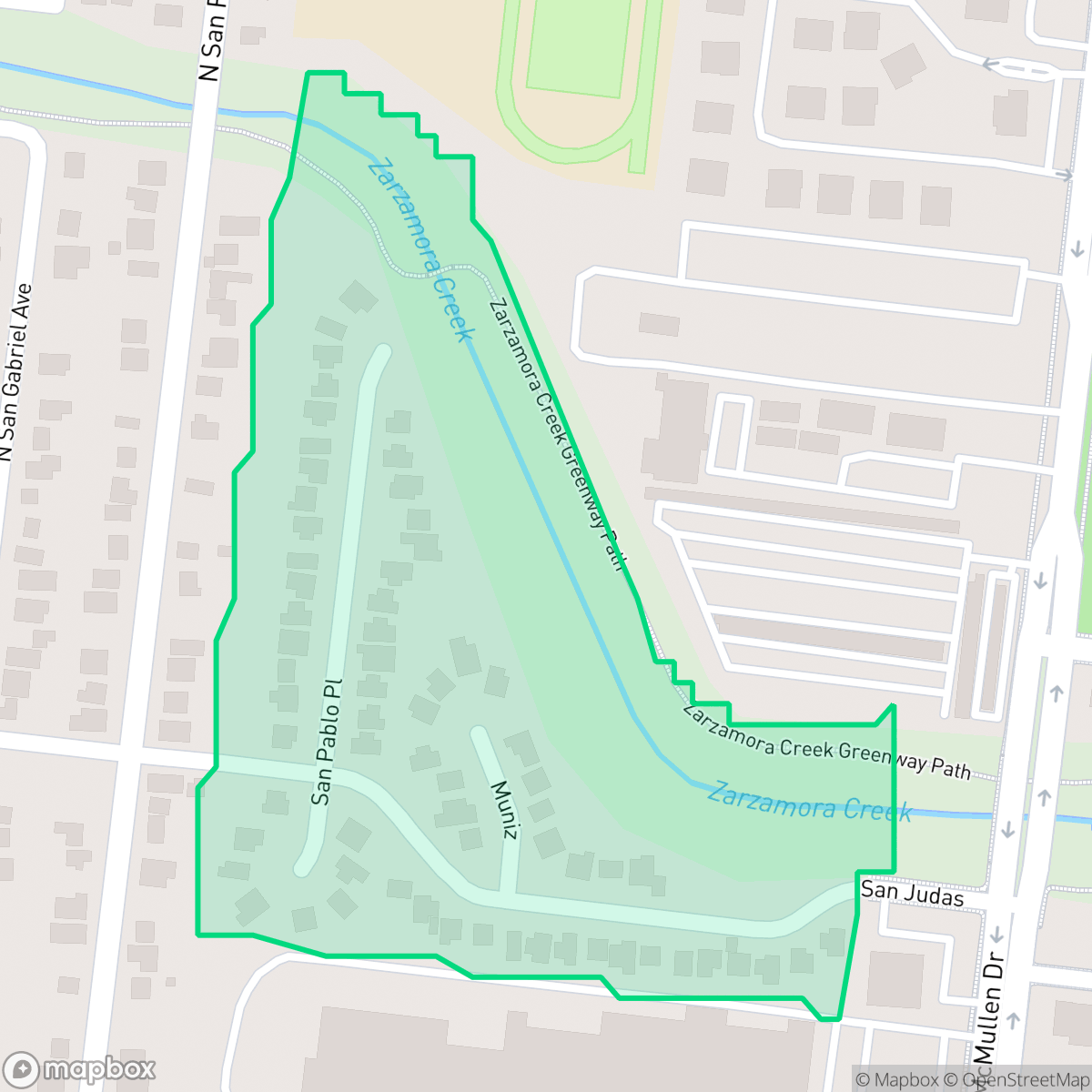
About Villa De San Antonio
Villa De San Antonio is a small, suburban community in San Antonio with a population of approximately 241. The neighborhood is characterized by a blend of residential streets and light commercial units, creating an environment that balances daily life with active daytime traffic. Local amenities are concentrated around established dining spots such as Mi Guadalajara and Whataburger, though the overall pace of the neighborhood remains relatively subdued.
When considering this area, prospective residents should be aware of several specific livability trade-offs. The neighborhood experiences elevated noise levels primarily due to road traffic and faces significant challenges regarding air quality and flood safety. Education is provided by the Edgewood Independent School District, which is currently managing a complex transition involving budget deficits and campus consolidation. Given these factors, the area is best suited for those who prioritize a quiet suburban setting while carefully evaluating the environmental and institutional context of the region.
Neighborhood Scores Across 15 Qualities
Residential spacing in Villa De San Antonio offers a moderate level of separation between neighbors, though some areas feature higher density with minimal backyard buffers. This level of privacy is slightly lower than the average found across San Antonio.
Quiet residential streets allow for easy movement, though discontinuous sidewalks and high-speed arterial roads make walking slightly less convenient than the city average. According to iHuus data, some areas benefit from a grid network and paved trails that facilitate safer pedestrian travel.
Residential views consist of repetitive, single-story housing on compact lots with limited greenery. This level of visual variety is below the San Antonio average.
Access to a paved trail and school athletic fields provides good space for exercise, though minimal sidewalk verges mean greenery is largely restricted to private yards. This level of dog friendliness is slightly above the city average according to iHuus data.
Residential layouts feature a dense suburban grid with frequent paved surfaces and large school campuses. This area is slightly less open than the San Antonio average, according to iHuus data.
Local social activity is limited to a few scattered dining options near green spaces; according to iHuus data, the area is notably less lively than the San Antonio average. Most daily needs require driving due to a landscape centered around suburban streets and highway-adjacent commerce.
Frequent noise from nearby freeways and rail lines characterizes the area. According to iHuus data, acoustic comfort is significantly lower than the San Antonio average.
Frequent unhealthy air quality levels pose a significant risk to sensitive groups. According to iHuus data, the air quality in this area is worse than the San Antonio average.
Limited industrial activity characterizes the area, though a large electrical substation and some light commercial zones on the western edge may introduce occasional noise or light. This presence of industrial infrastructure is slightly higher than the San Antonio average according to iHuus data.
Health insurance accessibility is lower than the San Antonio average, according to iHuus data. Residents may find fewer options for employer-sponsored or private coverage within the immediate area.
Voting patterns and census indicators show a strongly liberal political leaning that is notably higher than the San Antonio average.
Residents live alongside a balanced mix of young professionals, families, and older adults. This age distribution is consistent with the broader San Antonio area.
Extreme flood hazards and wave action pose significant risks to this area, making insurance costs notably higher than the San Antonio average. According to iHuus data, residents should expect substantial flood-related vulnerabilities.
Address-Level Insights for Villa De San Antonio


iHuus Neighborhood Intelligence Insights
Get address-level neighborhood insights for Villa De San Antonio
- Street-level scores — see how individual blocks compare, not just neighborhood averages
- Micro-zone boundaries — identify quiet pockets, flood boundaries, and walkable clusters before you visit
- 15 dimensions in full — walkability, noise, air quality, school quality, insurance coverage, population age profile, urban/rural index, and more
- Boundary risk alerts — know if your address sits near a block boundary where scores drop, the kind of detail no listing will ever mention
- School insights — individual school ratings and insights, not just district-level data
- Compare before you commit — side-by-side data across neighborhoods, down to block precision
No credit card required
Compare with Any Neighborhood
| Dimension | Villa De San Antonio | 145 Association |
|---|---|---|
| 🚶 Walkabilityavg 6.44 | ||
| 🔊 Acoustic Comfortavg 4.07 | ||
| 🤫 Privacy Indexavg 5.75 | ||
| 🎨 Visual Appealavg 6.11 | ||
| 🐕 Dog Friendlinessavg 5.91 | ||
| 🗺️ Urban-Rural Indexavg 6.87 | ||
| ✨ Neighborhood Vibeavg 4.35 | ||
| 🏥 Health Insurance Coverageavg 5.94 | ||
| 🌿 Air Qualityavg 2.27 | ||
| 🏭 Industrial Proximityavg 8.31 | ||
| 🌊 Flood Safetyavg 4.2 | ||
| 🗳️ Ideological Leanavg 7.37 | ||
| 👥 Population Age Profileavg 4.68 | ||
| 🔥 Fire Safety | ||
| 🏫 School Quality |
Villa De San Antonio Rankings
School Districts Serving Villa De San Antonio
School Insights for Villa De San Antonio
Below average outcomes; significant attendance and academic challenges.
School Insights
See what's really behind every school rating near Villa De San Antonio
- Individual school ratings — each school's own score with outcome context, not just a district average
- Enrollment & class size data — student-to-teacher ratio and how it compares to the state average
- Full demographics breakdown — ethnicity and gender composition for every school in the enrollment zone
- Every school in the district — all schools within the enrollment boundary ranked by rating, not just the closest one
- Grade levels & benchmarks — elementary through high school, with below/above state-average flags
No credit card required