Valencia, San Antonio
Updated · 1,997 residents
Valencia is a vibrant residential enclave on San Antonio's Northeast Side, defined by its blend of suburban comfort and accessible local dining. While the area maintains a lively atmosphere with diverse commercial amenities, residents should anticipate moderate noise levels from nearby road traffic and a car-dependent layout.
Key Highlights
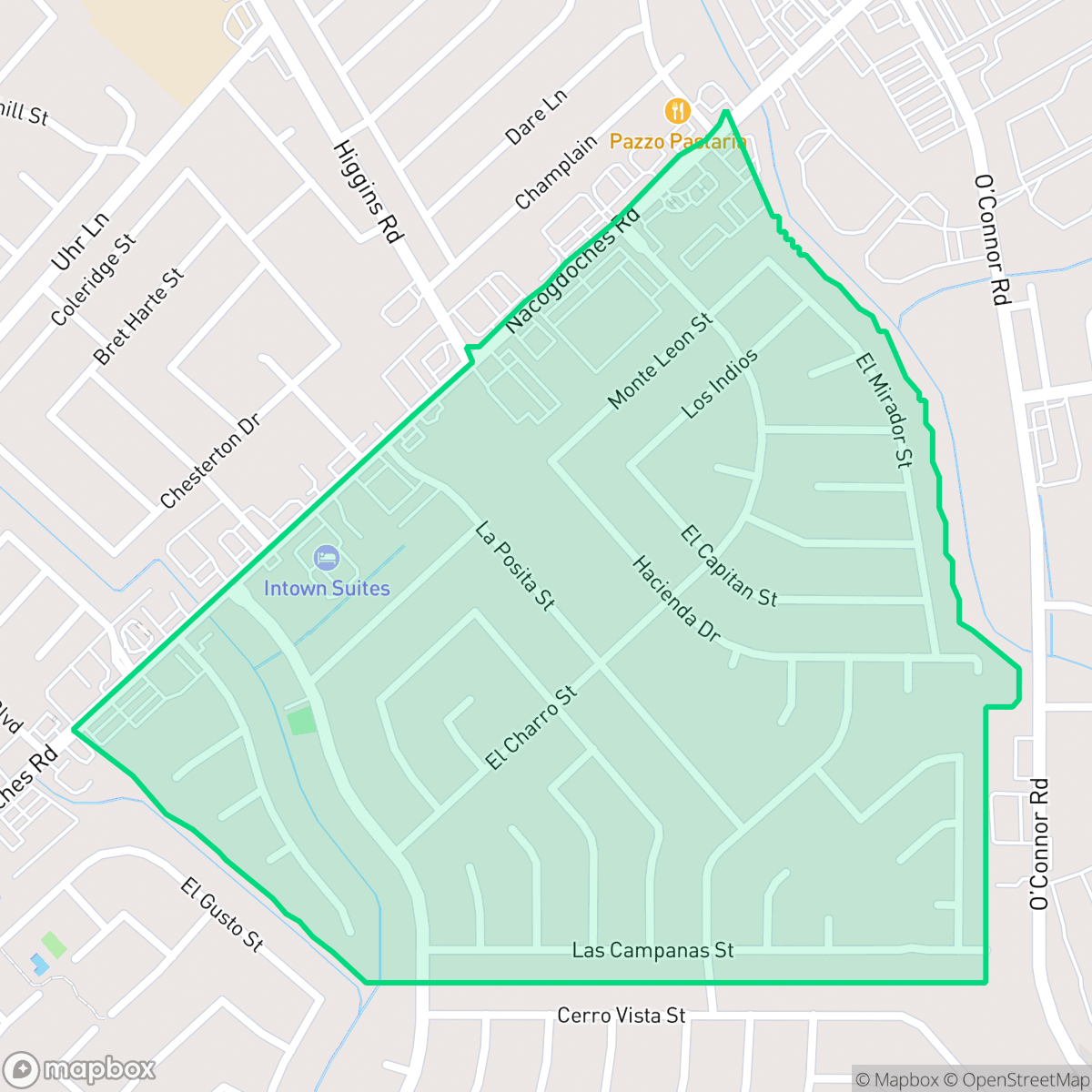
About Valencia
The Valencia neighborhood, situated alongside Northern Hills on San Antonio's Northeast Side, sits on land steeped in Spanish colonial and indigenous history. In the 1740s, the area was part of Rancho Monte Galván and Rancho Monte Comal, where Coahuiltecan vaqueros and presidio soldiers grazed livestock for the Alamo and local missions. Running directly through the area is Nacogdoches Road, which traces the path of El Camino Real de los Tejas—a historic Spanish-era corridor built upon ancient Native American migratory trails. Today, Valencia is a quiet residential enclave, yet its deep roots connect it directly to the early agricultural, indigenous, and colonial foundations of San Antonio.
The neighborhood offers a distinct suburban environment characterized by single-family homes and a variety of local dining options, such as Al Carbon Pollos Asados and Molino Rojo Cafe. Its location along Nacogdoches Road provides convenient access to major retail corridors, contributing to a lively local vibe that exceeds many surrounding areas. According to iHuus data, the area balances residential quietude with proximity to essential services, making it a functional choice for those who value neighborhood accessibility.
Prospective residents should weigh the benefits of the North East Independent School District against local environmental factors. While the district is known for high-performing schools and strong college readiness programs, the area experiences moderate noise from road traffic and some visual impact from nearby commercial warehouses and utility infrastructure. Air quality levels and a reliance on personal vehicles for daily errands are important considerations for those evaluating the long-term livability of this Northeast Side community, as noted in iHuus research.
Neighborhood Scores Across 15 Qualities
Residential structures feature mixed spacing with some buffer between neighbors, though certain areas contain closely packed houses. This level of privacy is slightly higher than the San Antonio average according to iHuus data.
Low traffic volumes and safe crossings make residential streets pleasant for pedestrians, though sidewalks are sometimes obscured by overhanging trees. This level of walkability is slightly above the San Antonio average according to iHuus data.
Typical tract housing with small yards and simple rooflines characterizes this area. This level of visual variety is roughly in line with the San Antonio city average, according to iHuus data.
Private yards are primarily enclosed by narrow sidewalk verges, and a lack of large public parks within the neighborhood grid makes walking pets more difficult than in most other parts of San Antonio. According to iHuus data, the area offers fewer dedicated spaces for off-leash activity compared to the city average.
Residential layouts here consist of dense suburban neighborhoods and single-family homes, presenting a slightly more developed character than the city average. According to iHuus data, the area features a mix of residential pockets and nearby commercial strips.
Local dining and community hubs create a much more active atmosphere than the San Antonio average. While social pockets exist throughout the area, the suburban layout remains heavily dependent on vehicles for easy access.
A steady hum of local traffic from a nearby busy street is common here. According to iHuus data, acoustic comfort in Valencia is slightly higher than the San Antonio average.
Air quality levels fluctuate between acceptable and unhealthy ranges, though conditions remain notably better than the San Antonio average according to iHuus data. Sensitive individuals may experience occasional concern during certain periods.
Industrial presence is minimal in Valencia, as the area is almost entirely free of warehouses or heavy manufacturing sites. According to iHuus data, the neighborhood maintains a higher level of separation from industrial hazards than the San Antonio average.
Health insurance enrollment among residents is below the San Antonio average, according to iHuus data. This indicates a higher proportion of uninsured individuals compared to the rest of the city.
Political leanings in this area are split fairly evenly between conservative and liberal perspectives. This represents a more moderate ideological landscape compared to the more leaning average found across San Antonio.
A balanced mix of young adults, families, and older residents defines the area. This demographic distribution is slightly more varied than the San Antonio average, according to iHuus data.
Flood risk levels are higher than the San Antonio average, though official FEMA studies for this specific area remain incomplete. According to iHuus data, the neighborhood sits in an undetermined risk zone.
Address-Level Insights for Valencia


iHuus Neighborhood Intelligence Insights
Get address-level neighborhood insights for Valencia
- Street-level scores — see how individual blocks compare, not just neighborhood averages
- Micro-zone boundaries — identify quiet pockets, flood boundaries, and walkable clusters before you visit
- 15 dimensions in full — walkability, noise, air quality, school quality, insurance coverage, population age profile, urban/rural index, and more
- Boundary risk alerts — know if your address sits near a block boundary where scores drop, the kind of detail no listing will ever mention
- School insights — individual school ratings and insights, not just district-level data
- Compare before you commit — side-by-side data across neighborhoods, down to block precision
No credit card required
Compare with Any Neighborhood
| Dimension | Valencia | 145 Association |
|---|---|---|
| 🚶 Walkabilityavg 6.44 | ||
| 🔊 Acoustic Comfortavg 4.07 | ||
| 🤫 Privacy Indexavg 5.75 | ||
| 🎨 Visual Appealavg 6.11 | ||
| 🐕 Dog Friendlinessavg 5.91 | ||
| 🗺️ Urban-Rural Indexavg 6.87 | ||
| ✨ Neighborhood Vibeavg 4.35 | ||
| 🏥 Health Insurance Coverageavg 5.94 | ||
| 🌿 Air Qualityavg 2.27 | ||
| 🏭 Industrial Proximityavg 8.31 | ||
| 🌊 Flood Safetyavg 4.2 | ||
| 🗳️ Ideological Leanavg 7.37 | ||
| 👥 Population Age Profileavg 4.68 | ||
| 🔥 Fire Safety | ||
| 🏫 School Quality |
Valencia Rankings
School Districts Serving Valencia
School Insights for Valencia
Below average outcomes; significant attendance and academic challenges.
School Insights
See what's really behind every school rating near Valencia
- Individual school ratings — each school's own score with outcome context, not just a district average
- Enrollment & class size data — student-to-teacher ratio and how it compares to the state average
- Full demographics breakdown — ethnicity and gender composition for every school in the enrollment zone
- Every school in the district — all schools within the enrollment boundary ranked by rating, not just the closest one
- Grade levels & benchmarks — elementary through high school, with below/above state-average flags
No credit card required