The Seventh at Sonterra-The Vineyard, San Antonio
Updated · 309 residents
The Seventh at Sonterra-The Vineyard is a distinct North Central San Antonio community defined by its Mediterranean architecture and direct golf course access. The area offers high walkability and proximity to diverse local dining options, though residents should anticipate noticeable road traffic noise.
Key Highlights
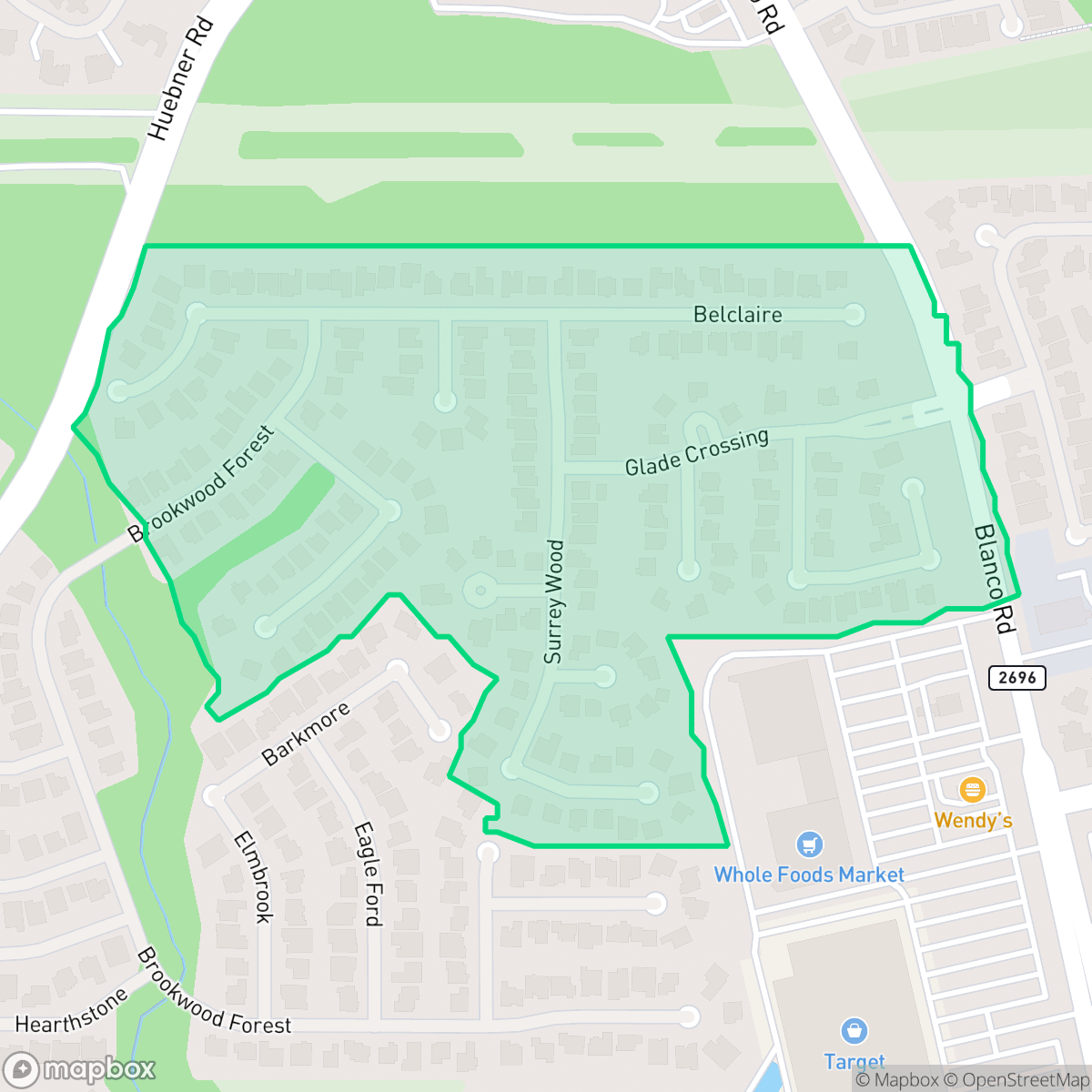
About The Seventh at Sonterra-The Vineyard
The Seventh at Sonterra and the adjacent Vineyard are premier master-planned residential communities in North Central San Antonio’s Stone Oak area. Established in the late 1980s, The Seventh at Sonterra is a gated, Mediterranean-style townhome community. It is uniquely distinguished by a private golf cart path that connects the neighborhood directly to the seventh fairway of the Sonterra Country Club golf course. Nearby, The Vineyard was developed starting in 1997 by Thompson Realty Capital. Designed with a wine-country aesthetic, it became one of the fastest-selling upscale subdivisions in San Antonio’s history, selling out its five phases—including Napa Forest and Tuscany Hills—in just 36 months. Together, these developments represent the peak of North Central San Antonio’s late-20th-century suburban expansion.
Situated in the Stone Oak corridor, the neighborhood serves as a quiet residential enclave characterized by well-maintained green spaces and a high level of walkability compared to the city average. Residents benefit from convenient access to local establishments like Kennedy's Public House and Sake Cafe, fostering a social atmosphere that remains grounded in suburban comfort. The area maintains a strong sense of community, supported by high health insurance coverage rates and a stable environment within the North East Independent School District.
Potential residents should be aware that the neighborhood experiences higher than average road traffic noise, which impacts acoustic comfort. While the area provides a high standard of living and visual appeal, the air quality and noise levels are trade-offs for its central location. It is well-suited for those who prioritize neighborhood connectivity and access to local amenities over absolute silence, particularly professionals and families seeking a balance between suburban aesthetics and urban convenience.
Neighborhood Scores Across 15 Qualities
Residential spacing offers a moderate level of separation between neighbors; this density is slightly higher than the typical San Antonio average according to iHuus data.
Pedestrian movement is well-supported by sidewalks on one side of the streets and safe crossings. This level of accessibility for walking is notably higher than the San Antonio average, according to iHuus data.
Large-scale homes and premium amenities create a highly polished environment that is notably more visually appealing than the San Antonio average. According to iHuus data, the area is characterized by spacious driveways and well-maintained upscale features.
Expansive green spaces and wide, low-traffic paths provide an environment that is significantly more accommodating for dog owners than the San Antonio average. According to iHuus data, the area features interconnected natural areas that are well-suited for walking pets safely.
Residential cul-de-sacs and large commercial shopping centers characterize this area, which feels slightly less open than the San Antonio average according to iHuus data.
Diverse dining and social destinations provide a noticeable concentration of activity that is significantly higher than the San Antonio average. According to iHuus data, the area features a mix of suburban streets and accessible eateries ranging from casual cafes to local bars.
Frequent noise from nearby heavy traffic and transit routes makes this area significantly louder than the San Antonio average. According to iHuus data, residents may experience consistent auditory disturbances from nearby freeway or rail activity.
Air quality fluctuates between acceptable and unhealthy levels, though it remains notably better than the San Antonio average. Sensitive individuals may encounter occasional concerns according to iHuus data.
Quiet streets and open green spaces define the area, though some light commercial warehouses and highway traffic contribute a moderate level of industrial presence. This neighborhood maintains a higher level of industrial separation than the San Antonio average according to iHuus data.
Health insurance access is exceptionally high in this area, significantly outpacing the San Antonio average according to iHuus data.
Political preferences in this area lean notably conservative, representing a significant departure from the more liberal-leaning average found throughout San Antonio.
Residents experience a diverse age distribution featuring a relatively even mix of young professionals, families, and seniors. This demographic spread is slightly more varied than the typical profile found across San Antonio.
Flood risk in this area is higher than the San Antonio average, though the specific level of danger remains undetermined because detailed federal studies for this zone are not yet complete.
Address-Level Insights for The Seventh at Sonterra-The Vineyard


iHuus Neighborhood Intelligence Insights
Get address-level neighborhood insights for The Seventh at Sonterra-The Vineyard
- Street-level scores — see how individual blocks compare, not just neighborhood averages
- Micro-zone boundaries — identify quiet pockets, flood boundaries, and walkable clusters before you visit
- 15 dimensions in full — walkability, noise, air quality, school quality, insurance coverage, population age profile, urban/rural index, and more
- Boundary risk alerts — know if your address sits near a block boundary where scores drop, the kind of detail no listing will ever mention
- School insights — individual school ratings and insights, not just district-level data
- Compare before you commit — side-by-side data across neighborhoods, down to block precision
No credit card required
Compare with Any Neighborhood
| Dimension | The Seventh at Sonterra-The Vineyard | 145 Association |
|---|---|---|
| 🚶 Walkabilityavg 6.44 | ||
| 🔊 Acoustic Comfortavg 4.07 | ||
| 🤫 Privacy Indexavg 5.75 | ||
| 🎨 Visual Appealavg 6.11 | ||
| 🐕 Dog Friendlinessavg 5.91 | ||
| 🗺️ Urban-Rural Indexavg 6.87 | ||
| ✨ Neighborhood Vibeavg 4.35 | ||
| 🏥 Health Insurance Coverageavg 5.94 | ||
| 🌿 Air Qualityavg 2.27 | ||
| 🏭 Industrial Proximityavg 8.31 | ||
| 🌊 Flood Safetyavg 4.2 | ||
| 🗳️ Ideological Leanavg 7.37 | ||
| 👥 Population Age Profileavg 4.68 | ||
| 🔥 Fire Safety | ||
| 🏫 School Quality |
The Seventh at Sonterra-The Vineyard Rankings
School Districts Serving The Seventh at Sonterra-The Vineyard
School Insights for The Seventh at Sonterra-The Vineyard
Below average outcomes; significant attendance and academic challenges.
School Insights
See what's really behind every school rating near The Seventh at Sonterra-The Vineyard
- Individual school ratings — each school's own score with outcome context, not just a district average
- Enrollment & class size data — student-to-teacher ratio and how it compares to the state average
- Full demographics breakdown — ethnicity and gender composition for every school in the enrollment zone
- Every school in the district — all schools within the enrollment boundary ranked by rating, not just the closest one
- Grade levels & benchmarks — elementary through high school, with below/above state-average flags
No credit card required