Pipers Meadow, San Antonio
Updated · 5,749 residents
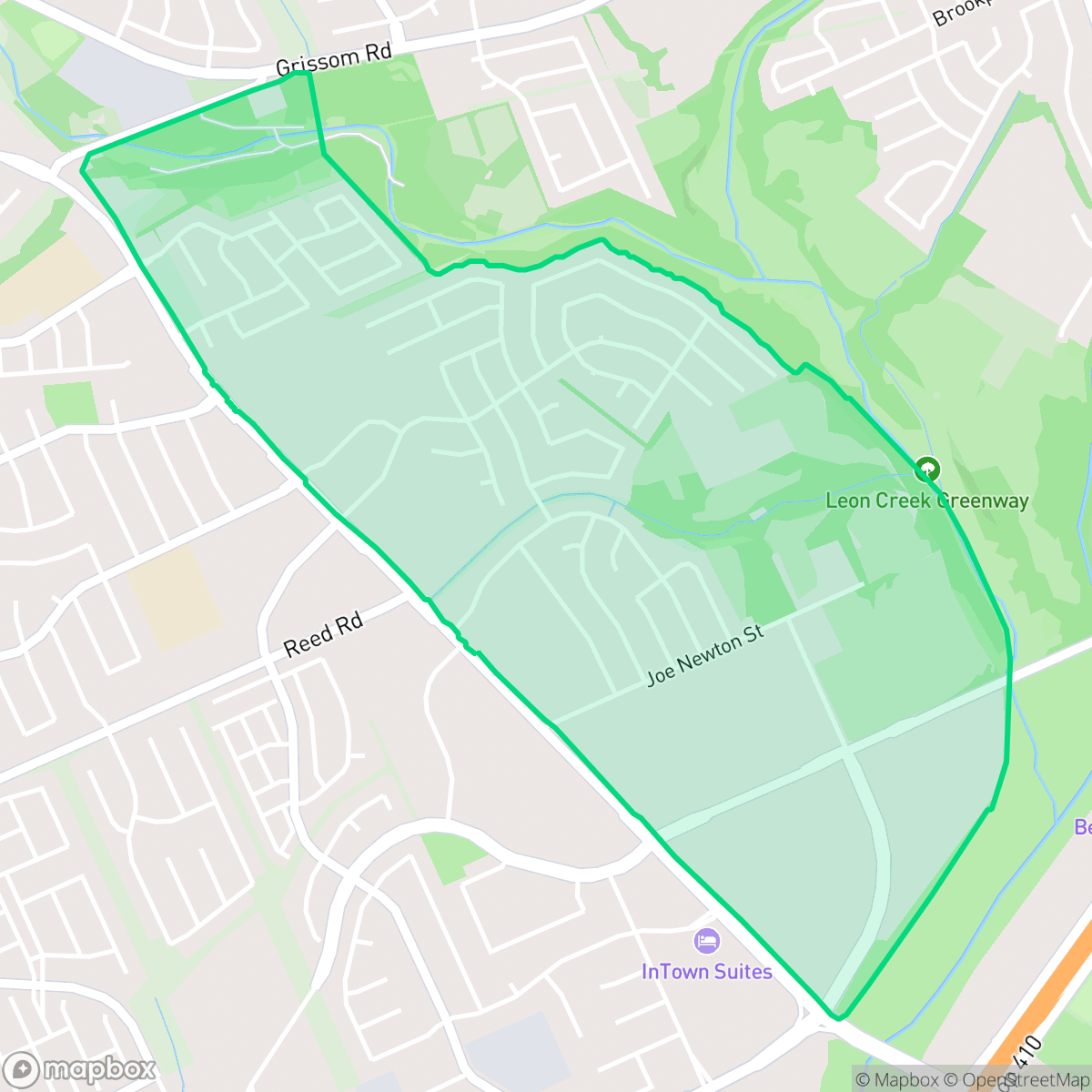
Pipers Meadow is a dense suburban neighborhood in San Antonio characterized by a mix of single-family homes and apartment complexes. While the area offers a functional network of sidewalks for local walking, residents often experience significant noise from road traffic and must navigate a car-dependent landscape for most daily needs.
Key Highlights
About Pipers Meadow
Pipers Meadow serves as a residential hub within San Antonio, featuring a blend of tract housing and multi-family developments. The area maintains a suburban atmosphere with pockets of green space and various local dining options, such as Los Ajos Mexican Grill and Papi's Barbacoa, scattered throughout the vicinity. Residents benefit from being part of the Northside Independent School District, which is recognized for its strong academic programs and collegiate preparation, making it a common choice for families despite recent district-wide budget and overcrowding challenges. Prospective residents should consider the neighborhood's specific environmental and infrastructure trade-offs. The area faces challenges regarding acoustic comfort due to high road traffic noise and lower air quality metrics. While the layout provides some safe walking paths in residential cul-de-sacs, the overall infrastructure remains heavily oriented toward vehicle travel. With limited health insurance coverage and concerns regarding flood safety, the neighborhood is best suited for those prioritizing proximity to established suburban amenities over quiet, low-traffic environments.
Neighborhood Scores Across 15 Qualities
Residential spacing is typical for a suburban area, featuring a mix of apartment blocks and single-family homes with standard yard buffers. According to iHuus data, the level of separation between neighbors is roughly average for San Antonio.
Continuous sidewalks and safe residential cul-de-sacs provide a pedestrian environment that is more walkable than the San Antonio average. According to iHuus data, main arterials and residential streets both feature infrastructure that supports safe movement throughout the area.
Consistent tract housing and apartment complexes define the landscape, which is roughly in line with the San Antonio average. Visual variety is limited by uniform rooflines and modest yard sizes, though several shared and private pools are visible across the area.
Large wooded greenbelts, wide grassy verges, and accessible school fields provide ample space for pet exercise. These features make the area more dog friendly than the San Antonio average according to iHuus data.
Dense suburban development defines this area, featuring a mix of single-family homes, apartment complexes, and retail centers. This landscape is very similar to the broader San Antonio area.
A mix of quiet, green residential blocks and more active commercial areas provides a liveliness that is slightly above the San Antonio average. While various dining options are available, most businesses require a car to access.
Frequent noise from nearby freeway and railroad traffic is a consistent feature of this area. According to iHuus data, acoustic comfort levels are notably lower than the San Antonio average.
Unhealthy air quality levels occur frequently in this area, which is slightly worse than the San Antonio average according to iHuus data. Sensitive groups may face significant health risks during periods of poor air quality.
Residential and retail uses dominate the area with no heavy industry or hazardous facilities detected. While the neighborhood is largely similar to the San Antonio average, some nearby commercial warehouses and a nearby EPA Superfund site may present minor traffic or environmental considerations.
Health insurance availability among residents is below the San Antonio average, according to iHuus data.
Political leanings in this area trend more liberal than the San Antonio average. According to iHuus data, the neighborhood maintains a liberal majority with a modest opposing presence.
Residents experience a balanced demographic mix of families, young adults, and seniors. This age distribution is slightly lower than the San Antonio average, according to iHuus data.
Property flooding is a significant concern in this area because parts of the neighborhood sit within a designated floodplain. According to iHuus data, the risk level here is notably higher than the San Antonio average, which may necessitate flood insurance requirements.
Address-Level Insights for Pipers Meadow


iHuus Neighborhood Intelligence Insights
Get address-level neighborhood insights for Pipers Meadow
- Street-level scores — see how individual blocks compare, not just neighborhood averages
- Micro-zone boundaries — identify quiet pockets, flood boundaries, and walkable clusters before you visit
- 15 dimensions in full — walkability, noise, air quality, school quality, insurance coverage, population age profile, urban/rural index, and more
- Boundary risk alerts — know if your address sits near a block boundary where scores drop, the kind of detail no listing will ever mention
- School insights — individual school ratings and insights, not just district-level data
- Compare before you commit — side-by-side data across neighborhoods, down to block precision
No credit card required
Compare with Any Neighborhood
| Dimension | Pipers Meadow | 145 Association |
|---|---|---|
| 🚶 Walkabilityavg 6.44 | ||
| 🔊 Acoustic Comfortavg 4.07 | ||
| 🤫 Privacy Indexavg 5.75 | ||
| 🎨 Visual Appealavg 6.11 | ||
| 🐕 Dog Friendlinessavg 5.91 | ||
| 🗺️ Urban-Rural Indexavg 6.87 | ||
| ✨ Neighborhood Vibeavg 4.35 | ||
| 🏥 Health Insurance Coverageavg 5.94 | ||
| 🌿 Air Qualityavg 2.27 | ||
| 🏭 Industrial Proximityavg 8.31 | ||
| 🌊 Flood Safetyavg 4.2 | ||
| 🗳️ Ideological Leanavg 7.37 | ||
| 👥 Population Age Profileavg 4.68 | ||
| 🔥 Fire Safety | ||
| 🏫 School Quality |
Pipers Meadow Rankings
School Districts Serving Pipers Meadow
School Insights for Pipers Meadow
Below average outcomes; significant attendance and academic challenges.
School Insights
See what's really behind every school rating near Pipers Meadow
- Individual school ratings — each school's own score with outcome context, not just a district average
- Enrollment & class size data — student-to-teacher ratio and how it compares to the state average
- Full demographics breakdown — ethnicity and gender composition for every school in the enrollment zone
- Every school in the district — all schools within the enrollment boundary ranked by rating, not just the closest one
- Grade levels & benchmarks — elementary through high school, with below/above state-average flags
No credit card required