People Active in Community Effort-Valley Forest, San Antonio
Updated · 492 residents
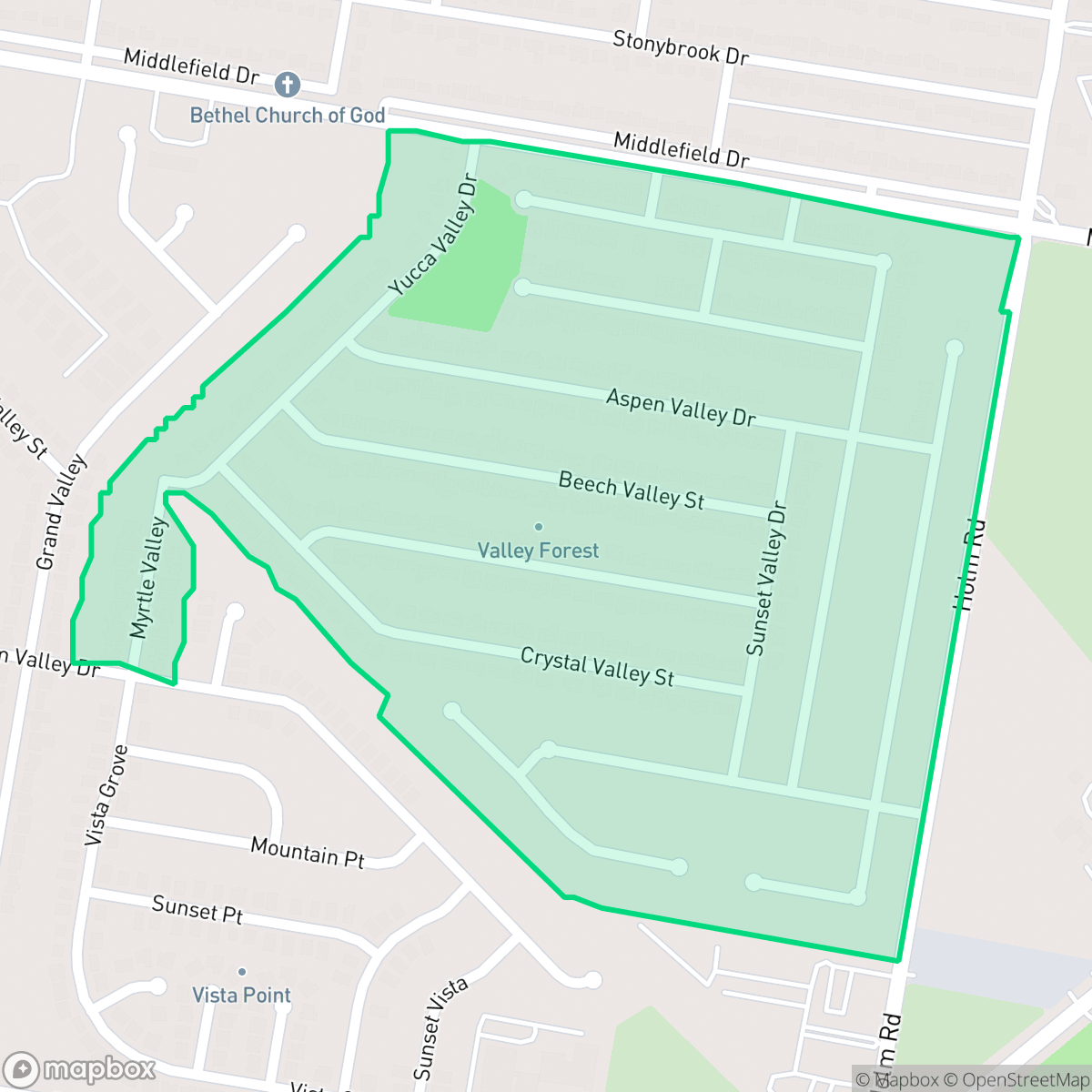
P.A.C.E.-Valley Forest is a quiet, suburban enclave located southwest of Lackland Air Force Base in San Antonio. Known for its strong civic engagement and military heritage, the area offers a peaceful residential environment with accessible green spaces like Miller’s Pond Park.
Key Highlights
About People Active in Community Effort-Valley Forest
Located southwest of Lackland Air Force Base in San Antonio, the P.A.C.E.-Valley Forest neighborhood developed in response to the mid-20th-century expansion of Kelly and Lackland bases, providing supplemental housing for military personnel. The Valley Forest subdivision was annexed into San Antonio in 1972. In 1982, local residents formed People Active in Community Effort (P.A.C.E.) to address critical environmental and educational issues, notably protesting a nearby sanitary landfill. Chartered in 1983, the non-profit neighborhood association successfully advocated for local improvements, including securing a multi-use facility at Miller’s Pond Park. Today, the neighborhood remains defined by its close-knit military heritage and active civic advocacy.
The neighborhood is characterized by its tranquil atmosphere and deep connection to the city's military history. Residents benefit from relatively quiet streets, as ambient noise levels primarily stem from local road traffic rather than aviation or rail activity. The community maintains a suburban feel, blending residential blocks with pockets of open space and light industrial uses that provide essential local services.
Prospective residents should consider the area's specific infrastructure and service landscape when evaluating the neighborhood. While the area boasts strong flood safety ratings, it faces challenges regarding local air quality and low rates of health insurance coverage. Educational opportunities are provided by the South San Antonio Independent School District, which is currently navigating significant fiscal and operational instability. This area is best suited for those prioritizing a close-knit, advocacy-driven community in a settled, suburban setting.
Neighborhood Scores Across 15 Qualities
Residential spacing varies, with some areas featuring closely positioned homes and shared fence lines. This level of density is slightly higher than the San Antonio average, according to iHuus data.
Low traffic volumes and narrow roads make for a peaceful environment, though the absence of formal sidewalks means residents should exercise caution when walking. This level of walkability is slightly below the San Antonio city average.
Modest lots with tidy yards and some private pools define the visual landscape, which is largely in line with the city average for San Antonio.
Local access to school fields and public parks provides space for pets, though narrow sidewalk verges make walking dogs along residential streets less convenient than the city average.
Open land and scattered greenery provide a semi-rural atmosphere that is slightly less dense than the San Antonio average. While some areas feature traditional suburban layouts, the landscape maintains a balance of woodland and open space.
Low density and limited local amenities create a peaceful, subdued atmosphere that is less active than the San Antonio average. Residents will find a serene setting with few social hubs or nearby retail options for walking access.
Acoustic levels are notably lower than the San Antonio average, consisting primarily of infrequent distant trains or sporadic vehicle traffic. According to iHuus data, this area offers a significantly more peaceful atmosphere than most parts of the city.
Frequent unhealthy air quality levels pose significant risks to sensitive groups in this area. According to iHuus data, the atmospheric conditions here are slightly worse than the San Antonio average.
Residential life here is free from warehouses, manufacturing plants, or industrial hazards. According to iHuus data, this area offers a notably cleaner environment regarding industrial proximity than the San Antonio average.
Health insurance accessibility is below the San Antonio average. According to iHuus data, a minority of residents in this area possess comprehensive health coverage.
Political leanings in this area are more liberal than the San Antonio average. According to iHuus data, the neighborhood maintains a liberal majority with a modest presence of opposing views.
A diverse mix of young adults, families, and older residents characterizes the local population. This demographic distribution aligns closely with the broader San Antonio area.
Flood risk in this area is elevated as parts of the neighborhood sit within the 100-year floodplain, which is notably higher than the San Antonio average. Residents should be aware that flood insurance is typically required for properties in this zone according to iHuus data.
Address-Level Insights for People Active in Community Effort-Valley Forest


iHuus Neighborhood Intelligence Insights
Get address-level neighborhood insights for People Active in Community Effort-Valley Forest
- Street-level scores — see how individual blocks compare, not just neighborhood averages
- Micro-zone boundaries — identify quiet pockets, flood boundaries, and walkable clusters before you visit
- 15 dimensions in full — walkability, noise, air quality, school quality, insurance coverage, population age profile, urban/rural index, and more
- Boundary risk alerts — know if your address sits near a block boundary where scores drop, the kind of detail no listing will ever mention
- School insights — individual school ratings and insights, not just district-level data
- Compare before you commit — side-by-side data across neighborhoods, down to block precision
No credit card required
Compare with Any Neighborhood
| Dimension | People Active in Community Effort-Valley Forest | 145 Association |
|---|---|---|
| 🚶 Walkabilityavg 6.44 | ||
| 🔊 Acoustic Comfortavg 4.07 | ||
| 🤫 Privacy Indexavg 5.75 | ||
| 🎨 Visual Appealavg 6.11 | ||
| 🐕 Dog Friendlinessavg 5.91 | ||
| 🗺️ Urban-Rural Indexavg 6.87 | ||
| ✨ Neighborhood Vibeavg 4.35 | ||
| 🏥 Health Insurance Coverageavg 5.94 | ||
| 🌿 Air Qualityavg 2.27 | ||
| 🏭 Industrial Proximityavg 8.31 | ||
| 🌊 Flood Safetyavg 4.2 | ||
| 🗳️ Ideological Leanavg 7.37 | ||
| 👥 Population Age Profileavg 4.68 | ||
| 🔥 Fire Safety | ||
| 🏫 School Quality |
People Active in Community Effort-Valley Forest Rankings
School Districts Serving People Active in Community Effort-Valley Forest
School Insights for People Active in Community Effort-Valley Forest
Below average outcomes; significant attendance and academic challenges.
School Insights
See what's really behind every school rating near People Active in Community Effort-Valley Forest
- Individual school ratings — each school's own score with outcome context, not just a district average
- Enrollment & class size data — student-to-teacher ratio and how it compares to the state average
- Full demographics breakdown — ethnicity and gender composition for every school in the enrollment zone
- Every school in the district — all schools within the enrollment boundary ranked by rating, not just the closest one
- Grade levels & benchmarks — elementary through high school, with below/above state-average flags
No credit card required