North Shearer Hills, San Antonio
Updated · 1,861 residents
North Shearer Hills is a tranquil enclave defined by its mid-century modern architecture and established tree-lined streets. While the area offers a quiet, suburban atmosphere with diverse local dining options, residents should be aware of the neighborhood's susceptibility to flooding and limited pedestrian infrastructure along major arterials.
Key Highlights
About North Shearer Hills
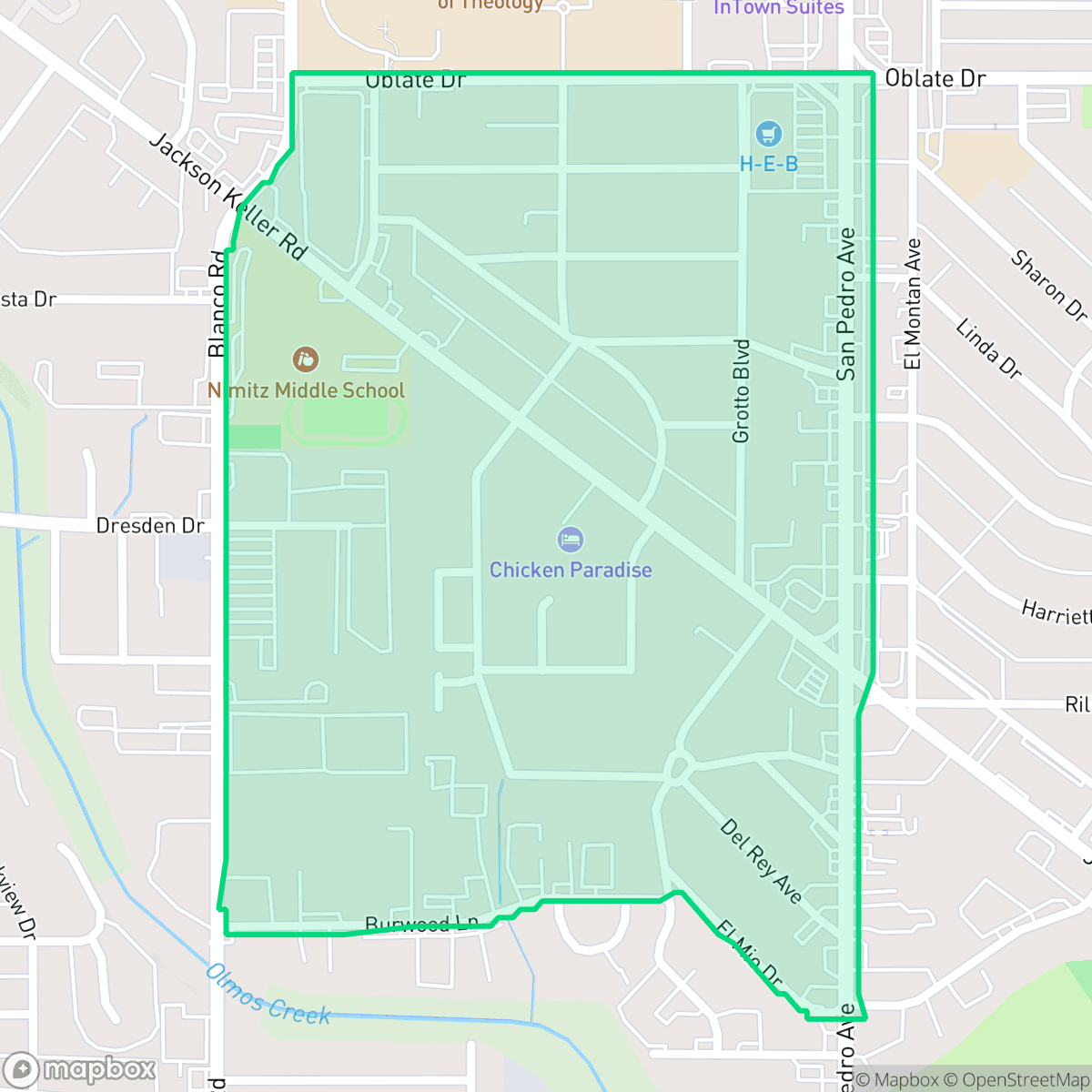
Developed during San Antonio’s post-World War II housing boom in the early 1950s, North Shearer Hills was originally a wooded area outside the city limits. Prominent developer H.J. Shearer designed the neighborhood with winding, automobile-oriented streets, naming many after his daughter’s friends. The area is celebrated for its well-preserved mid-century modern architecture, featuring classic ranch-style homes with large yards and mature tree canopies. Early on, the neighborhood was subject to restrictive deed covenants typical of the era, though it quickly grew into a diverse community. Historically anchored by local landmarks like the 1950 El Montan Motor Hotel along San Pedro Avenue (then U.S. 281), the neighborhood remains a distinct mid-century enclave located just south of Loop 410.
The neighborhood maintains a distinct suburban character, blending residential, light commercial, and industrial spaces. It is characterized by a calm, quiet atmosphere where residents enjoy access to local culinary staples like Thai Dee Restaurant and Los Angeles Tortilleria. According to iHuus data, the area provides a balanced mix of single-family homes and multi-unit complexes, though the presence of light industrial warehouses in the central and eastern sections creates a varied landscape. The community is well-suited for those who value a suburban lifestyle with proximity to city amenities, though it is best navigated by car due to the lack of continuous sidewalk infrastructure along major north-south transit routes.
Prospective residents should note several important livability factors, including a significant risk regarding flood safety and moderate noise levels averaging 57 decibels, primarily from road traffic. While the neighborhood lacks extensive green spaces, the local athletic track and open fields provide some options for dog owners. Educational needs are supported by the North East Independent School District, which holds a strong reputation, alongside the highly-rated Somerset Academy Lone Star. As noted by iHuus, the area is ideal for those prioritizing a central location and architectural charm, provided they are prepared for the specific environmental and infrastructure considerations present in this part of San Antonio.
Neighborhood Scores Across 15 Qualities
Residential spacing varies between single-family homes and denser apartment blocks, resulting in a level of privacy that is roughly comparable to the San Antonio average. According to iHuus data, some neighbors are situated quite close together, while other areas maintain a moderate buffer between structures.
Residential streets are generally quiet and navigable for pedestrians, though the lack of continuous sidewalks on major north-south roads makes walking slightly less convenient than the San Antonio average.
Residential views consist of typical suburban housing with simple rooflines and modest yards. This level of visual variety is slightly below the San Antonio average according to iHuus data.
Open fields and an athletic track provide nearby green space for pets, though residential sidewalks are relatively narrow. This level of accessibility is slightly above the San Antonio average according to iHuus data.
Open land and scattered homes provide a more spacious atmosphere than the city average. According to iHuus data, the area features a mix of single-family residences and dense suburban pockets near institutional buildings.
Suburban blocks and light industrial areas provide a steady but low-key atmosphere, though a lack of nearby businesses makes this area slightly less lively than the San Antonio average. While various dining options are available, the neighborhood remains car-oriented with few services within walking distance.
Steady noise from nearby busy streets is a common feature here, though levels remain more tranquil than the city average according to iHuus data.
Frequent unhealthy air quality levels pose a significant risk to sensitive groups. According to iHuus data, the air quality in this area is slightly worse than the San Antonio average.
Industrial presence is minimal, with the area consisting mainly of residential, educational, and light commercial uses. This level of separation from heavy industry is consistent with the San Antonio average.
Health insurance coverage among residents is lower than the San Antonio average. According to iHuus data, a minority of the population currently holds medical coverage.
Political leanings in this area trend more liberal than the San Antonio average, according to iHuus data.
Residents live alongside a balanced mix of young adults, families, and older individuals. This age distribution is largely in line with the broader San Antonio area.
Flood risk is significantly higher than the San Antonio average, with much greater vulnerability to water hazards. According to iHuus data, residents may face elevated or prohibitive insurance costs due to this heightened exposure.
Address-Level Insights for North Shearer Hills


iHuus Neighborhood Intelligence Insights
Get address-level neighborhood insights for North Shearer Hills
- Street-level scores — see how individual blocks compare, not just neighborhood averages
- Micro-zone boundaries — identify quiet pockets, flood boundaries, and walkable clusters before you visit
- 15 dimensions in full — walkability, noise, air quality, school quality, insurance coverage, population age profile, urban/rural index, and more
- Boundary risk alerts — know if your address sits near a block boundary where scores drop, the kind of detail no listing will ever mention
- School insights — individual school ratings and insights, not just district-level data
- Compare before you commit — side-by-side data across neighborhoods, down to block precision
No credit card required
Compare with Any Neighborhood
| Dimension | North Shearer Hills | 145 Association |
|---|---|---|
| 🚶 Walkabilityavg 6.44 | ||
| 🔊 Acoustic Comfortavg 4.07 | ||
| 🤫 Privacy Indexavg 5.75 | ||
| 🎨 Visual Appealavg 6.11 | ||
| 🐕 Dog Friendlinessavg 5.91 | ||
| 🗺️ Urban-Rural Indexavg 6.87 | ||
| ✨ Neighborhood Vibeavg 4.35 | ||
| 🏥 Health Insurance Coverageavg 5.94 | ||
| 🌿 Air Qualityavg 2.27 | ||
| 🏭 Industrial Proximityavg 8.31 | ||
| 🌊 Flood Safetyavg 4.2 | ||
| 🗳️ Ideological Leanavg 7.37 | ||
| 👥 Population Age Profileavg 4.68 | ||
| 🔥 Fire Safety | ||
| 🏫 School Quality |
North Shearer Hills Rankings
School Districts Serving North Shearer Hills
School Insights for North Shearer Hills
Below average outcomes; significant attendance and academic challenges.
School Insights
See what's really behind every school rating near North Shearer Hills
- Individual school ratings — each school's own score with outcome context, not just a district average
- Enrollment & class size data — student-to-teacher ratio and how it compares to the state average
- Full demographics breakdown — ethnicity and gender composition for every school in the enrollment zone
- Every school in the district — all schools within the enrollment boundary ranked by rating, not just the closest one
- Grade levels & benchmarks — elementary through high school, with below/above state-average flags
No credit card required