Mission Trace-Vance Jackson, San Antonio
Updated · 529 residents
Mission Trace-Vance Jackson is a quiet, nature-focused community in northwest San Antonio known for its high walkability and preserved oak canopy. As a designated wildlife habitat, the area offers a serene, rural-like atmosphere that prioritizes open space and pedestrian-friendly paths.
Key Highlights
About Mission Trace-Vance Jackson
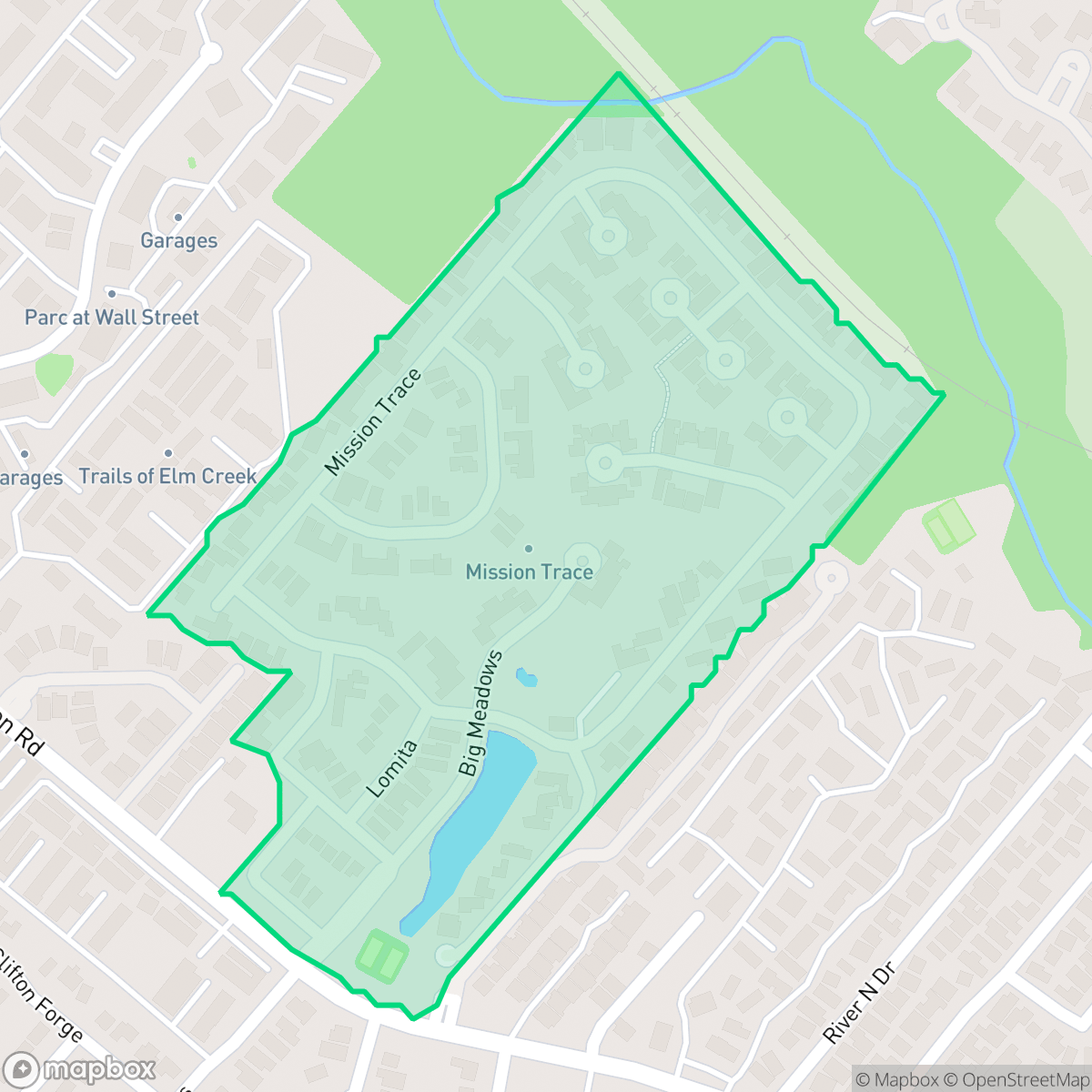
The Mission Trace-Vance Jackson neighborhood in northwest San Antonio blends historic Texas ranching roots with pioneering mid-century urban planning. The Vance Jackson area traces its name to the Vance and Jackson families, prominent local figures who operated adjacent ranches here in the late 19th and early 20th centuries. In 1973, developer Jack Devore established Mission Trace within the area as San Antonio’s very first Planned Unit Development (PUD). Formally opened in 1974, this innovative 55-acre community was designed with clustered homes to preserve half of the land as natural open space. Today, the neighborhood is recognized as a National Wildlife Federation-Designated Wildlife Habitat Community, centered around its historic retention pond and lush oak canopy, maintaining a unique balance of suburban density and ecological preservation.
The neighborhood functions as a low-density residential enclave that emphasizes environmental stewardship and visual appeal. Residents benefit from above-average walkability and a strong connection to nature, with streets lined by mature trees that contribute to the area's distinct aesthetic. While it maintains a peaceful, remote character, it remains served by the Northside Independent School District, which provides access to reputable academic programs and high-performing high schools.
Prospective residents should note that the area offers minimal commercial activity and a very low-key social environment. While the acoustic environment is generally comfortable, occasional noise from nearby rail lines is present. The neighborhood is best suited for individuals or families who prioritize privacy, outdoor accessibility, and a quiet residential setting over proximity to urban nightlife or dense commercial hubs.
Neighborhood Scores Across 15 Qualities
Residential spacing varies between dense apartment clusters and detached homes with modest yards. This level of separation between neighbors is slightly higher than the San Antonio average, according to iHuus data.
Pedestrian access is enhanced by a continuous sidewalk network and low-traffic residential loops that offer greater safety than the San Antonio average. Apartment layouts and main roads feature visible pathways and safe crossings for easy movement on foot.
Well-landscaped yards and large residential footprints create an aesthetic that is notably more polished than the San Antonio average. According to iHuus data, the presence of private pools and expansive driveways contributes to a more premium visual environment.
Abundant shaded grassy areas and wide, tree-lined paths make this area significantly more conducive to dog walking than the San Antonio average. Mature tree canopies and buffered sidewalks provide a comfortable environment for pet owners according to iHuus data.
Frequent open land and scattered homes provide a more semi-rural feel than most of San Antonio. According to iHuus data, the area features a mix of dense suburban greenery and pockets of woodland.
Active pockets of social hubs and local amenities coexist with quieter, low-density residential areas. This blend of community spaces and greenery provides a level of liveliness that is notably higher than the San Antonio average, according to iHuus data.
Acoustic levels remain notably lower than the San Antonio average, with noise primarily limited to infrequent distant traffic or trains. According to iHuus data, residents can expect a calm environment with very little ambient disturbance.
Frequent unhealthy air quality levels pose a significant risk to sensitive groups. According to iHuus data, the air quality in this area is slightly worse than the San Antonio average.
Residential and light commercial zoning ensures an absence of warehouses or hazardous industrial facilities. This area is notably cleaner of industrial activity than the San Antonio average, according to iHuus data.
Health insurance coverage among residents is higher than the San Antonio average, according to iHuus data. This indicates a relatively strong level of access to healthcare benefits within the community.
Political leanings in this area trend more liberal than the San Antonio average, with a majority of residents identifying with liberal ideologies.
A balanced mix of young adults, families, and older residents characterizes this area. This demographic distribution is slightly lower than the San Antonio average, according to iHuus data.
Flood risk in this area is higher than the San Antonio average, though a lack of detailed FEMA studies means the precise level of danger remains undetermined. Residents should remain cautious as current official assessments for this specific zone are incomplete.
Address-Level Insights for Mission Trace-Vance Jackson


iHuus Neighborhood Intelligence Insights
Get address-level neighborhood insights for Mission Trace-Vance Jackson
- Street-level scores — see how individual blocks compare, not just neighborhood averages
- Micro-zone boundaries — identify quiet pockets, flood boundaries, and walkable clusters before you visit
- 15 dimensions in full — walkability, noise, air quality, school quality, insurance coverage, population age profile, urban/rural index, and more
- Boundary risk alerts — know if your address sits near a block boundary where scores drop, the kind of detail no listing will ever mention
- School insights — individual school ratings and insights, not just district-level data
- Compare before you commit — side-by-side data across neighborhoods, down to block precision
No credit card required
Compare with Any Neighborhood
| Dimension | Mission Trace-Vance Jackson | 145 Association |
|---|---|---|
| 🚶 Walkabilityavg 6.44 | ||
| 🔊 Acoustic Comfortavg 4.07 | ||
| 🤫 Privacy Indexavg 5.75 | ||
| 🎨 Visual Appealavg 6.11 | ||
| 🐕 Dog Friendlinessavg 5.91 | ||
| 🗺️ Urban-Rural Indexavg 6.87 | ||
| ✨ Neighborhood Vibeavg 4.35 | ||
| 🏥 Health Insurance Coverageavg 5.94 | ||
| 🌿 Air Qualityavg 2.27 | ||
| 🏭 Industrial Proximityavg 8.31 | ||
| 🌊 Flood Safetyavg 4.2 | ||
| 🗳️ Ideological Leanavg 7.37 | ||
| 👥 Population Age Profileavg 4.68 | ||
| 🔥 Fire Safety | ||
| 🏫 School Quality |
Mission Trace-Vance Jackson Rankings
School Districts Serving Mission Trace-Vance Jackson
School Insights for Mission Trace-Vance Jackson
Below average outcomes; significant attendance and academic challenges.
School Insights
See what's really behind every school rating near Mission Trace-Vance Jackson
- Individual school ratings — each school's own score with outcome context, not just a district average
- Enrollment & class size data — student-to-teacher ratio and how it compares to the state average
- Full demographics breakdown — ethnicity and gender composition for every school in the enrollment zone
- Every school in the district — all schools within the enrollment boundary ranked by rating, not just the closest one
- Grade levels & benchmarks — elementary through high school, with below/above state-average flags
No credit card required