Los Angeles Heights - Keystone-Northwest Los Angeles Height, San Antonio
Updated · 521 residents
Los Angeles Heights - Keystone-Northwest Los Angeles Heights is a dense, historic suburban enclave defined by its collection of early 20th-century homes and proximity to the vibrant Deco District. While the area offers a grid-based layout and central access, residents frequently experience significant noise from nearby highway traffic and limited privacy due to closely spaced housing.
Key Highlights
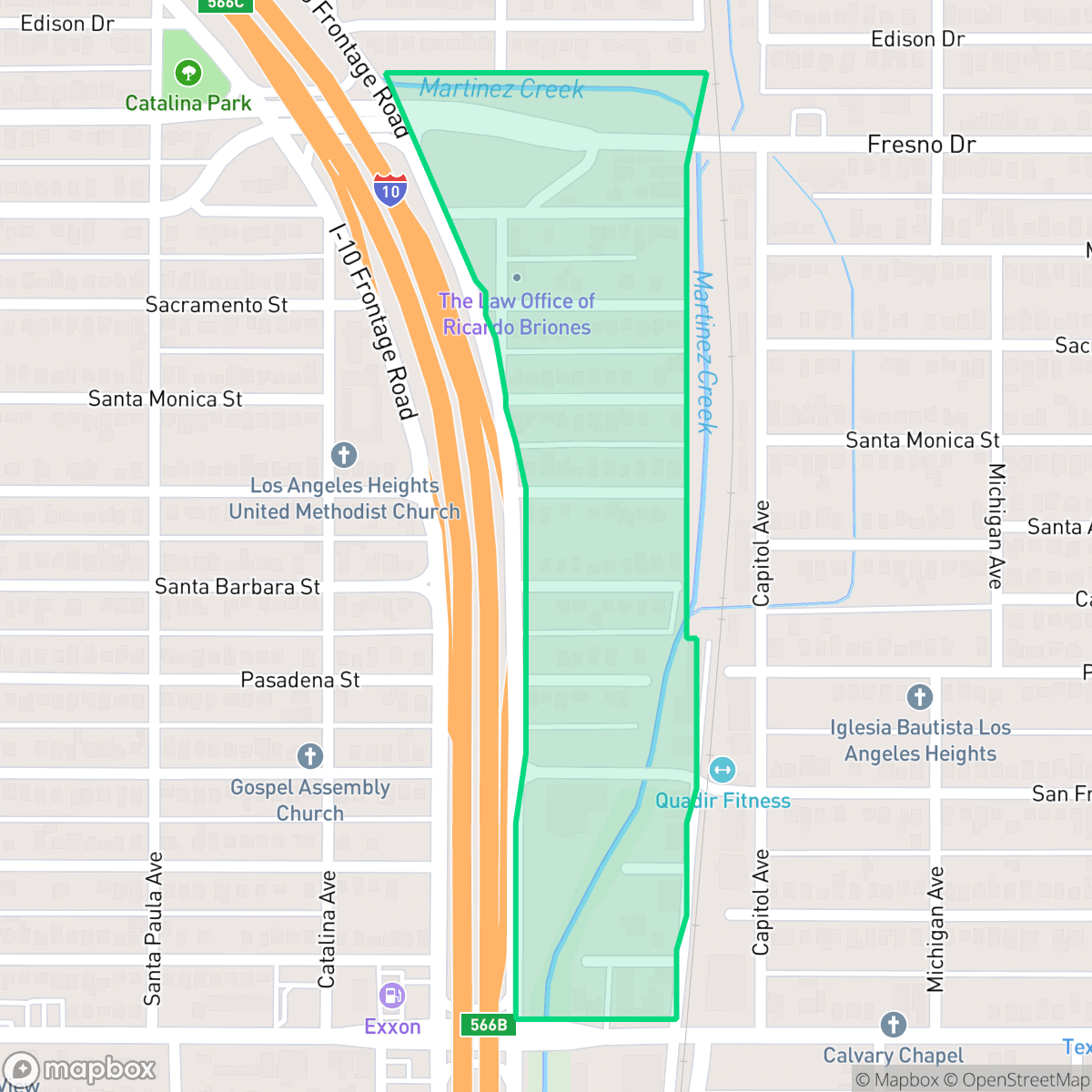
About Los Angeles Heights - Keystone-Northwest Los Angeles Height
The Los Angeles Heights - Keystone neighborhood in near-northwest San Antonio originated in the early 20th century as a streetcar suburb. Platted as separate developments—Los Angeles Heights and the Keystone Park addition (platted 1908–1910 by Clifton George)—the area grew rapidly in the 1920s under developers like L.E. Fite. The neighborhood is defined by its 1920s to 1940s bungalows, Tudor Revival, and Spanish Eclectic homes. It encompasses the Fulton Avenue Historic District and Greenlawn Estates, San Antonio's 31st local historic district, showcasing Tudor and Mission Revival architecture. Local landmarks include the historic Keystone School, founded in 1948, and the adjacent Deco District along Fredericksburg Road. Longstanding local businesses like De Wese's Tip Top Café (1938) and the Original Donut Shop further anchor the neighborhood's distinct cultural character.
The area functions as a dense residential grid that balances its historic architectural roots with modern commercial pressures. Located near major thoroughfares, the neighborhood provides residents with direct access to local landmarks and cultural hubs, though this proximity comes with the presence of nearby warehouses and light industrial zones. The environment is characterized by a compact, suburban feel where single-family homes sit on small lots, creating a tight-knit but visually modest streetscape.
Prospective residents should be aware of several environmental and infrastructure trade-offs. The neighborhood contends with high levels of ambient noise from road traffic and faces challenges regarding air quality and flood safety. Additionally, the local school district is currently managing significant structural changes and rightsizing, which may impact families. Given these factors, the area is best suited for those prioritizing a central location and historical character over quiet, secluded living or extensive private green space.
Neighborhood Scores Across 15 Qualities
Homes are situated in a relatively dense grid with close spacing between structures. This level of privacy is slightly lower than the San Antonio average due to the compact nature of the residential lots.
Gridded residential streets provide a predictable layout for pedestrians, although the lack of consistent sidewalks makes walking slightly less convenient than the San Antonio average. Navigating the area is generally safe due to low traffic volumes, but sidewalk gaps occur near highway edges and industrial zones.
Simple, uniform housing and small yards characterize the area, resulting in a visual landscape that is less varied than the San Antonio average. According to iHuus data, the neighborhood consists primarily of standard tract homes with minimal greenery or private amenities.
Public parks and wide green verges are scarce in this area; most vegetation is confined to private, fenced yards. According to iHuus data, dog-friendly infrastructure and accessible public greenery are below the San Antonio average.
Low-rise residential grids and light industrial zones create a suburban feel that is slightly less open than the San Antonio average. Scattered single-family homes and large school complexes characterize the landscape according to iHuus data.
Mix of active commercial pockets and quiet suburban blocks creates an atmosphere that is more lively than the San Antonio average. Residents can access a diverse range of dining options, though some areas remain highly car-dependent due to proximity to major highways and industrial zones.
Frequent noise from nearby freeways and railroad tracks makes this area significantly louder than the San Antonio average. According to iHuus data, residents may experience persistent acoustic disturbances due to the proximity of major transit corridors.
Frequent unhealthy air quality levels pose significant risks to sensitive groups. According to iHuus data, air quality in this area is worse than the San Antonio average.
Largely residential with occasional light commercial activity, though some warehouse structures near the highway may contribute to localized noise. This area features less industrial density than the San Antonio average, according to iHuus data.
Health insurance access is significantly lower here than the San Antonio average, according to iHuus data. Residents may face greater challenges in accessing employer-sponsored or private medical plans.
Voting patterns and census indicators reflect a predominantly liberal community, trending significantly more liberal than the San Antonio average according to iHuus data.
Residents live alongside a balanced mix of young adults, families, and seniors. This demographic distribution is roughly in line with the broader San Antonio area, according to iHuus data.
Significant flood hazards and potential for wave action exist in this area, making it much more vulnerable than the San Antonio average. Residents should prepare for elevated or prohibitive flood insurance costs according to iHuus data.
Address-Level Insights for Los Angeles Heights - Keystone-Northwest Los Angeles Height


iHuus Neighborhood Intelligence Insights
Get address-level neighborhood insights for Los Angeles Heights - Keystone-Northwest Los Angeles Height
- Street-level scores — see how individual blocks compare, not just neighborhood averages
- Micro-zone boundaries — identify quiet pockets, flood boundaries, and walkable clusters before you visit
- 15 dimensions in full — walkability, noise, air quality, school quality, insurance coverage, population age profile, urban/rural index, and more
- Boundary risk alerts — know if your address sits near a block boundary where scores drop, the kind of detail no listing will ever mention
- School insights — individual school ratings and insights, not just district-level data
- Compare before you commit — side-by-side data across neighborhoods, down to block precision
No credit card required
Compare with Any Neighborhood
| Dimension | Los Angeles Heights - Keystone-Northwest Los Angeles Height | 145 Association |
|---|---|---|
| 🚶 Walkabilityavg 6.44 | ||
| 🔊 Acoustic Comfortavg 4.07 | ||
| 🤫 Privacy Indexavg 5.75 | ||
| 🎨 Visual Appealavg 6.11 | ||
| 🐕 Dog Friendlinessavg 5.91 | ||
| 🗺️ Urban-Rural Indexavg 6.87 | ||
| ✨ Neighborhood Vibeavg 4.35 | ||
| 🏥 Health Insurance Coverageavg 5.94 | ||
| 🌿 Air Qualityavg 2.27 | ||
| 🏭 Industrial Proximityavg 8.31 | ||
| 🌊 Flood Safetyavg 4.2 | ||
| 🗳️ Ideological Leanavg 7.37 | ||
| 👥 Population Age Profileavg 4.68 | ||
| 🔥 Fire Safety | ||
| 🏫 School Quality |
Los Angeles Heights - Keystone-Northwest Los Angeles Height Rankings
School Districts Serving Los Angeles Heights - Keystone-Northwest Los Angeles Height
School Insights for Los Angeles Heights - Keystone-Northwest Los Angeles Height
Below average outcomes; significant attendance and academic challenges.
School Insights
See what's really behind every school rating near Los Angeles Heights - Keystone-Northwest Los Angeles Height
- Individual school ratings — each school's own score with outcome context, not just a district average
- Enrollment & class size data — student-to-teacher ratio and how it compares to the state average
- Full demographics breakdown — ethnicity and gender composition for every school in the enrollment zone
- Every school in the district — all schools within the enrollment boundary ranked by rating, not just the closest one
- Grade levels & benchmarks — elementary through high school, with below/above state-average flags
No credit card required