Jefferson Heights, San Antonio
Updated · 3,558 residents
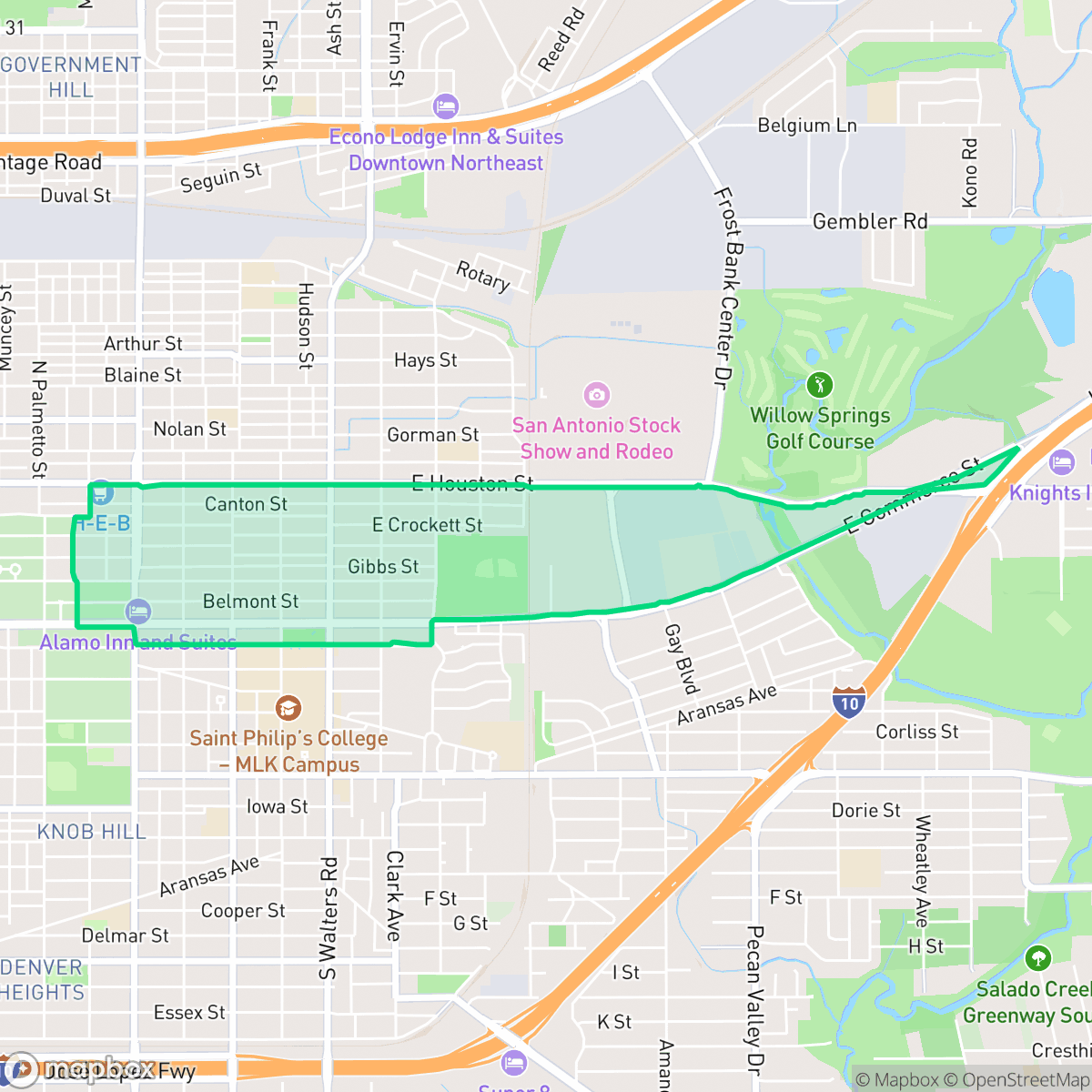
Jefferson Heights is a walkable, grid-patterned neighborhood on San Antonio’s Eastside known for its historic cultural significance and modest residential architecture. Residents enjoy access to green spaces like Lincoln Park, though the area is defined by quiet streets and limited local business density.
Key Highlights
About Jefferson Heights
Located on San Antonio’s Eastside, Jefferson Heights was platted starting in 1919, developing into a dense residential enclave of one-story single-family homes and duplexes. In 2005, it became San Antonio's first designated Cultural Heritage District, honoring its rich history as a major center for African American homeownership and its deep ties to the local civil rights movement. Historically shaped by segregation and racial covenants, the neighborhood evolved into a resilient community hub. Architecturally, Jefferson Heights features early 20th-century residential structures built on a walkable grid pattern. Local landmarks of cultural significance include Dawson Park, Lincoln Park, and the Tried Stone Baptist Church, a designated historic individual landmark.
The area maintains a consistent grid layout that supports pedestrian mobility, offering a quiet, suburban atmosphere. While the neighborhood is primarily residential, it features small commercial clusters that provide essential services. According to iHuus data, the community benefits from a reliable network of sidewalks, making it more accessible for walking than many other parts of the city. Prospective residents should consider that the neighborhood is located near logistics hubs, which can lead to increased truck traffic in certain sections. The housing stock consists primarily of entry-level homes on compact lots, and the local school district is currently navigating significant restructuring. This area is best suited for those prioritizing a historic, community-focused environment over high-density urban amenities or modern luxury housing.
Neighborhood Scores Across 15 Qualities
Residential structures are spaced with moderate separation, offering a level of privacy that is roughly in line with the San Antonio average. Houses are typically detached but situated relatively close to neighbors on standard lots.
Low traffic volumes and a grid layout facilitate safe movement, though sidewalk continuity varies across certain streets. Pedestrian infrastructure in this area is slightly above the San Antonio average according to iHuus data.
Standard tract housing with simple rooflines and small yards defines the area. According to iHuus data, the visual variety here is lower than the San Antonio average.
Shaded residential streets and nearby sports fields provide adequate space for walking pets. According to iHuus data, the availability of green space for dogs is roughly comparable to the rest of San Antonio.
The landscape consists of a blend of residential grids and large-scale industrial warehouses, sitting very close to the city average for semi-rural development. Residents will find a transition between dense residential pockets and significant grey infrastructure according to iHuus data.
Low business density and a heavy presence of industrial corridors and warehouses create a subdued atmosphere that is less active than the San Antonio average. Most daily activities require a vehicle, as local dining and services are scattered and often situated near major highways or rail lines.
Steady noise from nearby busy streets is present, though acoustic levels remain more tranquil than the San Antonio average.
Frequent unhealthy air quality levels pose a significant risk to sensitive groups; this level of pollution is slightly worse than the San Antonio average, according to iHuus data.
Large warehouses, rail yards, and logistics hubs bordering the neighborhood edges introduce more noise and truck traffic than is typical for San Antonio. While much of the area remains residential, residents should expect occasional dust and heavy vehicle movement from nearby industrial sites.
Health insurance enrollment among residents is below the San Antonio average, according to iHuus data. This lower rate of coverage may impact access to certain local medical services.
Voting patterns and census indicators reflect a much more liberal political leaning than the San Antonio average, according to iHuus data.
Residents live alongside a varied demographic of young adults, families, and seniors. This age distribution is largely consistent with the broader San Antonio area, according to iHuus data.
Flood risk levels are currently difficult to determine because FEMA has not completed a detailed study for this area. According to iHuus data, the level of certainty regarding flood safety is slightly below the San Antonio average.
Address-Level Insights for Jefferson Heights


iHuus Neighborhood Intelligence Insights
Get address-level neighborhood insights for Jefferson Heights
- Street-level scores — see how individual blocks compare, not just neighborhood averages
- Micro-zone boundaries — identify quiet pockets, flood boundaries, and walkable clusters before you visit
- 15 dimensions in full — walkability, noise, air quality, school quality, insurance coverage, population age profile, urban/rural index, and more
- Boundary risk alerts — know if your address sits near a block boundary where scores drop, the kind of detail no listing will ever mention
- School insights — individual school ratings and insights, not just district-level data
- Compare before you commit — side-by-side data across neighborhoods, down to block precision
No credit card required
Compare with Any Neighborhood
| Dimension | Jefferson Heights | 145 Association |
|---|---|---|
| 🚶 Walkabilityavg 6.44 | ||
| 🔊 Acoustic Comfortavg 4.07 | ||
| 🤫 Privacy Indexavg 5.75 | ||
| 🎨 Visual Appealavg 6.11 | ||
| 🐕 Dog Friendlinessavg 5.91 | ||
| 🗺️ Urban-Rural Indexavg 6.87 | ||
| ✨ Neighborhood Vibeavg 4.35 | ||
| 🏥 Health Insurance Coverageavg 5.94 | ||
| 🌿 Air Qualityavg 2.27 | ||
| 🏭 Industrial Proximityavg 8.31 | ||
| 🌊 Flood Safetyavg 4.2 | ||
| 🗳️ Ideological Leanavg 7.37 | ||
| 👥 Population Age Profileavg 4.68 | ||
| 🔥 Fire Safety | ||
| 🏫 School Quality |
Jefferson Heights Rankings
School Districts Serving Jefferson Heights
School Insights for Jefferson Heights
Below average outcomes; significant attendance and academic challenges.
School Insights
See what's really behind every school rating near Jefferson Heights
- Individual school ratings — each school's own score with outcome context, not just a district average
- Enrollment & class size data — student-to-teacher ratio and how it compares to the state average
- Full demographics breakdown — ethnicity and gender composition for every school in the enrollment zone
- Every school in the district — all schools within the enrollment boundary ranked by rating, not just the closest one
- Grade levels & benchmarks — elementary through high school, with below/above state-average flags
No credit card required