Hunt Crossing, San Antonio
Updated · 838 residents
Hunt Crossing is a dense, suburban neighborhood in San Antonio characterized by its exceptional walkability and uniform tract housing. While residents benefit from a comprehensive sidewalk network and nearby amenities, the area experiences high levels of road noise and significant flood risk.
Key Highlights
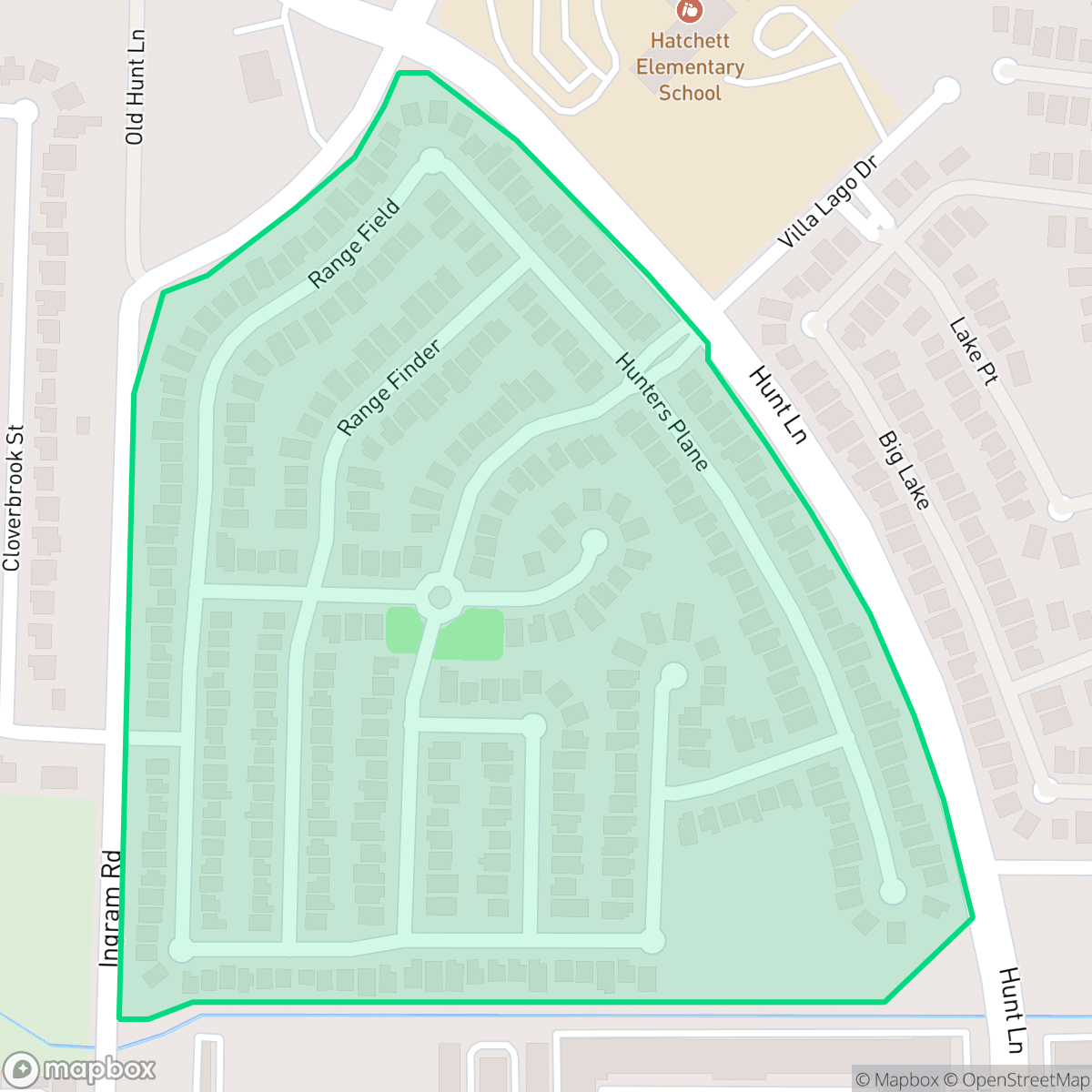
About Hunt Crossing
Hunt Crossing is a compact residential community featuring a high-density layout of single-family homes and apartment clusters. The area is notable for its extensive sidewalk system, which provides residents with easy access to local services such as nearby retail and dining options. According to iHuus data, the neighborhood maintains a consistent suburban aesthetic with uniform rooflines and small, private yards. The proximity of an electrical substation and commercial warehouses underscores the neighborhood's suburban and industrial mix.
Prospective residents should consider specific environmental and infrastructure trade-offs. The neighborhood faces elevated noise levels from surrounding road traffic and has limited privacy due to the close proximity of homes. Additionally, the area has significant flood safety concerns and lower-than-average health insurance coverage rates among its population. Families may find the proximity to Northside Independent School District schools an advantage, though they should be aware of the district's current financial and capacity challenges.
Neighborhood Scores Across 15 Qualities
Housing density varies across the area, ranging from closely clustered apartment units to single-family homes with more separation. This level of privacy is slightly lower than the San Antonio average due to the mix of high-density suburban layouts and shared boundaries.
Comprehensive sidewalk networks and safe crossings make much of the area accessible for pedestrians. This level of walkability is significantly higher than the San Antonio average, particularly within the residential subdivisions.
Standard tract housing and multi-family apartments define the landscape, featuring uniform rooflines and modest yards. This visual character is largely in line with the San Antonio average.
Accessible green spaces and wide grassy verges provide reliable routes for dog walking. This area offers slightly more greenery for pets than the San Antonio average, according to iHuus data.
Low-density suburban development characterizes this area, featuring a mix of single-family homes and commercial strip malls. This level of density is slightly more developed than the San Antonio average according to iHuus data.
A mix of quiet residential streets and accessible dining options creates a level of activity that is higher than the San Antonio average. Local amenities like Dunkin' and various dining spots provide moderate social opportunities within the area.
Frequent noise from nearby freeway and railroad corridors makes this area louder than the San Antonio average. Residents may experience significant acoustic disturbances throughout the day, according to iHuus data.
Frequent unhealthy air quality levels pose significant risks to sensitive groups. According to iHuus data, air quality in this area is lower than the San Antonio average.
Industrial presence is minimal in this area, which contains almost no warehouses or heavy manufacturing facilities. According to iHuus data, the neighborhood lacks industrial hazards and is significantly better positioned than the city average regarding proximity to industrial zones.
Health insurance access among residents is lower than the San Antonio average, according to iHuus data. This indicates a higher proportion of uninsured individuals living within the area.
Political leanings in this area trend more liberal than the San Antonio average. This ideological landscape features a liberal majority with a modest presence of opposing viewpoints according to iHuus data.
Residents live alongside a varied mix of young adults, families, and seniors. According to iHuus data, the population age profile is slightly more skewed toward younger age groups than the San Antonio average.
Flood risk in this area is higher than the San Antonio average, though official FEMA studies for the neighborhood have not yet been completed. According to iHuus data, residents should remain cautious as the specific level of risk is currently unverified.
Address-Level Insights for Hunt Crossing


iHuus Neighborhood Intelligence Insights
Get address-level neighborhood insights for Hunt Crossing
- Street-level scores — see how individual blocks compare, not just neighborhood averages
- Micro-zone boundaries — identify quiet pockets, flood boundaries, and walkable clusters before you visit
- 15 dimensions in full — walkability, noise, air quality, school quality, insurance coverage, population age profile, urban/rural index, and more
- Boundary risk alerts — know if your address sits near a block boundary where scores drop, the kind of detail no listing will ever mention
- School insights — individual school ratings and insights, not just district-level data
- Compare before you commit — side-by-side data across neighborhoods, down to block precision
No credit card required
Compare with Any Neighborhood
| Dimension | Hunt Crossing | 145 Association |
|---|---|---|
| 🚶 Walkabilityavg 6.44 | ||
| 🔊 Acoustic Comfortavg 4.07 | ||
| 🤫 Privacy Indexavg 5.75 | ||
| 🎨 Visual Appealavg 6.11 | ||
| 🐕 Dog Friendlinessavg 5.91 | ||
| 🗺️ Urban-Rural Indexavg 6.87 | ||
| ✨ Neighborhood Vibeavg 4.35 | ||
| 🏥 Health Insurance Coverageavg 5.94 | ||
| 🌿 Air Qualityavg 2.27 | ||
| 🏭 Industrial Proximityavg 8.31 | ||
| 🌊 Flood Safetyavg 4.2 | ||
| 🗳️ Ideological Leanavg 7.37 | ||
| 👥 Population Age Profileavg 4.68 | ||
| 🔥 Fire Safety | ||
| 🏫 School Quality |
Hunt Crossing Rankings
School Districts Serving Hunt Crossing
School Insights for Hunt Crossing
Below average outcomes; significant attendance and academic challenges.
School Insights
See what's really behind every school rating near Hunt Crossing
- Individual school ratings — each school's own score with outcome context, not just a district average
- Enrollment & class size data — student-to-teacher ratio and how it compares to the state average
- Full demographics breakdown — ethnicity and gender composition for every school in the enrollment zone
- Every school in the district — all schools within the enrollment boundary ranked by rating, not just the closest one
- Grade levels & benchmarks — elementary through high school, with below/above state-average flags
No credit card required